集装箱式岸上电力系统
SDACME supplies project-configured 集装箱式岸上供电系统 for ports, shipyards, dry docks and vessel maintenance facilities where outdoor installation, restricted space or factory pre-integration is required. The enclosure can integrate selected low-voltage or high-voltage shore power equipment according to the vessel connection, port grid, required capacity and project scope.
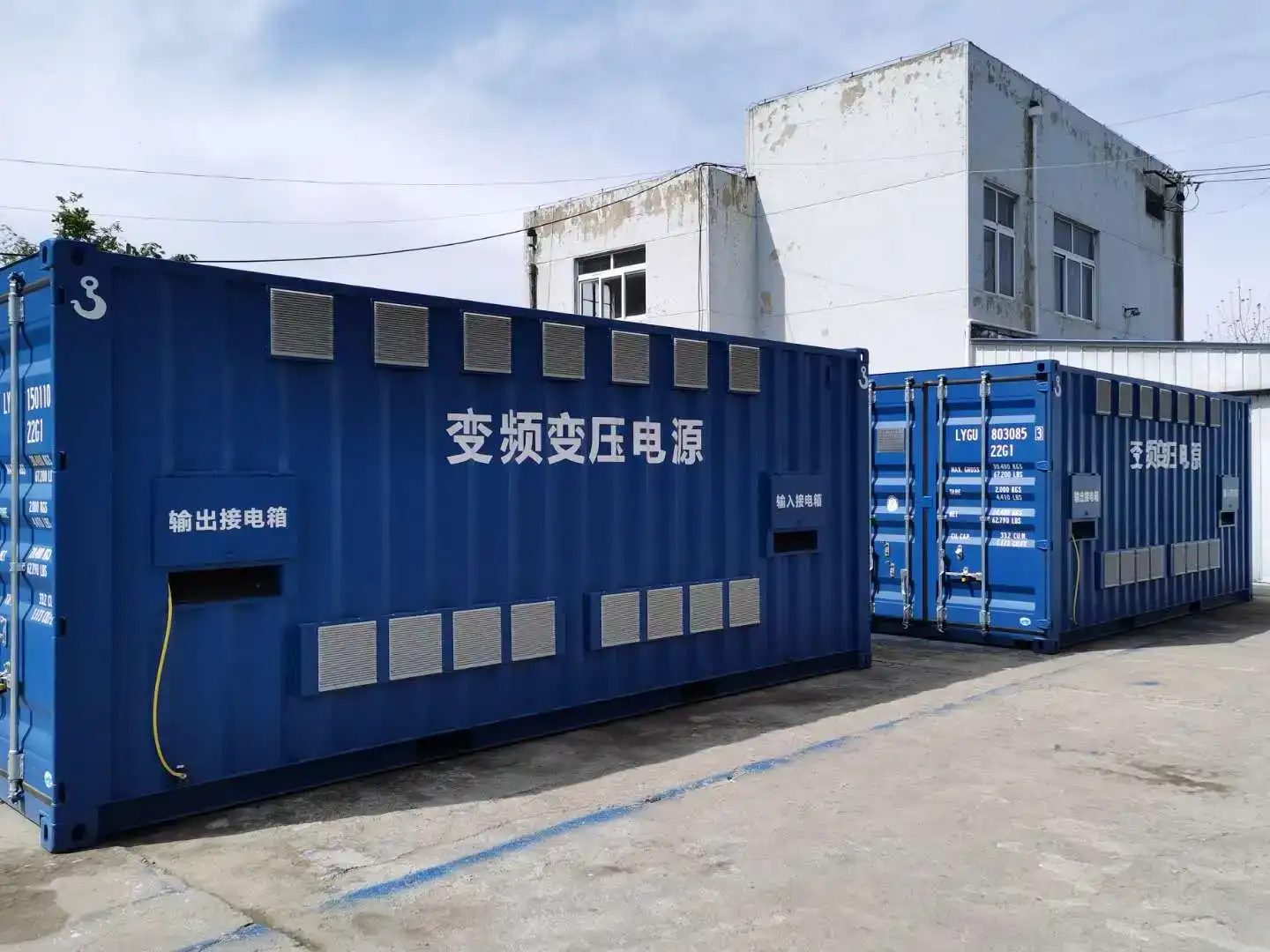
What Is a Containerized Shore Power System?
A containerized shore power system integrates selected shore-side electrical equipment into an engineered container or outdoor enclosure so that more of the system can be assembled, internally integrated and tested before shipment. Depending on the project, the container can incorporate frequency conversion, voltage transformation, switchgear, protection, control, monitoring and environmental-control equipment.
Containerized shore power is an installation and system-integration format, not a separate voltage class. The electrical system inside can be configured for either low-voltage or high-voltage shore power according to the vessel connection, shore grid and project requirements.
Two Different Design Decisions
Voltage architecture and installation architecture describe different aspects of the same shore power project.
电气架构
Determined mainly by the vessel electrical system, required voltage, current and overall shore connection architecture.
Used where the vessel-side shore connection operates at low voltage.
Used where the vessel connection requires a medium- or high-voltage shore supply.
Installation Architecture
Determined by site conditions, available space, environmental exposure and the preferred level of factory integration.
Equipment installed within a dedicated building or electrical room at the port or shipyard.
Selected electrical equipment integrated into an engineered enclosure for outdoor installation and factory pre-integration.
What Does Containerization Change?
The container does not change the fundamental electrical function of shore power. It changes how the equipment is packaged, protected, integrated, transported and connected to the project site.
设备集成
Frequency conversion, transformation, switchgear, controls and auxiliary equipment can be coordinated within one project-configured enclosure.
Outdoor Protection
The enclosure and environmental-control arrangement are selected for the actual installation conditions rather than treating indoor cabinets as outdoor equipment.
Factory Pre-Integration
More equipment assembly, internal integration and project-specific testing can be completed before the system is transported to site.
Defined Site Interface
The project team can coordinate the container footprint, shore-grid input, vessel-side output, cable routes and external interfaces as one integrated system package.
A containerized shore power converter may be one part of the enclosure, but a complete containerized shore power system can include additional transformation, switching, control, monitoring and environmental equipment according to the agreed project scope.
What Can Be Integrated Inside the Container?
A containerized shore power system can combine the required conversion equipment with selected transformation, switching, control and environmental equipment. The exact equipment list depends on the electrical architecture and the agreed project supply boundary.
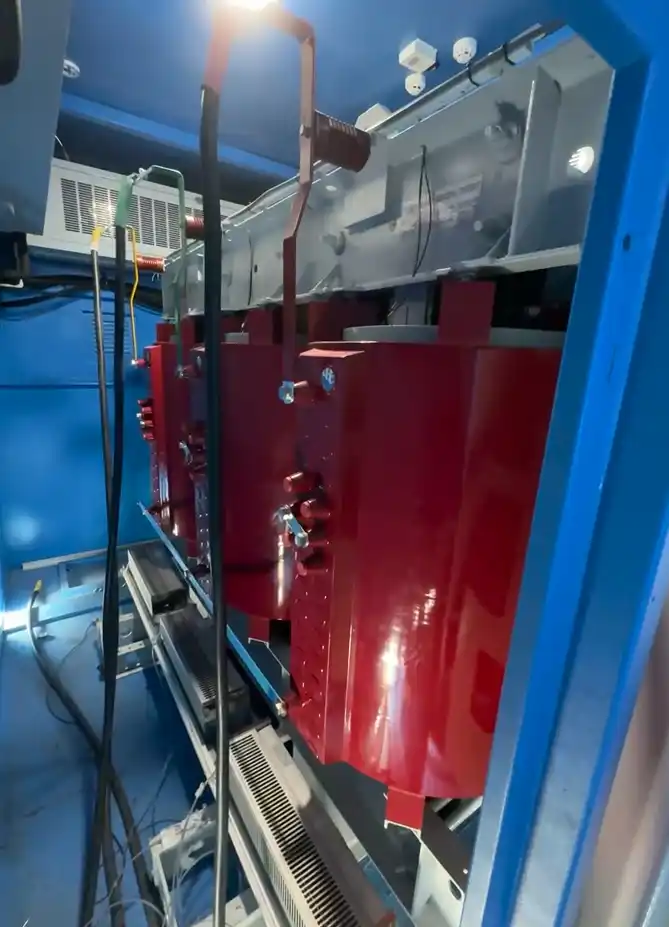
频率转换
A shore power frequency converter provides the required 50 Hz / 60 Hz conversion when shore-grid and vessel frequencies differ.
Voltage Transformation
Input, isolation, phase-shifting or output transformer functions can be incorporated where required by the selected electrical architecture.
Switchgear & Protection
Input and output switching, metering and electrical protection can be included according to the low- or high-voltage project configuration.
控制与监测
Local HMI, PLC control, metering, interlocks and agreed communication interfaces can form part of the integrated package.
HVAC & Auxiliary Systems
Environmental-control equipment can be integrated to support temperature management and anti-condensation requirements.
External Interfaces
Shore-side input, vessel-side output and selected external connection equipment are coordinated according to the agreed supply scope.
Low-Voltage and High-Voltage Containerized Configurations
Containerization can be applied to either major shore power electrical architecture. The correct voltage class is selected from the vessel connection, required capacity, operating current, grid conditions and overall project design.
Low-Voltage Containerized Shore Power
A low-voltage containerized system can combine frequency conversion, transformation, switchgear, control and auxiliary equipment for vessels using low-voltage onboard distribution.
High-Voltage Containerized Shore Power
A high-voltage containerized system can integrate selected conversion, transformation, switchgear, control, grounding and protection equipment for projects requiring a medium- or high-voltage vessel connection.
Why Use a Containerized Shore Power System?
Containerized integration is especially useful when shore power equipment must be installed outdoors, the available site is restricted, or the project does not have a dedicated electrical room. It also allows more assembly and integration work to be completed under factory conditions before shipment.
Outdoor Installation
Electrical equipment can be arranged inside an engineered enclosure where a conventional indoor electrical room is unavailable or unsuitable.
Defined Equipment Footprint
20ft, 40ft and custom enclosure arrangements can be evaluated according to the equipment layout, access clearances and available site space.
Factory Pre-Integration
Equipment installation, internal integration and project-specific testing can be completed before the package is transported to the project site.
Reduced Site Integration
A defined factory-integrated package can reduce the amount of cabinet assembly and internal equipment coordination required at site.
From Factory Integration to Site Connection
Outdoor Environmental Design for Containerized Shore Power
A containerized shore power enclosure must be specified for the actual installation environment. Temperature, humidity, condensation, airborne salt, cooling requirements and exposure conditions should be reviewed together rather than treating “outdoor” as a single standard configuration.

HVAC & Heat Removal
Containerized configurations can incorporate air-conditioning and environmental-control equipment according to equipment losses, ambient conditions and the selected arrangement.
Humidity & Condensation
Anti-condensation measures are considered for containerized systems, particularly where humidity and temperature variation create condensation risk.
Salt-Fog & Corrosion Exposure
Coastal and shipyard projects should identify salt-fog and corrosion conditions so that the enclosure and applicable protection measures can be selected for the project environment.
Define the Required Environmental Specification
The required enclosure protection level should be stated in the project specification. IP65 containerized configurations are available according to final design. Where a tender also specifies a corrosion category, coating system, enclosure material or environmental test requirement, include that requirement in the RFQ for project-level confirmation.
Factory Pre-Integration Before Shipment
One advantage of a containerized configuration is that more equipment assembly, internal integration and project-specific verification can be completed before the system reaches the installation site.
Equipment Assembly
Selected conversion, transformation, switching, control and auxiliary equipment is arranged according to the approved project configuration.
Internal Integration
Internal electrical integration and agreed project interfaces are completed within the factory supply scope.
功能 V验证
The assembled configuration is checked against the approved electrical requirements before delivery.
工厂验收测试
Project-specific FAT verifies the agreed functions and acceptance items before shipment.
Shipment Preparation
After the agreed testing and documentation are completed, the integrated package is prepared for transport and site connection.
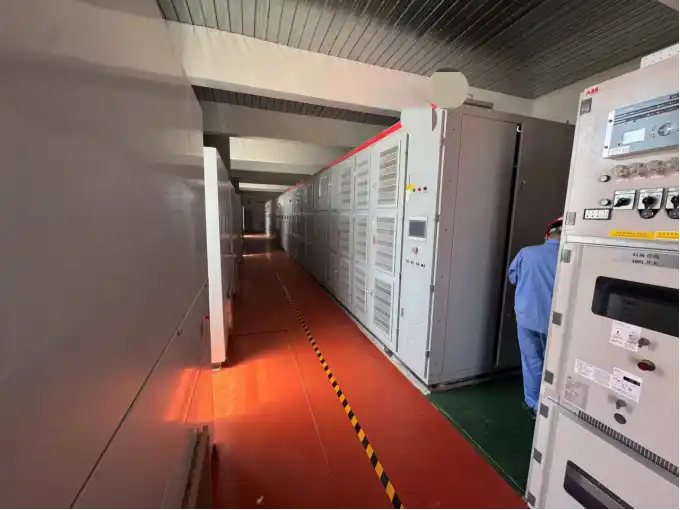
Typical FAT Verification Categories
The actual FAT scope and acceptance values are defined in the project technical agreement. Customer witnessing can be arranged according to the project.
Site Interfaces for a Containerized Shore Power System
Factory pre-integration reduces site assembly, but the container still has to interface correctly with the shore grid, vessel connection, civil works, cable routes, operating environment and project control system.
Port / Shipyard Grid
Voltage · Frequency · Grid capacity · Earthing · Incoming cables
Containerized Shore Power System
Conversion · Transformation · Switching · Control · Environmental systems
V埃塞尔连接
Required voltage · Frequency · Load · Cable / connection arrangement
Cable Entry & Routing
Confirm cable direction, approximate distance, route and external connection locations.
Foundation & Placement
Confirm available footprint, container position, civil interface and site access.
Lifting & Transport
Coordinate enclosure dimensions, transport route, lifting conditions and destination access.
Cooling Clearances
Maintain the required space for HVAC operation, airflow and heat rejection.
维护访问权限
Allow suitable access for routine inspection, service and equipment replacement.
Control Interface
Define the required external monitoring, communication or SCADA interface at project level.
Information Required for a Containerized Shore Power System
A useful containerized shore power proposal requires more than a requested kVA value or container size. The electrical architecture, enclosure and environmental configuration should be selected from the actual shore grid, vessel load and installation conditions.
Shore-Side 电气数据
Vessel Electrical Data
系统架构
Installation & Environment
Useful Documents for Engineering Review
Existing project documents can shorten the initial configuration review and help define the actual system and supply boundary.
新加坡 400 千瓦集装箱式岸上电力项目
A 400 kVA outdoor containerized shore power system was supplied for a shipyard project in Singapore, with the electrical equipment integrated into an outdoor container for factory assembly, internal wiring and testing before shipment.
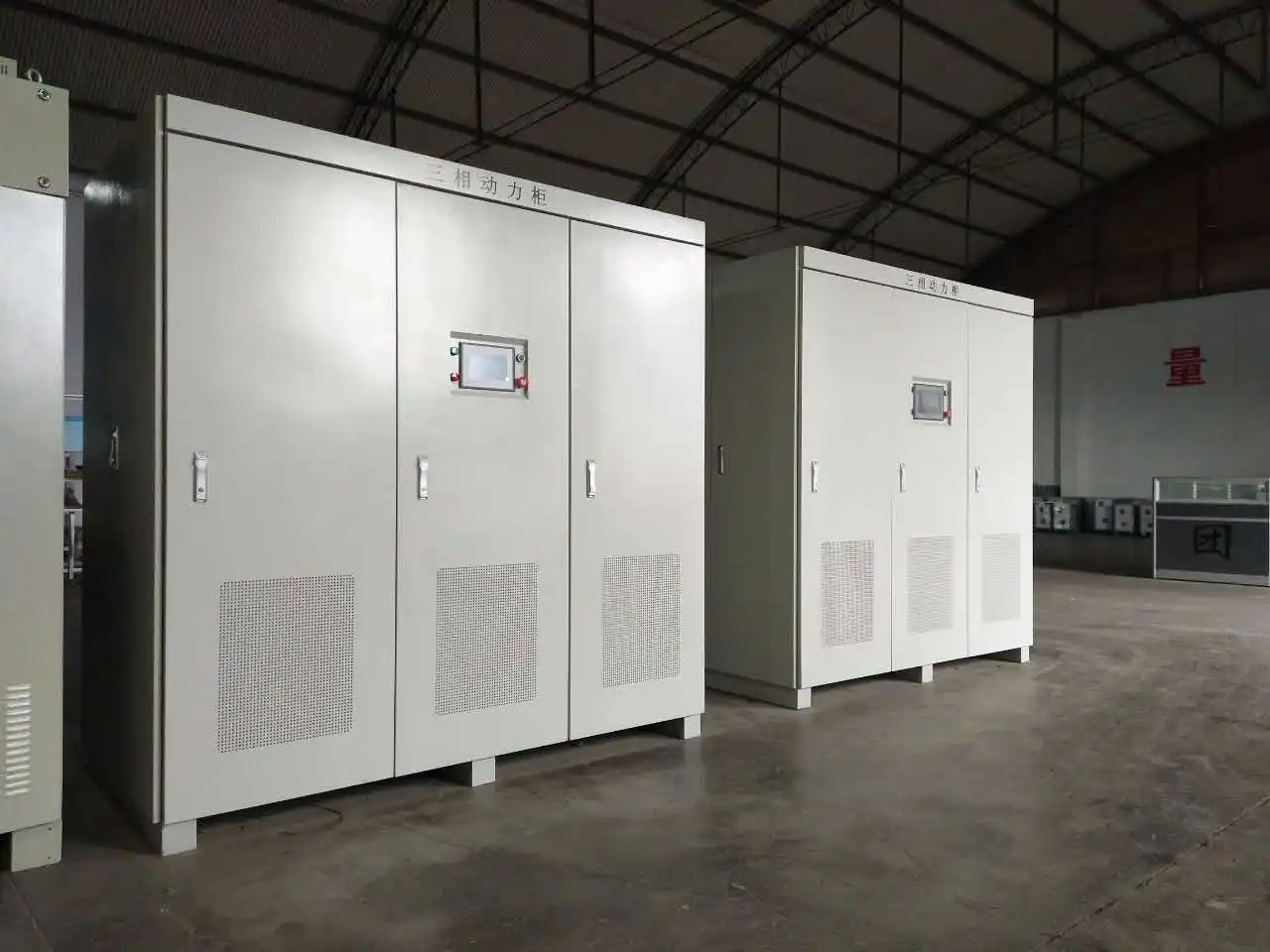
400 kVA Outdoor Containerized Configuration
The project converts the available shore-side supply to the frequency required by the vessel application while packaging the electrical equipment in an outdoor containerized arrangement.
What This Project Shows
Containerized shore power is not limited to one fixed capacity. The 400 kVA Singapore project and larger reference configurations illustrate why both the electrical rating and enclosure arrangement should be selected from the actual vessel load, shore-grid conditions and project scope.

Containerized Shore Power System FAQ
Key questions about voltage architecture, outdoor installation, enclosure protection, factory integration and project selection for containerized shore power systems.
What is a containerized shore power system?
A containerized shore power system integrates selected shore-side electrical equipment into an engineered container or outdoor enclosure. Depending on the project, the package can include frequency conversion, transformers, switchgear, control, monitoring and environmental-control equipment.
Is a containerized shore power system low voltage or high voltage?
It can be either. Containerized describes the installation and integration method, while low voltage or high voltage describes the electrical architecture.
The appropriate combination is selected according to vessel voltage, shore-grid conditions, required capacity and the overall project design.
When should a containerized shore power system be considered?
Containerized integration is particularly useful for outdoor installations, sites with restricted space, projects without a dedicated electrical room, or projects that benefit from completing more equipment assembly and testing before shipment.
What equipment can be installed inside the container?
Depending on the project scope, the container can integrate a frequency converter, transformers, switchgear, protection, control and monitoring equipment, HVAC and selected external connection interfaces.
The final equipment list is defined by the approved electrical configuration rather than by a fixed standard package.
What container sizes are available?
Confirmed enclosure options include 20ft, 40ft and custom-dimension configurations. The required size depends on equipment layout, electrical clearances, HVAC arrangement, maintenance access and available site footprint.
What capacities are available for containerized shore power?
Typical reference configurations include 1000 kVA and 2000 kVA, with confirmed containerized configurations up to 3000 kVA.
Capacity is not determined by container size alone. For example, a Singapore shipyard project used a 400 kVA outdoor containerized configuration.
Can a containerized shore power system be installed outdoors?
Yes. Outdoor containerized configurations can be used where the enclosure, HVAC, condensation control, corrosion protection and site interfaces are specified for the actual installation environment.
What IP rating is required for an outdoor shore power system?
There is no single IP rating that should be assumed for every project. The required enclosure protection level depends on the equipment location and environmental exposure.
IP65 containerized configurations are available according to final project design. The required IP rating should be included in the technical specification or RFQ.
How should corrosion protection be specified for a coastal site?
Provide the actual environmental or tender requirement. If the project references ISO 12944, C5, CX, salt-mist testing or another corrosion requirement, include that specification in the RFQ so the applicable enclosure and protection arrangement can be reviewed for the project.
Is a containerized shore power system the same as a mobile shore power system?
并非必然如此。. A containerized system can be transported as an integrated package, but containerization does not automatically mean that the equipment is engineered for frequent relocation or mobile operation.
Mobility should be defined as a separate project requirement.
能否在货物装运前完成工厂验收测试?
Yes. Project-specific FAT can be completed before shipment. Depending on the selected configuration, verification can include wiring inspection, insulation and withstand checks, load operation, voltage and frequency verification, protection, interlocks, HMI functions and communication checks.
What information is needed to configure a containerized shore power system?
The initial review should include shore-side voltage and frequency, vessel voltage and frequency, required capacity, LV or HV connection, load information, number of outputs, site conditions, available footprint and the required environmental and supply scope.
Do not select a containerized shore power system from container size alone. Electrical capacity, voltage architecture, environmental conditions and the required equipment scope should be defined first; the enclosure is then configured around the actual project.
Have a project specification or single-line diagram?
Send the available electrical and site information for an initial configuration review.
Request a Containerized Shore Power Configuration
A useful quotation should be based on the electrical system, installation environment and required supply scope — not on container size alone. Send the available project information below for an initial configuration review.
Shore-Side 电气数据
Vessel Electrical Requirements
系统架构
Installation & Environment
Documents You Can Send
Existing electrical or tender documents can help define the initial system configuration more efficiently.
Define the Required Supply Scope
Tell us which equipment and services should be included in the project package.
Ready for an Initial Configuration Review?
Send the available project data. SDACME can review the required voltage, frequency, capacity, LV or HV architecture, container arrangement, environmental requirements and supply boundary before preparing the technical configuration and quotation.
