MPCVD Project Delivery & Support
MPCVD工厂验收测试、安装、培训及保修支持
Buying an MPCVD system is not only an equipment-selection decision. For an international project, the customer also needs to understand how the machine will be verified before shipment, how installation and commissioning will be handled, how operators will be trained, and what support will be available after acceptance.
SDACME can support MPCVD projects through factory acceptance testing, FAT witnessing, installation coordination, equipment commissioning, operation and maintenance training, project-agreed process guidance, warranty coordination, after-sales technical support and spare-parts supply.
The exact service scope is defined according to the selected MPCVD system, installation country, site readiness, customer requirements and final technical and commercial agreement.
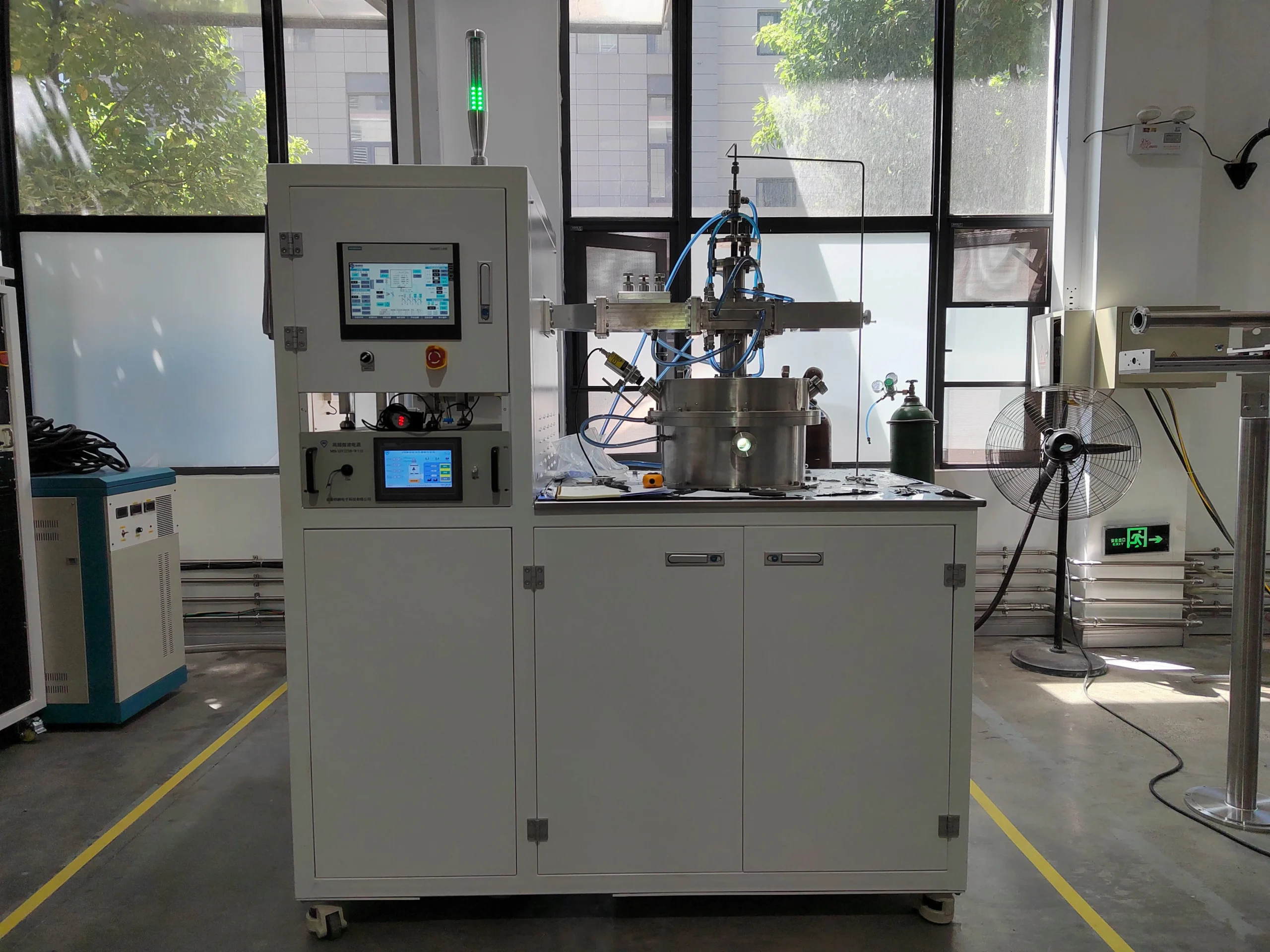
Project Support Scope
- FAT
Factory acceptance before shipment - 见证
Remote video or factory witnessing - 安装
Remote or on-site project support - 调试
Equipment startup and handover - Training
Operation, maintenance & agreed process guidance - Warranty
12 months from project acceptance
Project scope is confirmed before order release.
From FAT to Operational Handover
A Defined Project Path Before and After Shipment
A successful MPCVD project requires more than manufacturing the machine and arranging shipment. The acceptance basis, site responsibilities, installation scope and post-delivery support should be defined before the equipment arrives at the customer site.
A typical project can progress through technical confirmation, manufacturing, factory acceptance testing, customer witnessing, packing and shipment, site readiness, installation, commissioning, training, acceptance and after-sales support.
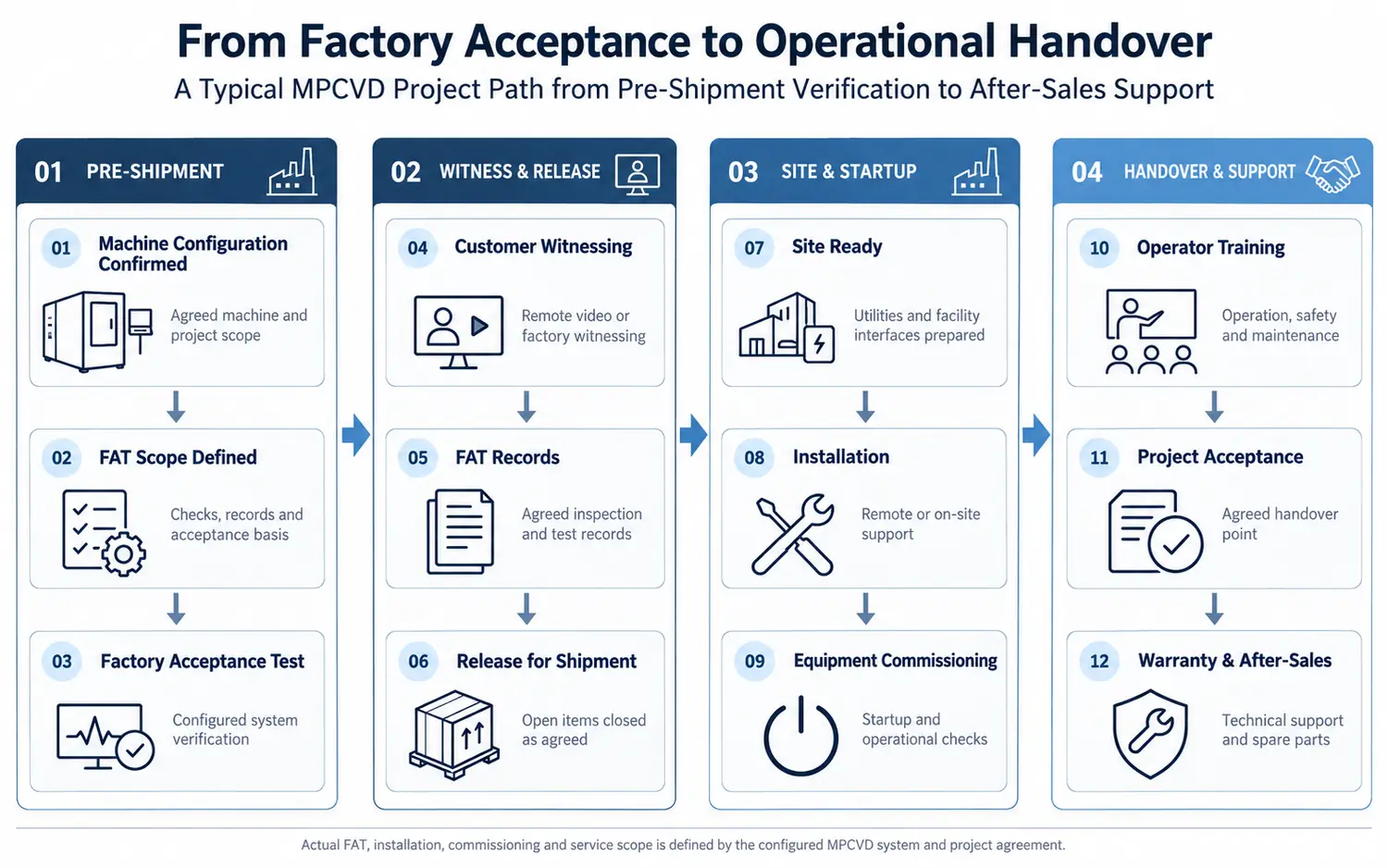
Before shipment, the configured equipment is checked against the agreed project scope. FAT requirements, witnessing arrangements and required records should be confirmed before the machine is released for shipment.
Before installation, the customer site should be prepared according to the selected MPCVD configuration. Required utilities and facility interfaces need to be available so that installation and startup can proceed without unnecessary delay.
During installation and commissioning, the supplied system is connected, checked and brought through the agreed startup process. Training and project documentation then support the transition from equipment installation to routine operation.
After project acceptance, warranty, remote technical support, on-site service where required and spare-parts support provide the next layer of project continuity.
MPCVD Factory Acceptance Testing
What Does an MPCVD FAT Verify Before Shipment?
An MPCVD factory acceptance test verifies the configured machine against the agreed technical and supply scope before shipment.
The purpose of FAT is to confirm that the equipment prepared for the customer has been manufactured, assembled and functionally checked according to the project requirements. FAT is not intended to guarantee a future diamond growth rate, crystal grade, yield or production output.
Depending on the configured system and technical agreement, FAT can cover equipment configuration verification, visual and assembly inspection, applicable subsystem operating checks, relevant control and monitoring functions, agreed alarm or protection functions, integrated equipment operation and the preparation of inspection or FAT records.
The actual test items and acceptance criteria are defined for the project rather than assumed from one universal MPCVD checklist.
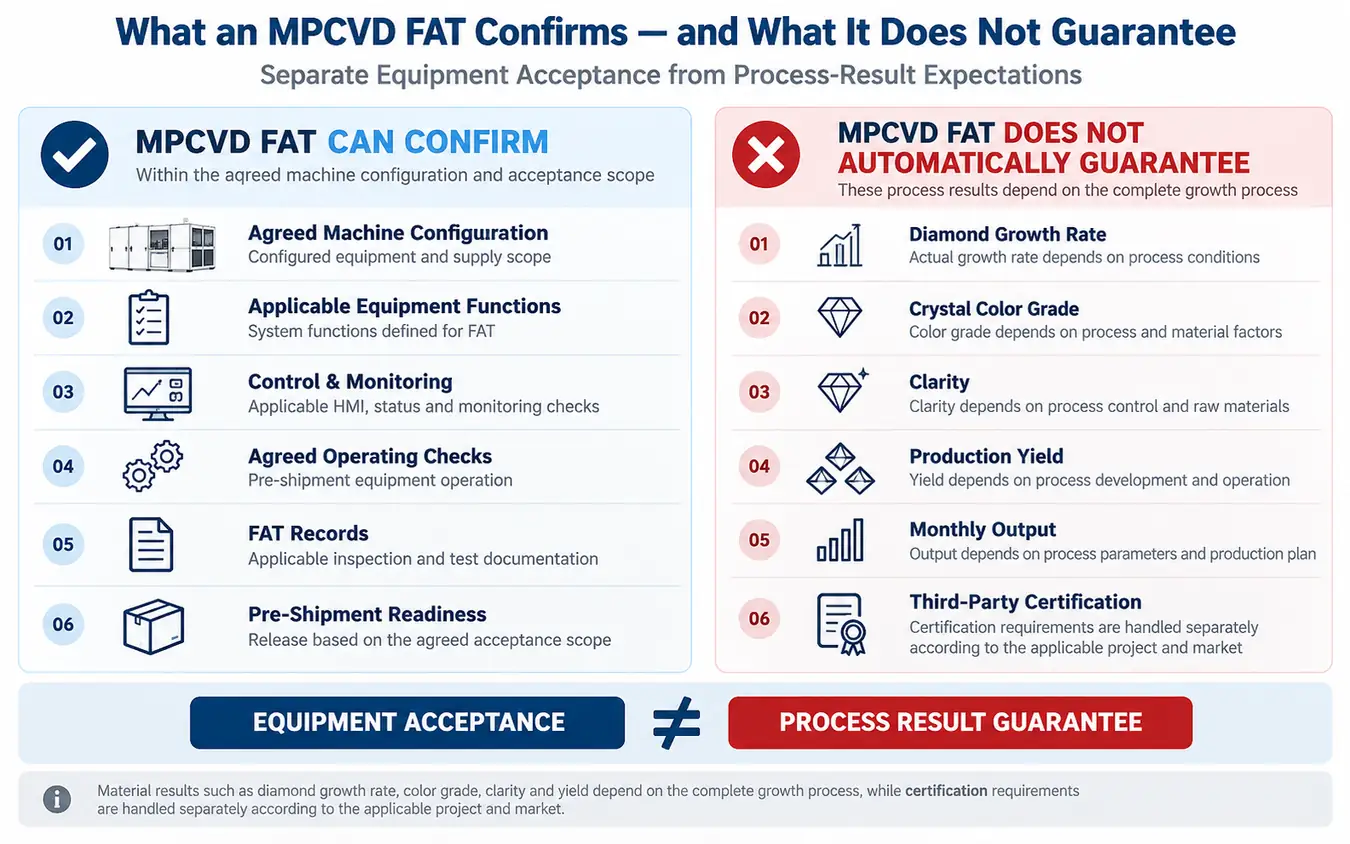
Define the Acceptance Basis Before FAT
A useful FAT starts with an agreed acceptance basis.
Before the FAT is performed, the project should define the configured machine scope, applicable technical specification, FAT items, witnessing method, required records, acceptance responsibilities and the method for handling any open items.
Without an agreed equipment scope and acceptance criteria, a factory demonstration is not the same as a formal project FAT.
For an overseas buyer, this creates a clear checkpoint before packing and shipment and reduces uncertainty about what has been supplied, what has been checked and what still needs to be resolved.
FAT Witnessing, Records & Project Documentation
Can an MPCVD FAT Be Witnessed Remotely?
Yes. Remote video witnessing can be arranged according to the agreed MPCVD FAT scope and project schedule.
Customer witnessing at the manufacturing facility can also be arranged when required. FAT reports, video witnessing and factory witnessing can be provided according to the agreed MPCVD project scope.
Remote FAT Witnessing
Remote witnessing can be useful when the customer does not need to travel for the factory acceptance stage. Agreed FAT activities can be reviewed through scheduled video communication together with the applicable test and inspection records.
Factory Witnessing
For projects requiring direct customer participation, factory witnessing can be arranged according to the agreed schedule, machine status and FAT scope.
FAT Records and Handover Documentation
Depending on the configured system and project, documentation can include equipment information, operating documentation, FAT or inspection records, installation-related information, packing and shipping documents, applicable compliance-related documents and other project-specific technical records.
The actual document list is confirmed according to the selected equipment and contract.
Release for Shipment
Once the agreed FAT activities, project documentation and applicable commercial conditions have been completed, the machine can proceed to packing and shipment.
Factory acceptance testing should not be interpreted as CE certification, third-party certification or proof of a guaranteed material-production result.
MPCVD Installation Service
From Site Readiness to Equipment Installation
MPCVD installation begins before the machine arrives.
The installation site should be prepared according to the selected machine configuration so that the required facility interfaces and utilities are available before startup.
SDACME can coordinate installation support through project documentation, remote technical assistance and on-site engineering arrangements where required. Installation manuals, remote support and on-site installation support can be arranged according to project requirements.
Remote Installation Support
Remote technical support can be suitable where the customer has appropriate local engineering resources and the agreed installation scope allows remote coordination.
On-Site Installation Support
On-site engineering support can be arranged internationally according to the installation country, system configuration, customer requirements and commercial agreement.
Travel, visas, service duration and related on-site costs are confirmed separately where applicable and should not be assumed to be included in every MPCVD equipment quotation.
Before installation is scheduled, the customer should also confirm that the site meets the applicable utility and facility requirements for the selected machine.
Equipment Commissioning vs Process Support
Commissioning the Machine Is Different from Guaranteeing the Growth Result
Equipment commissioning and process development are related, but they are not the same responsibility.
Equipment Commissioning
Equipment commissioning focuses on bringing the installed MPCVD system into the agreed operating condition.
Depending on the project, this can include confirming applicable utility connections, checking the operation of supplied subsystems, completing the agreed startup procedure and preparing the machine for operational handover.
The objective is to confirm that the configured equipment can proceed into its intended operating state according to the agreed project scope.
Process-Oriented Support
MPCVD material growth depends on more than whether the equipment starts successfully.
Actual process results can also be influenced by substrate or seed condition, process gases, operating parameters, plasma condition, substrate temperature, chamber condition, loading arrangement, process recipe and operator practice.
Process-oriented commissioning or application guidance can therefore be included as a separate project service where required.
Successful equipment commissioning does not by itself guarantee a specific diamond growth rate, crystal size, color grade, clarity, yield, monthly output or other material result.
MPCVD Operation, Maintenance & Process Training
Training for the Team That Will Operate the System
Training can be included as part of an MPCVD project and can be arranged remotely, at the manufacturing facility or at the customer site according to the agreed scope. Training can cover operation, maintenance and process-oriented guidance according to project requirements.
Operation Training
Operation training can help the customer team understand the machine interface, normal operating workflow and system-status information required for routine use.
Startup and Shutdown Training
Startup and shutdown training helps operators understand the correct sequence for bringing the equipment into service and shutting it down after operation.
Maintenance-Oriented Training
Maintenance-oriented training can cover routine inspection, cleaning and the basic maintenance responsibilities expected from the operating team.
Safety-Oriented Instruction
Safety-oriented instruction can address the applicable precautions associated with the configured equipment, utilities and normal operating procedures.
Process-Oriented Guidance
Where included in the project, training can also cover basic process setup and agreed application guidance. This is different from transferring unrestricted proprietary process recipes or guaranteeing a specific material-production result.
12-Month Warranty, After-Sales & Spare Parts
Support After Project Acceptance
MPCVD equipment is provided with a 12-month warranty starting from project acceptance. The final contract defines the applicable component coverage, consumables, exclusions and service responsibilities for the specific machine and project.
Warranty Scope
A project warranty should clearly identify the applicable machine, covered equipment, warranty period, warranty-start condition, consumables or wear items, component-specific conditions and after-sales responsibilities.
This creates a clearer service basis than a general statement that every component is automatically covered under all operating conditions.
Customer Responsibilities During the Warranty Period
Warranty support assumes that the MPCVD system is installed, operated and maintained according to the agreed equipment requirements and applicable documentation.
Site utilities, unauthorized modifications, consumables, wear conditions and operating practices can affect the applicable service or warranty responsibility. The detailed boundary is defined in the project contract rather than assumed from a general website statement.
Remote Technical Support
Remote after-sales support is available for equipment-related questions, service coordination and troubleshooting communication.
On-Site After-Sales Service
International on-site technical support can be arranged according to the project, customer location, service requirement and commercial scope.
Spare Parts
Applicable replacement parts and spare parts can be supplied according to the machine configuration and actual service requirement.
Spare parts are quoted according to the required item and project scope rather than treated as an unlimited lifetime free-replacement commitment.
Thailand 10kW MPCVD Project Delivery Evidence
From International Supply to Operating Status
A 10kW ACME-MW1070 MPCVD system was supplied for a diamond-growth project in Thailand.
The confirmed project scope covered a complete 10kW MPCVD equipment package together with installation support. The equipment was delivered to Thailand, and the project record confirms that the system subsequently entered operation.
This reference is used to demonstrate an international delivery and operational-handover path.
It is not presented as a guarantee of a specific diamond growth rate, crystal color, clarity, yield or production output.
For customers evaluating their first MPCVD purchase from China, this type of project is relevant because FAT, site preparation, installation support and after-sales planning need to be considered before the machine reaches the customer site.
常见问题解答
Does SDACME provide MPCVD factory acceptance testing?
Yes. Factory acceptance testing can be provided before shipment.
The FAT scope is defined according to the configured MPCVD machine and project technical agreement. FAT reports, remote video witnessing and customer factory witnessing can also be arranged according to the project.
What tests are included in an MPCVD FAT?
The exact FAT items depend on the configured MPCVD system and the agreed acceptance requirements.
A project FAT can address configuration verification, applicable inspections, operating checks, control and monitoring functions, agreed protection functions, integrated operation and required FAT records.
The final checklist and acceptance criteria should be agreed before testing rather than assumed from a generic list.
Can MPCVD FAT be witnessed by video?
Yes. Remote video witnessing can be arranged according to the project FAT plan and schedule.
Factory witnessing can also be arranged where direct customer participation is required.
Can SDACME provide MPCVD installation and commissioning?
Yes. Installation and equipment commissioning support can be provided according to the project.
The support method can include remote coordination or on-site engineering arrangements depending on site readiness, machine configuration, installation country and agreed service scope.
Is installation included in every MPCVD machine quotation?
并非必然如此。.
Installation, on-site commissioning, travel, training and related service costs are confirmed according to the project and commercial agreement. Customers should therefore review the required service scope together with the equipment quotation rather than assume that all on-site services are automatically included.
Does SDACME provide MPCVD training?
是的。
Training can cover machine operation, startup and shutdown, routine maintenance and agreed process-oriented guidance. Training can be arranged remotely, at the manufacturing facility or at the installation site according to the project.
What warranty is available for an MPCVD machine?
A 12-month equipment warranty is provided starting from project acceptance.
The contract defines the applicable covered components, consumables, exclusions and service responsibilities.
Are spare parts and after-sales support available?
是的。
Remote technical support is available, on-site international service can be arranged according to project requirements, and applicable spare parts can be supplied according to the machine configuration and service need.
M10 · Project Request
Request FAT, Installation & Support Details
Define the Service Scope Before Shipment
If you are evaluating an MPCVD system, the service scope should be reviewed together with the machine configuration rather than left until the equipment reaches the installation site.
For a useful project review, provide the required MPCVD model or power level if known, project country and installation location, expected schedule, FAT witnessing preference, installation and commissioning requirements, training requirements, preferred training location, required acceptance documentation, spare-parts requirements and any customer-specific FAT or handover conditions.
You do not need to define every service item before contacting SDACME. The machine configuration, FAT scope, installation responsibilities and after-sales requirements can be reviewed together during the technical and commercial stage.