工业微波设备

微波发生器更换与改造

Replace or upgrade an existing industrial microwave generator through a structured compatibility review. SDACME evaluates the generator installation across electrical, mechanical, RF, cooling and control interfaces before defining the replacement scope.

Compatibility Review Areas
Frequency & Power Electrical Input Mechanical Fit Waveguide / RF 冷却 控制
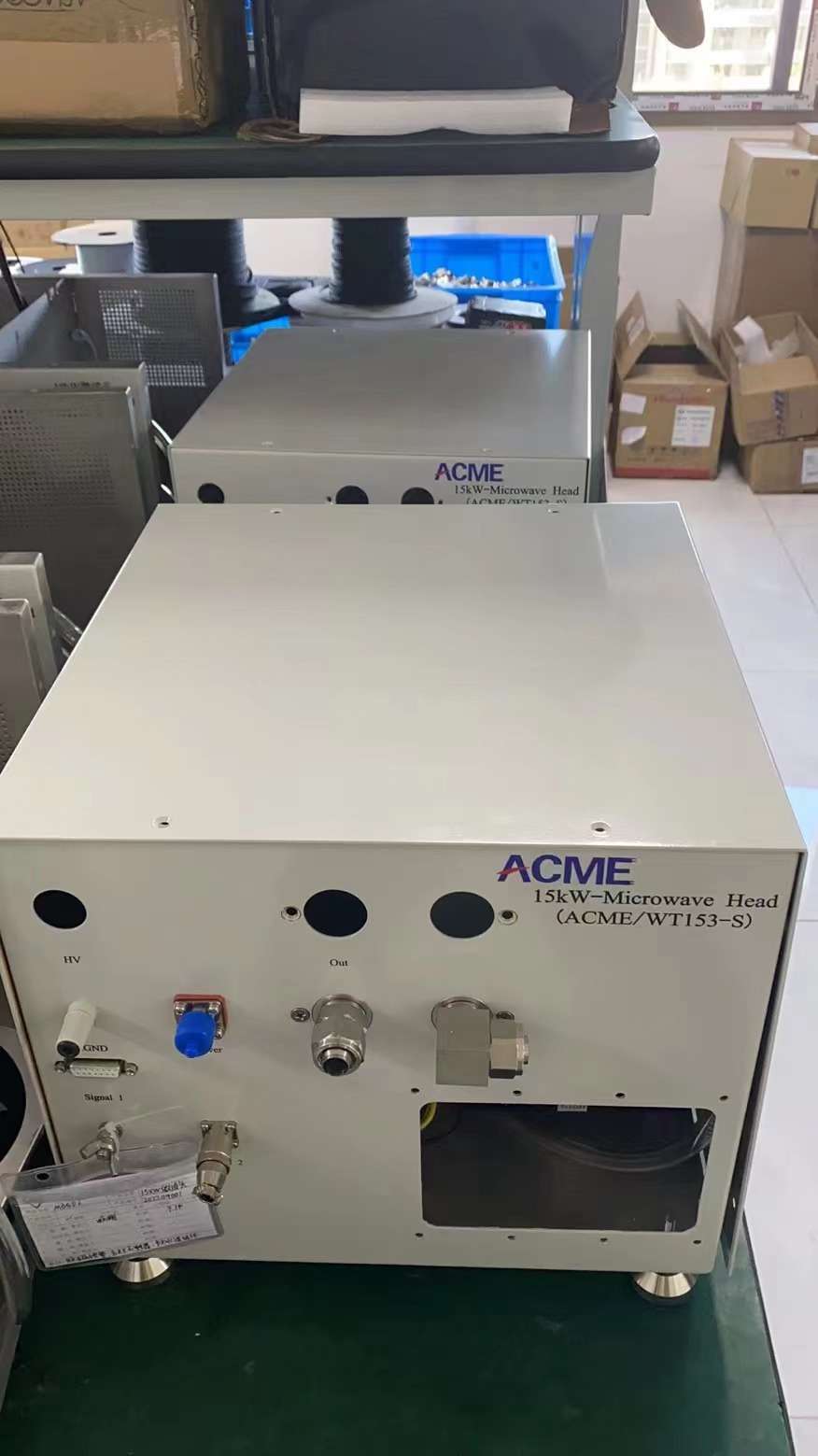
15 kW 2450 MHz industrial microwave generator system

Replacement Fundamentals

Microwave Generator Replacement Requires System Compatibility

Replacing an industrial microwave generator is different from selecting a generator for a new machine. The replacement must work with equipment that was already designed around specific electrical, mechanical, RF, cooling and control conditions.

Key Replacement Principle

Matching the rated power alone is not enough to establish replacement compatibility.

From Existing Generator to Replacement Route

The existing installation is reviewed first. The replacement configuration follows from the actual system interfaces and project conditions.

01

Existing Generator

Identify the current generator, operating requirements, installation conditions and available equipment information.

  • Manufacturer & model
  • Nameplate & equipment data
  • Current replacement reason
02

兼容性审查

Review the interfaces and utilities that connect the microwave generator to the existing industrial equipment.

频率 Power 电气 Mechanical RF 冷却 控制
03

Replacement Route

Define the proposed generator configuration, the interfaces that can remain, and the items requiring project-specific modification.

  • Proposed generator scope
  • Interface requirements
  • Required modifications

Start with the existing equipment, not only the required kW.

Send the existing generator model, nameplate and available equipment information so the first compatibility review can begin.

See Required Data

Compatibility Assessment

What Must Be Checked Before Replacing a Microwave Generator?

A reliable replacement proposal starts with the existing industrial microwave system. Frequency and power are important, but they must be reviewed together with the electrical supply, installation, RF interface, cooling, controls and available equipment documentation.

01

频率

Confirm the operating frequency of the existing generator and the RF system used by the equipment.

Confirm Existing Frequency
02

微波功率

Review the existing rated power together with the required operating range and the objective of the replacement.

Match Project Requirement
03

Electrical Input

Identify the existing site supply, electrical connection conditions and available power infrastructure.

Review Site Supply
04

机械安装

Check cabinet dimensions, microwave-head position, mounting, connection orientation and available installation space.

Check Physical Fit
05

Waveguide & RF Interface

Review the existing waveguide, flange, connection geometry, orientation and other RF interface conditions.

Evaluate RF Connection
06

冷却

Identify the existing cooling arrangement, connections, utilities and available cooling conditions.

Review Cooling Infrastructure
07

Controls & Communication

Identify how the existing machine operates, monitors and exchanges control information with the microwave generator.

Review Machine Interface
08

Existing Documentation

Nameplate photos, equipment photos, drawings and available interface documents improve the initial replacement review.

Provide Available Records

Compatibility is determined from the complete installation.

The final replacement scope is defined only after the relevant generator, equipment interfaces and site conditions have been reviewed together.

Prepare Existing Data

RF & Mechanical Compatibility

Review the Existing RF Path and Mechanical Installation

Microwave generator replacement should be evaluated as part of the complete RF and equipment installation. Existing waveguide sections, tuning or matching components, connection geometry, mounting and available installation space can all affect the final replacement scope.
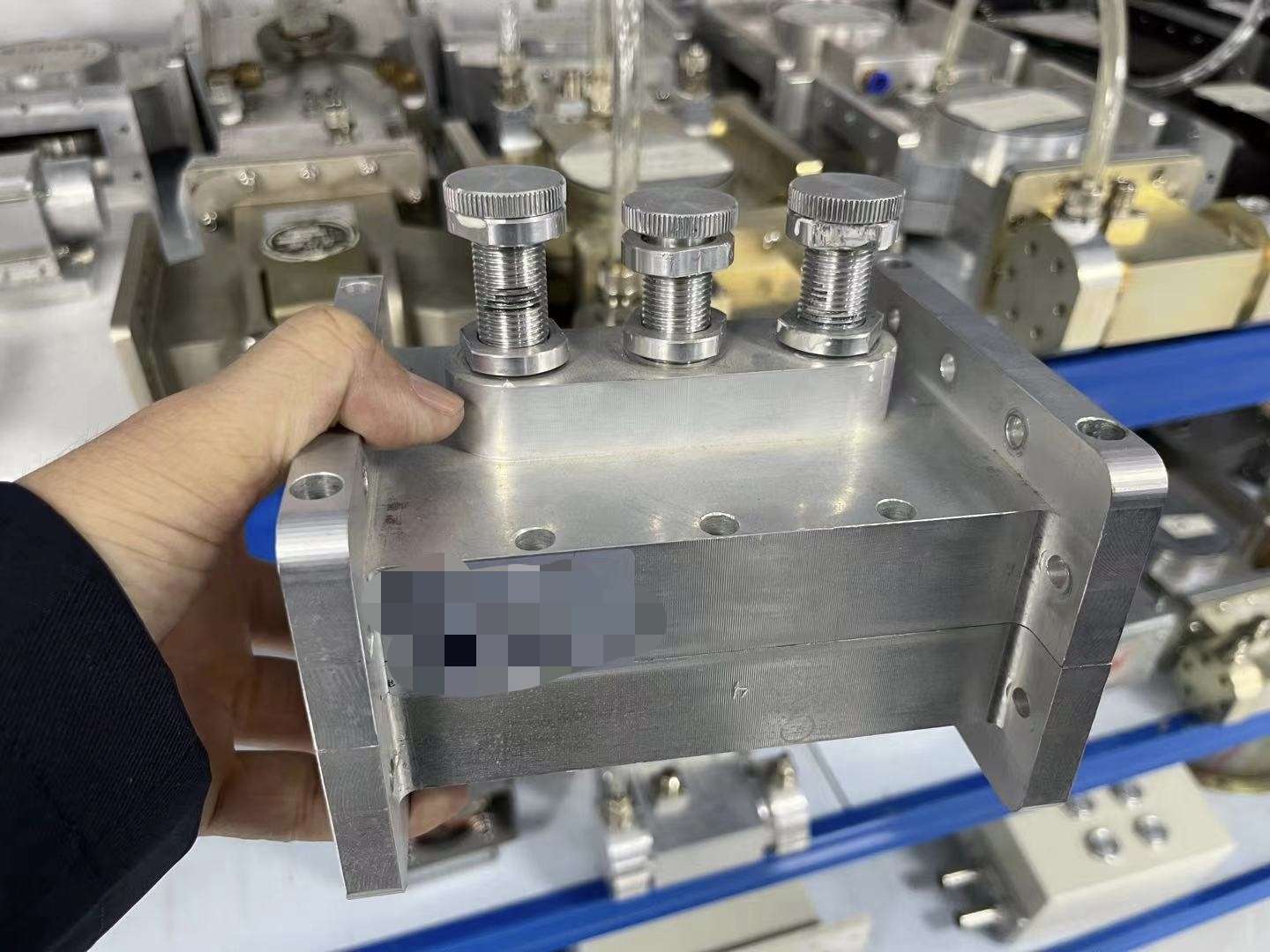
Waveguide three-probe impedance tuner for an industrial microwave RF system

Waveguide Three-Probe Impedance Tuner

A real RF-path component illustrates why existing waveguide, tuning and matching hardware should be considered during a microwave generator replacement review.

Replacement Question 01

Can the existing RF path be retained?

Existing waveguide and related RF components can be evaluated for reuse, but the actual decision depends on frequency, interfaces, geometry, orientation, condition and the proposed replacement configuration.

Replacement Question 02

Will the replacement equipment fit the existing installation?

Generator dimensions, microwave-head position, mounting, service access and available installation space should be checked together with the existing RF connection arrangement.

RF Path Review

  • Existing waveguide sections
  • Flange and connection interfaces
  • Operating frequency
  • Tuning or matching components
  • RF path geometry and orientation

Mechanical Review

  • 安装空间可用
  • Generator dimensions
  • 微波头的位置
  • Mounting arrangement
  • Service and connection access

Review the RF path as a system, not only the generator output.

Send photographs, dimensions and available RF-system information so the existing waveguide path and mechanical installation can be reviewed with the proposed replacement configuration.

See Required Data →

Electrical & Cooling Compatibility

Review Electrical Supply and Cooling Before Replacement

A replacement generator must operate within the utilities and installation conditions available at the existing site. Electrical input and cooling requirements are model- and project-specific , so the existing infrastructure should be reviewed before it is retained for the replacement configuration.

Electrical Conditions

Provide the available site supply and relevant information about the existing generator connection. The proposed replacement must be reviewed against the actual electrical conditions of the equipment and installation.

  • Existing electrical input
  • Available site power
  • 连接方式
  • Equipment-side interface
  • Grounding requirements
  • Relevant electrical drawings

冷却条件

Existing cooling infrastructure can be evaluated for reuse, but compatibility depends on the selected generator and the actual project conditions.

  • Existing cooling method
  • Cooling-water or chiller arrangement
  • Connection points
  • Existing pipe routing
  • Available cooling infrastructure
  • 安装环境
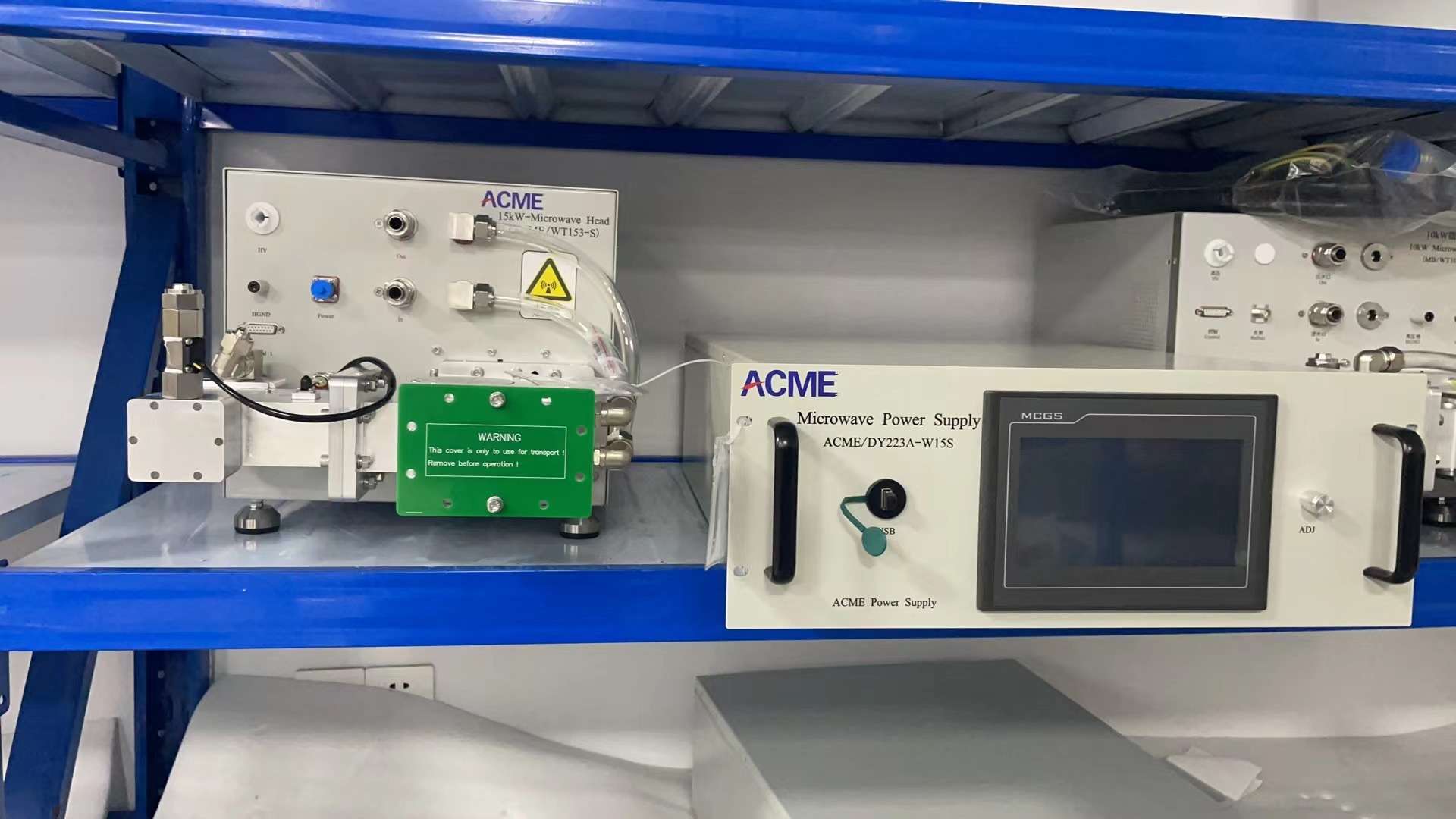
15 kW microwave head with cooling and external connection interfaces

15 kW Microwave Head

External cooling and connection interfaces illustrate why existing site utilities should be reviewed before a replacement configuration is confirmed.

Replacement Compatibility Principle

Existing electrical and cooling infrastructure should not be assumed compatible from power rating alone.

The site supply, cooling arrangement and connection conditions are reviewed together with the selected microwave generator configuration before the final replacement scope is defined.

Have site power or cooling information available?

Include it with the existing generator nameplate, photographs and installation data to improve the initial compatibility review.

See Required Data

Control & Communication Compatibility

Review How the Existing Machine Communicates with the Replacement Generator

A replacement generator may fit electrically and mechanically but still require changes to the equipment control interface. Existing machine control, communication and interlock requirements should therefore be reviewed before the final replacement configuration is confirmed.

Control Compatibility Relationship

现有设备

Machine / PLC / HMI

Existing operating commands, machine status, interlocks and control requirements.

Replacement Equipment

微波发生器

The required control and communication interface is confirmed for the actual project.

01

Operating Method

Identify how the existing equipment starts, stops, enables and regulates microwave operation.

02

Control Interface

Review the commands and machine-side signals required between the equipment and generator.

03

交流

Identify whether operating information or commands are exchanged through an existing communication interface.

04

Interlocks & Integration

Review how generator operation must coordinate with the surrounding equipment and existing safety conditions.
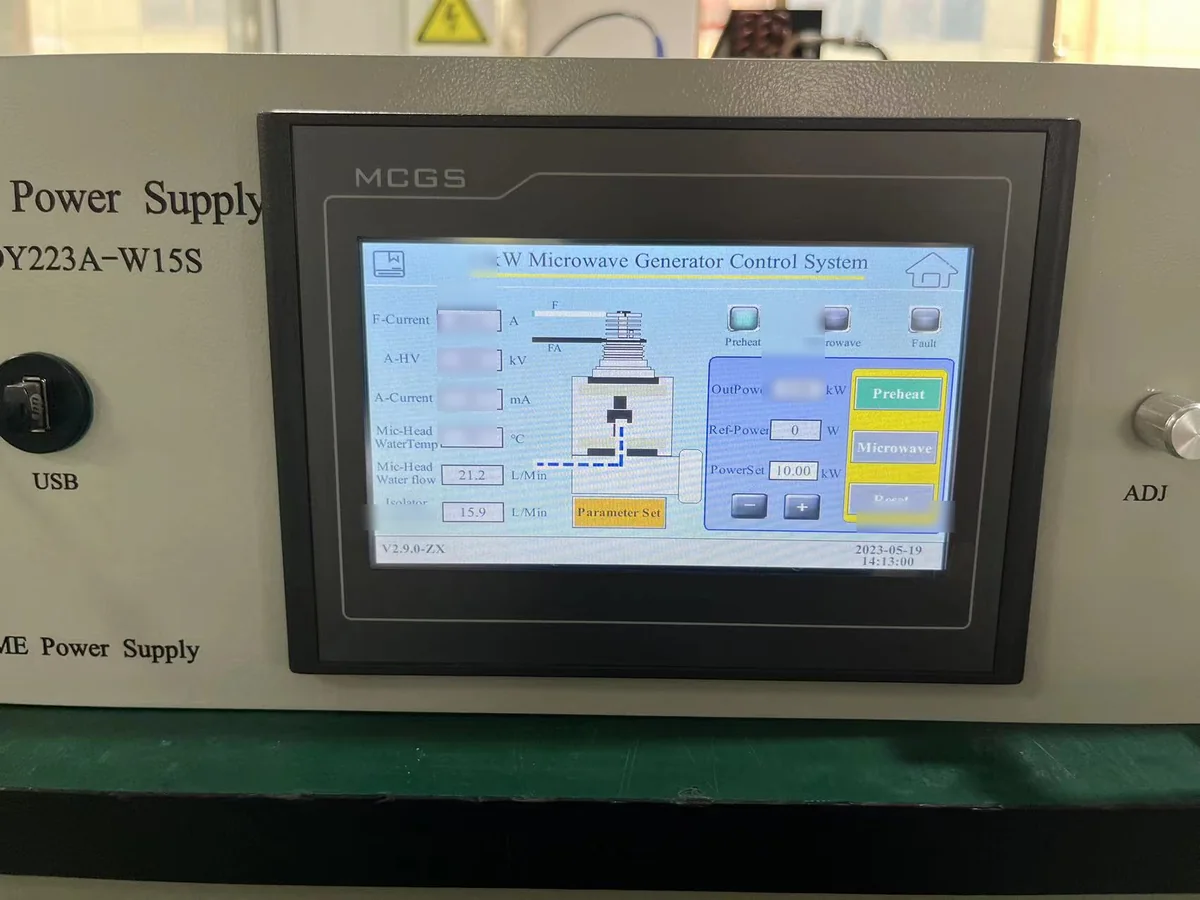
15 千瓦微波发生器 HMI 控制接口

Microwave Generator HMI

A real generator control interface illustrates why machine-side control requirements should be included in a replacement compatibility review.

Project Interface Boundary

Existing PLC or HMI infrastructure may be retained only after interface compatibility is reviewed.

Send the available control documentation and describe how the existing machine operates the microwave generator. Detailed signal mapping, wiring and project-specific control sequences are confirmed during the technical stage when required.

Have existing PLC, HMI or control documentation?

Include it with the generator nameplate and equipment information to improve the initial replacement review.

See Required Data

Reuse & Modification

What Existing Components Can Be Evaluated for Reuse?

Replacing a microwave generator does not automatically mean replacing every part of the existing system. Some infrastructure may remain usable, while other interfaces may require modification. The actual reuse and modification scope is determined from the complete compatibility review.

Evaluate for Reuse

Existing infrastructure that may remain usable after compatibility and condition review.

  • 安装空间可用
  • Selected waveguide sections
  • External cooling infrastructure
  • Existing machine control architecture
  • Site electrical infrastructure
  • Other external system components

May Require Modification

Interfaces or installation details that may need to be adapted for the proposed replacement configuration.

  • RF transition or connection
  • Mechanical mounting
  • Electrical connection
  • Cooling connections
  • Control or communication interface
  • Cable or utility routing

Confirm per Project

No reuse or modification decision should be assumed before the relevant interfaces and existing conditions are reviewed.

  • Final reusable equipment
  • Required interface changes
  • Replacement generator scope
  • Customer / supplier responsibility
  • Project-specific documentation

Final Decision

Reuse and modification are defined after compatibility review, not from the generator power rating alone.

01

Review Existing System

Collect equipment and interface information.

02

Evaluate Compatibility

Compare RF, mechanical, utility and control conditions.

03

Define Scope

Confirm what remains, what changes and what is supplied.

The goal is not to replace more equipment than necessary.

A structured compatibility review helps identify which existing items can be evaluated for retention and where changes may be required before the replacement scope is finalized.

Prepare Existing Data

Replacement Engineering Process

How the Microwave Generator Replacement Evaluation Works

A replacement project moves from existing-equipment information to a defined technical scope. The process is designed to identify compatibility requirements, interface changes and the proposed supply boundary before the final configuration is confirmed.

01 输入

Existing Equipment Data

Start with the existing generator and the surrounding equipment information available from the customer.

  • Manufacturer & model
  • Nameplate & photographs
  • Drawings and interface data
02 Review

兼容性审查

Compare the existing installation against the technical conditions required by the proposed replacement route.

  • Frequency & power
  • RF, mechanical & utilities
  • 控制要求
03 Scope

Replacement Scope Definition

Determine what can be evaluated for retention, which interfaces require attention and what should be included in the proposed supply.

  • Reuse review
  • Required modifications
  • Supply responsibility
工程评审 项目定义
04 Proposal

Technical Proposal

A suitable generator or system route can then be proposed based on the confirmed replacement requirements.

  • Proposed configuration
  • Project supply scope
  • Key interface conditions
05 Confirm

Interface Confirmation

Relevant project interfaces are confirmed before the final configuration moves into production or project preparation.

  • Dimensions & installation
  • Electrical, RF & cooling
  • Control interface
06 Verify

Verification & Delivery Preparation

The supplied configuration is checked against the agreed project scope before shipment and final delivery preparation.

  • Configuration check
  • Agreed interface review
  • Project documentation

Project Scope Boundary

Retrofit responsibilities and site modification scope are confirmed separately for each project.

Generator supply, interface adaptation, additional equipment modification, site work and customer-side responsibilities depend on the actual replacement project. These items are defined before the final technical and commercial scope is agreed.

Have an existing microwave generator to replace?

Start with the current generator information, nameplate, photographs and available interface data.

Send Existing Generator Data

Existing Generator Data Checklist

What Information Should You Send for a Replacement Review?

The more accurately the existing equipment is documented, the easier it is to identify compatibility issues before quotation. Start with the generator nameplate and basic system information, then add photographs, drawings and interface documents where available.

You do not need a complete engineering package before contacting us.

If some information is unavailable, send the existing brand, model, nameplate and equipment photographs first. Additional details can be confirmed as the replacement review progresses.

Group 01

Existing Generator

  • Manufacturer / brand
  • Model number
  • Nameplate photograph
  • 微波频率
  • 额定功率
  • Current fault or replacement reason

Group 02

电气

  • Existing electrical input
  • Available site power
  • Existing connection information
  • Electrical drawings, if available

Group 03

Mechanical & RF

  • Generator dimensions
  • Microwave-head location
  • 安装空间可用
  • 导波管/法兰信息
  • Connection photographs
  • Installation or RF drawings

Group 04

冷却

  • Existing cooling method
  • Cooling connections
  • Chiller or cooling-water arrangement
  • Available cooling infrastructure

Group 05

Controls & Project Information

  • Current operating method
  • Existing machine / PLC interface
  • Control or communication documents
  • Relevant interlock requirements
  • Quantity required
  • 目的地国家
  • Required delivery timing
  • Replacement or upgrade objective

Recommended Supporting Files

The most useful files are usually photographs and existing drawings.

You do not need to create new engineering documents just to make the first enquiry. Send what is already available from the existing equipment.

Nameplate photo
Generator photos
Waveguide / RF photo
Installation drawing
Electrical drawing
Control documentation

Minimum Starting Information

Not sure what to send first?

These five items are usually enough to start the first replacement discussion.

  • 01 Existing manufacturer
  • 02 Model number
  • 03 Nameplate photo
  • 04 Equipment photos
  • 05 Replacement reason

Ready to send your existing generator information?

Start with the information you already have. Additional technical details can be confirmed after the initial replacement review.

Send Existing Generator Data

Replacement Verification

Verification Against the Agreed Replacement Scope

Before shipment, the supplied microwave generator configuration can be checked against the agreed replacement scope and relevant project interfaces. This helps confirm that the delivered configuration corresponds to the technical basis established during the replacement review.
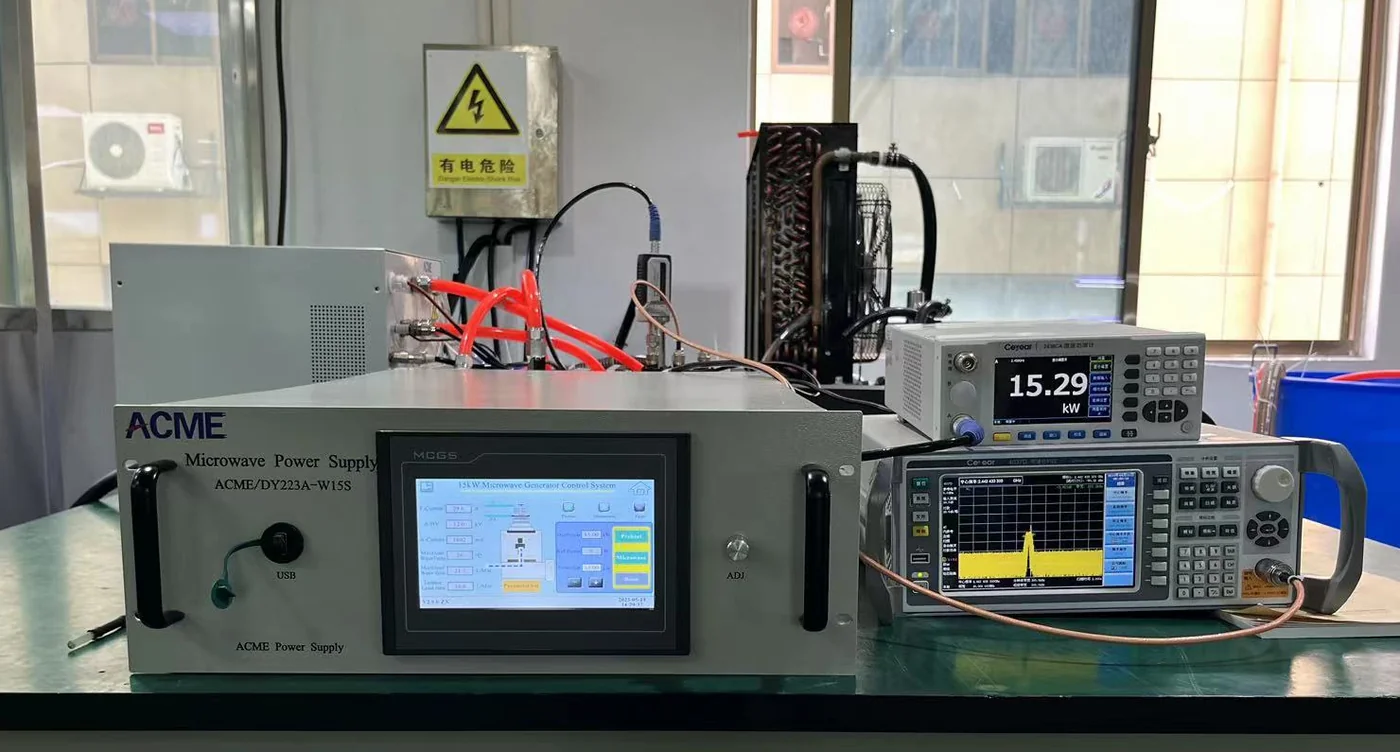
15 kW microwave generator functional test with HMI and measurement instruments

Microwave Generator Functional Verification

Functional checking of a microwave generator with HMI and measurement equipment before delivery preparation.

What Verification Confirms

Check the Supplied Configuration Against What Was Agreed

Replacement evaluation determines the proposed configuration and project interfaces. Verification then checks the supplied equipment against that agreed basis before delivery preparation.

01

配置检查

Confirm the supplied generator configuration corresponds to the agreed replacement requirement.

02

Relevant Interface Review

Review the applicable electrical, RF, cooling, mechanical and control interface requirements defined for the project.

03

功能 V验证

Relevant operating functions can be checked in accordance with the agreed configuration and project scope.

Replacement Evaluation

Establish Compatibility & Scope

Review the existing generator, RF path, installation, utilities and controls to determine the proposed replacement configuration and project boundary.

V验证

Check the Agreed Delivered Configuration

Confirm that the supplied equipment and relevant project interfaces correspond to the replacement scope established during the technical review.

Verification & Acceptance Boundary

Formal FAT or project-specific acceptance procedures are defined separately when required.

The replacement review establishes compatibility and supply scope. Verification checks the agreed delivered configuration. Where a project requires additional factory testing, acceptance criteria or project-specific procedures, the applicable scope is confirmed separately.

Need a replacement configuration for an existing microwave system?

Send the current generator information and available equipment data so the replacement scope can be reviewed before quotation.

Request a Replacement Review

Replacement FAQ

Microwave Generator Replacement Questions

These are the most common questions when an existing industrial microwave generator needs to be replaced, upgraded or evaluated for retrofit.

直接回答

Microwave generator replacement is a compatibility engineering task, not simply a same-frequency or same-power substitution.

The existing generator, RF path, mechanical installation, electrical supply, cooling and machine-control requirements should be reviewed together before the replacement configuration is confirmed.

01

Can I replace my existing microwave generator with another unit of the same power rating?

Not based on power rating alone. The replacement also needs to be reviewed for operating frequency, electrical input, RF connection, mechanical fit, cooling and control requirements. Two generators with the same rated kW may still require different installation or interface conditions.

02

Is matching the microwave frequency enough for a direct replacement?

没有。. Frequency is a fundamental compatibility condition, but it does not establish complete replacement compatibility. The existing RF path, electrical supply, mounting, cooling and machine interfaces must still be evaluated.

03

Can SDACME evaluate replacement of another manufacturer’s microwave generator?

Yes, replacement feasibility can be evaluated from the existing equipment information. The review is based on the actual generator and installation conditions rather than an assumption of brand-to-brand equivalence. Manufacturer, model, nameplate, photographs and available technical documents are useful starting information.

04

Can the existing waveguide and RF components be reused?

They can be evaluated for reuse, but reuse is not automatic. Existing waveguide sections and related RF components should be reviewed for frequency, interfaces, geometry, orientation, condition and the proposed replacement configuration. A connection change or transition may be required in some projects.

05

Can the existing electrical supply and cooling system be retained?

Possibly, subject to compatibility review. Electrical and cooling requirements are model- and project-specific. Existing site power, connection conditions, cooling arrangement and available utilities should therefore be reviewed against the proposed replacement configuration before they are retained.

06

Can the existing PLC, HMI or machine control system be retained?

Existing control infrastructure may be retained when the required interfaces are compatible. The review considers how the machine operates the generator, what commands and status information are required, and how the replacement generator must coordinate with the surrounding equipment.

07

What information is needed to start a microwave generator replacement review?

Start with the existing manufacturer, model, nameplate photograph, equipment photographs and replacement reason. Frequency, power, electrical input, dimensions, waveguide information, cooling details, controls and existing drawings can be added when available.

08

Is every replacement project a direct drop-in replacement?

没有。. Some installations may allow substantial reuse of existing infrastructure, while others require changes to RF connections, mounting, electrical connections, cooling or controls. The required modification and supply boundary are defined for the actual project.

Still unsure whether your existing generator can be replaced?

Send the current generator nameplate and a few equipment photographs. A replacement review can begin before every technical document is available.

Request a Replacement Review

Replacement RFQ

Start Your Microwave Generator Replacement Review

If an existing industrial microwave generator is obsolete, damaged or no longer suitable for the equipment, send the current generator information for an initial compatibility review. SDACME can evaluate the replacement requirement across the relevant electrical, mechanical, RF, cooling and control interfaces.

✓ Existing generator review
✓ Compatibility assessment
✓ Reuse & modification review
✓ Replacement scope definition

You can start with partial information. Existing manufacturer, model, nameplate photographs and equipment photographs are usually enough for the first discussion.

微波发生器更换与改造

Compatibility review · Project-specific replacement scope