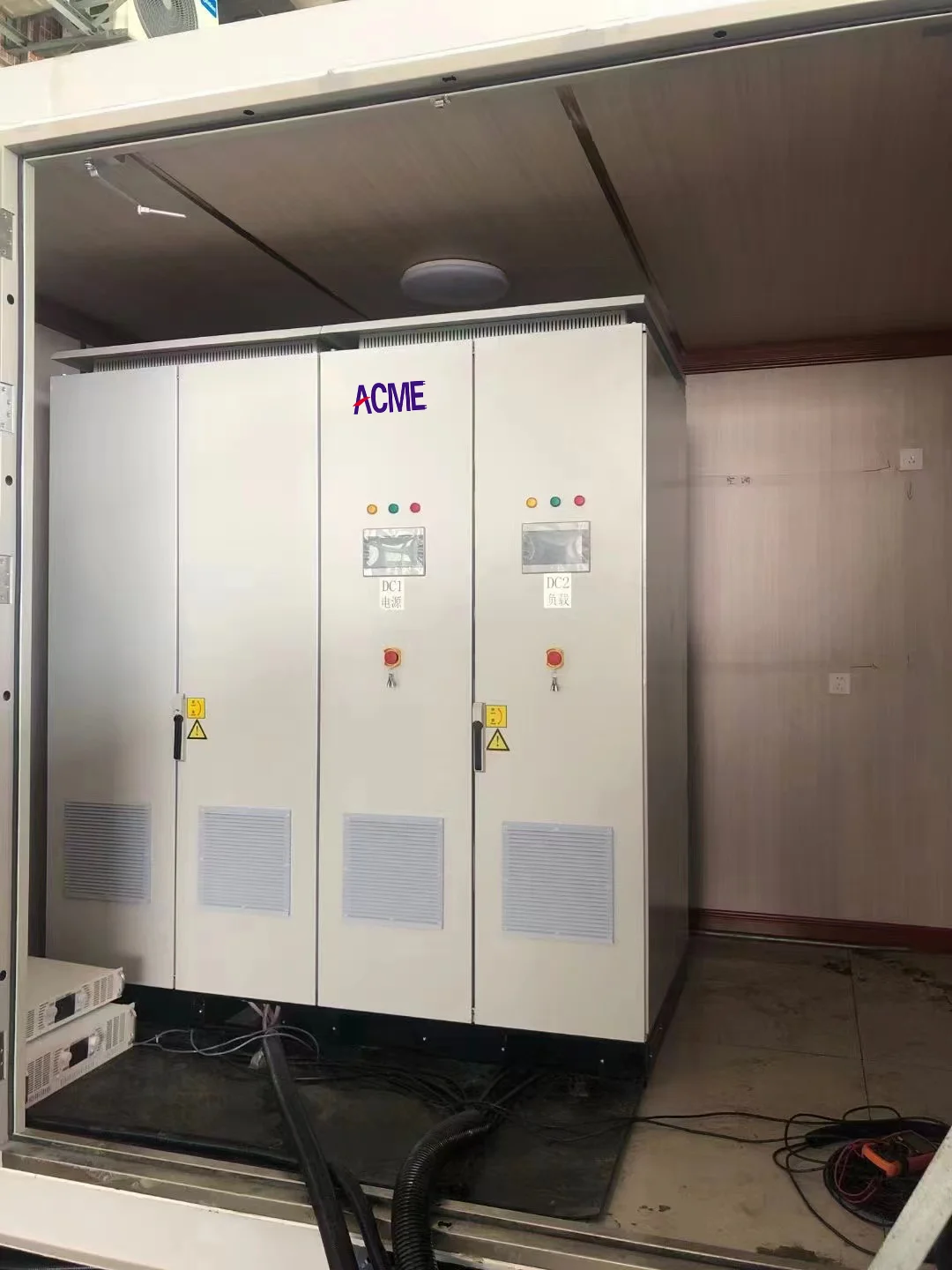
High-Power Battery Emulation · Bidirectional DC Testing

High-Power Battery Emulator & Battery Simulator

Test your DUT without waiting for a physical battery pack to reach the required condition. Simulate programmable battery behaviour for inverters, EV charging equipment, PCS and other battery-connected DUTs.

Configure the system around your required voltage, power level, bidirectional power flow and battery-emulation functions.

Send Your Test Requirement Approximate specifications are enough to start.
Up to 1000 V High-voltage project configurations
Up to 500 kW High-power system capability
Source ↔ Sink Bidirectional DC power flow
Battery Modeling OCV-SOC · Internal resistance · Profiles

Voltage and power capability depend on the selected system configuration.
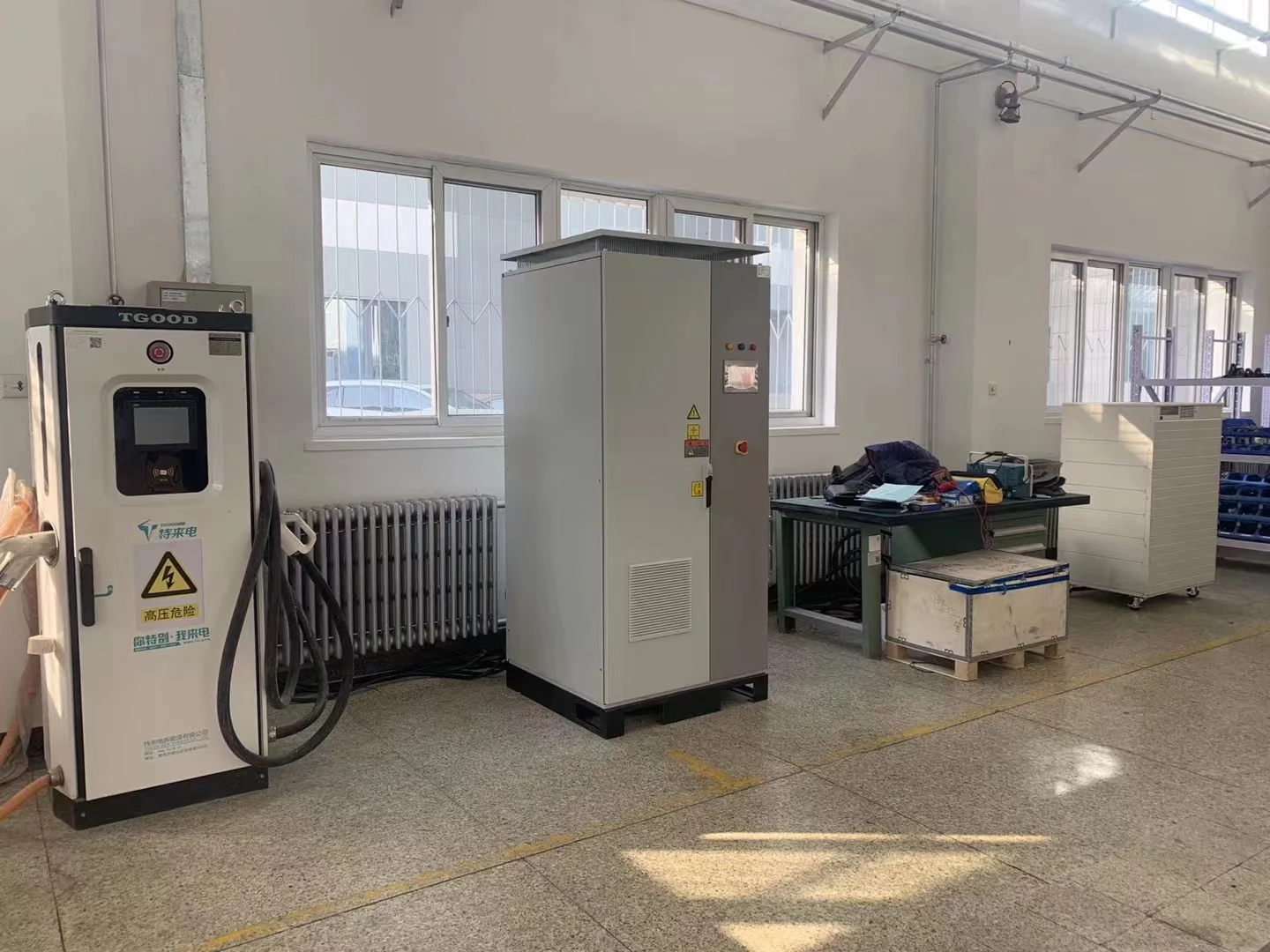
Typical DUTs: Inverter · EVSE · PCS · OBC / DC-DC · Other battery-connected equipment
Battery emulator used with EV charging equipment in a DC test laboratory

Start Your Test Project

Have a DUT and electrical range?

Send the DUT type, approximate voltage and power. We can review the configuration from there.

Get a Configuration

Why Battery Emulation

Control the Battery Conditions Your DUT Needs to See

Whether you are replacing a physical battery, developing a new DUT or building a larger test system, battery emulation gives you more control over the electrical conditions used during testing.

Your project does not have to match one fixed test example.

Different DUTs, voltage ranges, power levels, power-flow directions and test objectives can be reviewed around the actual project requirement.

01

Reach the Required Battery Condition Faster

A physical battery may need to be charged or discharged before the voltage, SOC or operating condition required for the test is available.

With Battery Emulation

Move directly to programmable battery-side conditions according to the DUT and test objective.

02

Repeat or Change Test Conditions

Development and validation often require one operating condition to be repeated and then changed to another voltage, SOC or load condition.

With Battery Emulation

Configure and reproduce defined operating conditions instead of relying on the changing state of a real battery.

03

Support Different Power-Flow Scenarios

Depending on the DUT and operating state, the test may require DC power to be supplied, absorbed or transferred in both directions.

With Battery Emulation

Source, sink and bidirectional operating requirements can be reviewed around the actual application.

Have a different DUT, voltage range or test requirement?

Send us what you are testing and the approximate electrical range. We can review the project even if the final specification has not been fully defined yet.

Send Your Test Requirement

Battery Simulation Capabilities

Simulate the Battery Conditions Your DUT Needs

Go beyond a fixed DC output. Configure battery-side behaviour for different operating states, repeat defined conditions and adapt the simulation around the actual DUT and test objective.

Battery Behaviour → DUT

Reproduce the electrical conditions the DUT needs to see.

Combine programmable battery behaviour with bidirectional DC power operation for development, validation and test-bench applications.

Battery Conditions SOC · OCV · internal resistance · curves · profiles
↓
Battery Emulator Programmable behaviour · Source ↔ Sink
↕
Your DUT Inverter · charger · PCS · converter · other battery-connected equipment
Need a different battery behaviour or test sequence? Send the operating condition you need to reproduce. Project-specific profiles and battery behaviour can be evaluated around the application.

01

OCV–SOC Behaviour

Reproduce battery voltage across simulated states of charge.

Configure the relationship between open-circuit voltage and SOC for different operating conditions.

02

Internal Resistance

Represent battery-side voltage response as current changes.

Configure resistance behaviour for charging, discharging and changing DUT operating conditions.

03

Dynamic SOC

Change simulated battery state as energy flows during testing.

SOC behaviour can change as the DUT draws power from or returns power to the emulator.

04

Custom Battery Curves

Configure battery behaviour around different test requirements.

Battery curves and applicable charge/discharge profiles can be configured or evaluated around the project.

05

Source ↔ Sink Operation

Support tests where DC power needs to flow in either direction.

Supply power to the DUT and absorb returned energy for charge, discharge and regenerative scenarios.

06

Programmable Test Profiles

Build repeatable conditions instead of one fixed operating point.

Defined profiles, operating points and project-specific sequences can be reviewed for the required workflow.

Real Control Interface

Programmable Operating Conditions

Actual HMI examples show programmable profiles and defined operating-point functions. Displayed values represent example operating conditions, not universal system ratings.
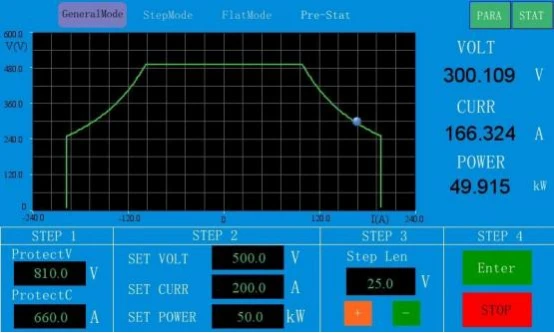
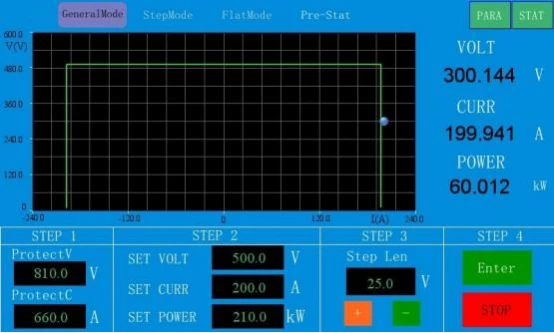
Battery emulator HMI showing programmable test profile
Programmable Test Profile
Battery emulator HMI showing defined operating condition
Defined Operating Condition

Need to reproduce a battery condition not shown above?

Tell us your DUT, approximate voltage and power range, and the battery behaviour or test sequence you want to reproduce. We can evaluate the suitable configuration around the project.

Send Your Test Requirement

DUT Applications

What Are You Testing?

Battery emulation can support a wide range of battery-connected power electronics and test systems. Start with your DUT and electrical range, then review the configuration around the actual application.

Power Electronics

Inverter & Motor Controller

Programmable battery-side DC conditions for inverter, motor-controller and electric-drive development or validation.

Typical Focus DC range · high power · regeneration · changing battery conditions

EV Charging

EV Charger & EVSE

Reproduce the vehicle-battery side when evaluating DC charging equipment under programmable charging conditions.

Typical Focus Charging voltage · charging power · profiles · battery behaviour

Vehicle Electronics

OBC & DC-DC Converter

Evaluate battery-side operating conditions according to the converter topology and project requirement.

Typical Focus Voltage range · power level · power direction · profiles

Energy Storage

PCS & Energy Storage Converter

Simulate battery-side DC conditions for charge/discharge operation and bidirectional power conversion.

Typical Focus DC bus · bidirectional power · SOC · programmable operation

Test Systems

Vehicle & Powertrain Test Bench

Integrate programmable bidirectional DC power and battery behaviour into larger vehicle, drivetrain or component test systems.

Typical Focus Integration · automation · DUT conditions · sequencing

Open Application

Other Battery-Connected Equipment

If your DUT is not listed here, send the topology, approximate electrical range and what the battery side needs to reproduce.

Start With DUT · voltage · power · direction · test objective

Your Application Does Not Need to Match This List

Have a different DUT or test architecture?

Send us what the equipment is, the approximate voltage and power range, and what you need to reproduce on the battery side. We can evaluate the project before the final specification is fully defined.

Send Your Test Requirement

Configuration Fit

Start With Your DUT, Voltage and Power

A battery emulator configuration is selected around the equipment being tested, the required DC range, maximum power and the direction of power flow. You do not need a complete specification to begin.

01

Your DUT

Tell us what you are testing: inverter, charger, PCS, converter, test bench or another battery-connected device.

02

DC Voltage Range

Approximate minimum and maximum DC voltage is enough for the first configuration review.

03

Maximum Power

Provide the expected kW level or approximate peak power requirement.

04

Power Direction

Tell us whether the DUT draws power, returns energy, or requires bidirectional operation.

Electrical Range & Project Capability

Standard configurations cover a broad DC range, while higher-voltage and higher-power projects can be evaluated according to the system architecture.

24–800 VDC Standard configuration range
Up to 1000 V Project-configured capability
Up to 500 kW High-power project capability
Source ↔ Sink Bidirectional DC operation
Different voltage, power or architecture?

Do not stop at the ranges shown above. Send the required operating range and DUT information so the project can be reviewed for a suitable configuration.

Approximate values are enough for an initial review.

DUT + voltage + power + power direction gives us enough information to start discussing the configuration.

Check My Configuration

工程与 V验证

Built Around Real Test Requirements

A high-power battery emulator is not selected from one universal specification. The system is configured around the DUT, electrical range, power flow and test objective, then verified before delivery.
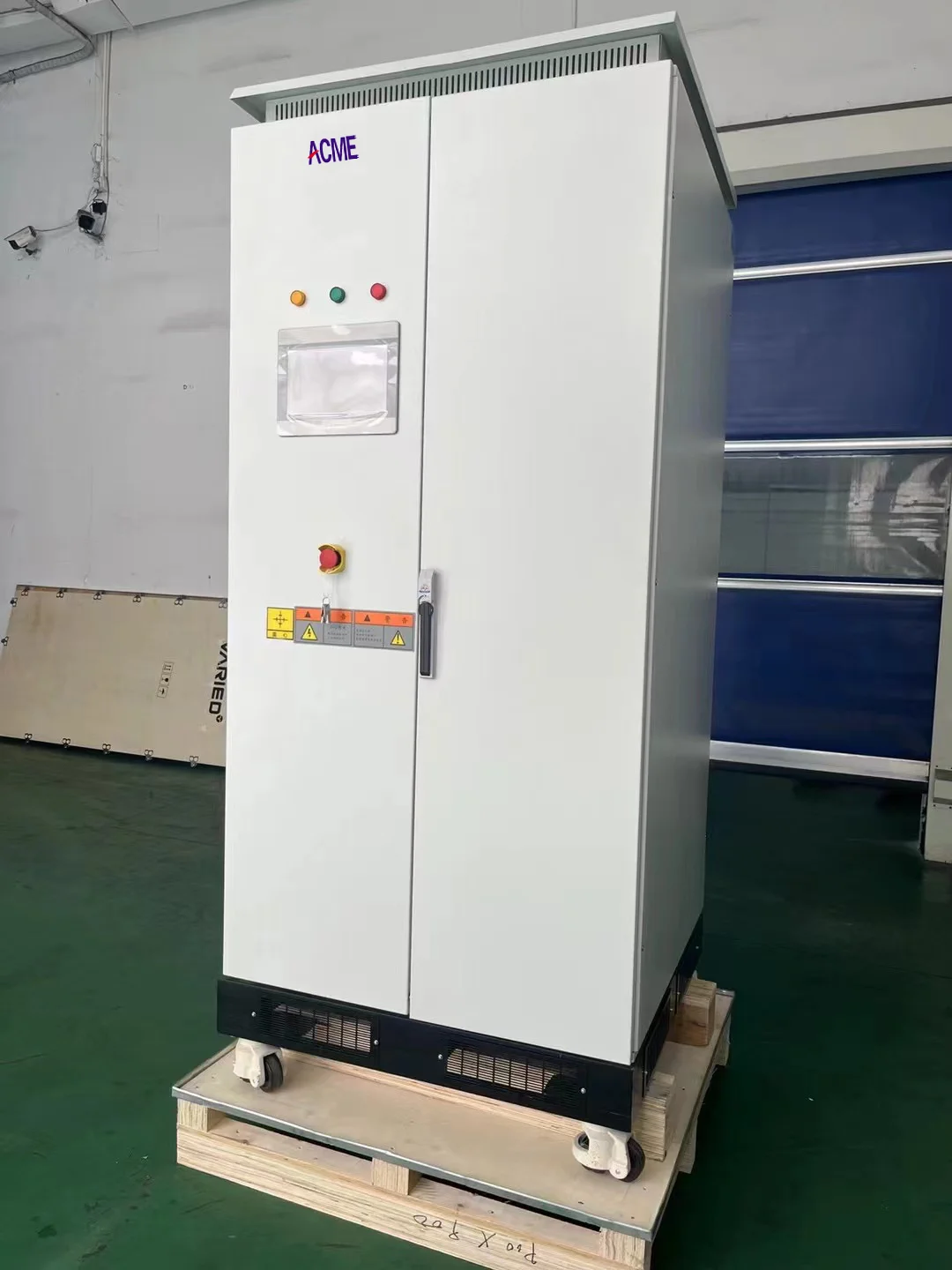
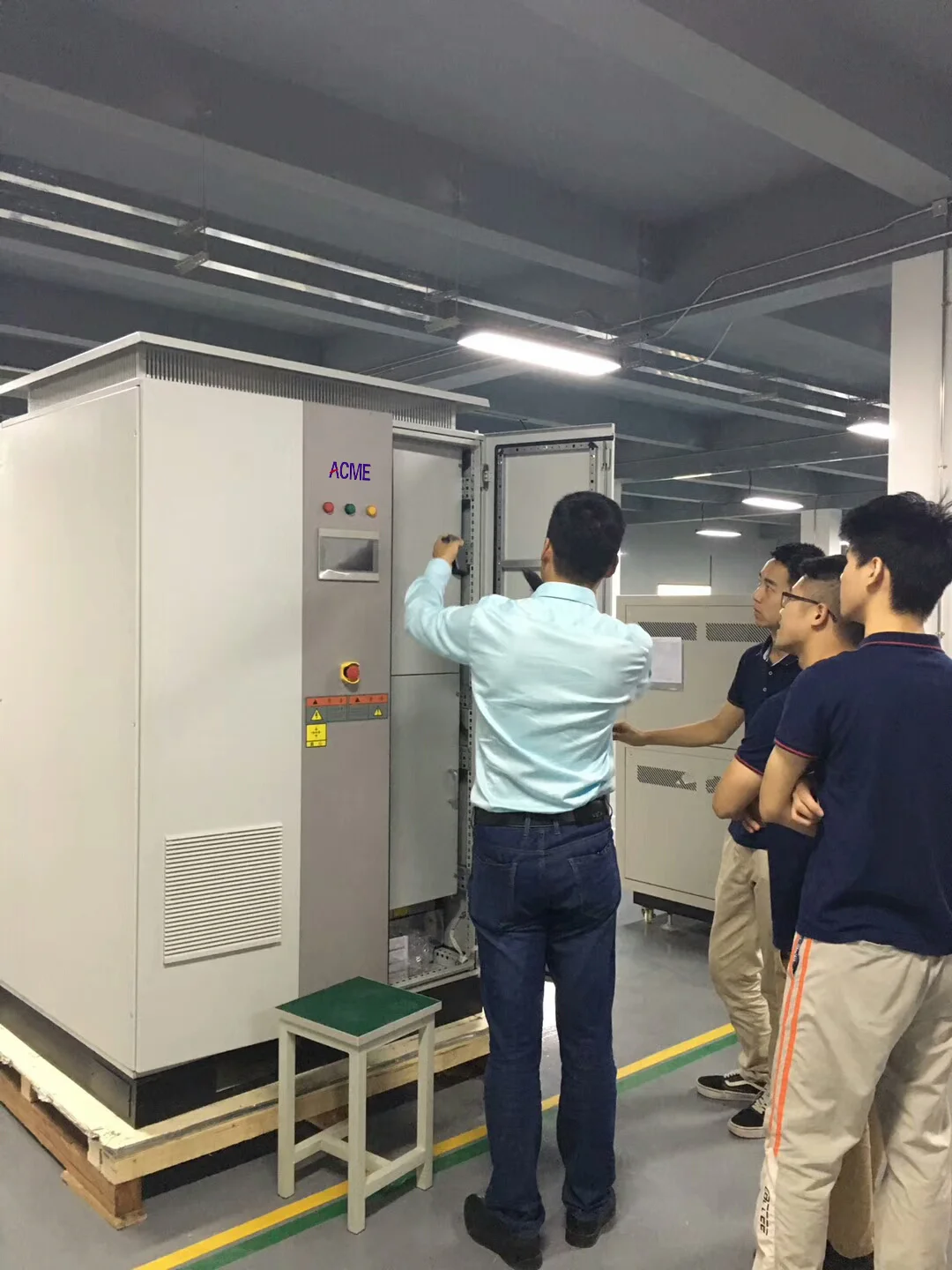
High power battery emulator cabinet in factory
Real High-Power DC Hardware
Bidirectional DC power system during factory inspection
Factory Inspection & Verification
Battery emulator system installation
System Installation

Real DC Power Hardware

Cabinet and system configurations are built around the required voltage, power and bidirectional operating requirements.

V工厂认证

Output behaviour, source/sink operation, response, protection functions and control operation can be checked before delivery.

Project-Based Configuration

The recommended solution depends on the actual DUT and test objective, rather than forcing every project into one fixed model.

Factory Verification Can Include

The exact verification plan depends on the selected configuration and project requirements.

Output Performance
Source / Sink Operation
Load Response
保护功能
HMI / Control Operation
Extended / Aging Operation
步骤 01

Send Your Requirement

DUT, voltage, power and approximate test objective.

步骤 02

Configuration Review

Review system range, power direction and battery-emulation needs.

步骤 03

Recommended Solution

Confirm the proposed configuration and quotation for the project.

Ready to review your test requirement?

Send the information you already have. Missing technical details can be confirmed during the project review.

Get My Recommended Configuration

Start With What You Know

What We Need to Start

You do not need a complete technical specification. Basic project information is enough for an initial review.

What are you testing? Inverter, EVSE, PCS, OBC, DC-DC converter, motor controller, test bench or another battery-connected DUT.
Approximate DC range Voltage range and maximum power, if already known.
Power-flow direction Source, sink or bidirectional operation, if relevant to your test.
Battery behaviour or profile SOC, OCV, internal resistance, battery curves or dynamic operating profiles, if required.
Control & integration Tell us if the system needs to connect with a test bench, supervisory PC or external controller.
Your test objective Tell us what battery behaviour, operating condition or test result you need to reproduce.

Project Requirement Form

Send Your Test Requirement

Tell us what you are testing and your approximate electrical requirement. We will review the configuration based on your project.

Basic information is enough to start. Exact technical parameters can be confirmed later.
请输入完整的 WhatsApp 号码,包括国家代码,这样我们的工程师就可以直接联系您。.