一次事件即可在短时间内改变系统的多个部分。保护继电器可能会启动;断路器可能会打开;变流器可能会停止运行;输出电压会消失;PLC控制系统可能会出现异常;随后还会出现其他报警。.
所有迹象都可能是真实的,但即使在行程结束后报警仍然可见,但这并不一定是引发这一事件的事件。.
因此,一项有用的调查需要结合多种类型的记录:
- 事件序列记录 帮助确定哪些独立的变化先发生。.
- 历史趋势 展示中断之前和中断后的运营状况。.
- 波形记录 捕捉事件期间的快速电气行为。.
- 运营记录 添加命令、模式更改以及用于解释序列的其他相关信息。.
目标不是尽可能收集更多的数据。目标是保留在正确的时间、分辨率下收集到的正确证据,并具备足够的背景信息,以便将引发事件与随后发生的反应区分开来。.
为什么最后警报可能不是根本原因
岸电系统包含多个保护、控制和切换层。.
根据项目的不同,停机可能涉及进线开关柜、变压器、调速器、输出开关柜、泊位连接设备、保护继电器、PLC控制系统以及船舶的电气系统。.
因此,一个初始条件可以产生如下的序列:
后来的记载并不一定都是错的。它们只是描述了同一事件链中的不同环节。.
故障指示会告知工程师某个情况的确发生了。但它本身并不能确定该事件的起因。.
因此,故障诊断需要具备更多功能,而不仅仅是简单的报警屏幕。工程师需要具备足够的历史数据,以便能够重建保护动作、切换状态、控制变化以及中断期间的电气状况。.
在岸电监测项目中,这些信息可以包括事件顺序记录、历史曲线、保护信息、运行日志和干扰记录。.
诊断任务是把它们按正确的顺序排列。.
从共同的事件时间线开始
事件序列记录建立了秩序
事件序列记录对于诸如以下这些离散变化而言非常有用:
- 断路器开启或关闭
- 保护拾取或行程
- 转换器已准备就绪,运行状态或故障状态
- PLC允许更改
- 紧急停止输入
- 连接准备好的信号
- 相关操作命令
- 重置操作
目的不是记录控制系统中所有可能的数字点。更有用的问题是:
如果保护继电器在转换器进入故障状态之前启动,那么调查的方式与输出断路器开启前出现的转换器故障截然不同。.
在单独查看多个设备日志时,可能很难发现这些差异。.
为什么时间同步很重要
当来自不同设备的标记时间戳能够得到足够的可靠性时,它们才对跨设备诊断有用。.
保护继电器、转换器控制器和PLC都可能记录到一起的事件。如果它们的时钟有未知偏移量,这些事件的实际顺序可能与实际顺序不符。.
采用统一的时间参照方法,可以把不同的记录置于同一事件的时间线中。.
精准的时序同步是电力系统自动化体系中的一项重要组成部分。所需精度仍取决于所研究的事件。慢热态趋势和快速的保护序列并不需要相同的时序分辨率。.
因此,该项目应明确规定:
- 哪些设备需要同步时间?
- 可用的同步方式
- 所需的事件处理
- 同步状态如何进行监控
- 如果时间源暂时不可用,会发生什么情况?
在一种岸电监测配置中,基于 GPS 的同步提供了通用时间基准。这只是一个工程实施方案,并非普遍要求。.
这些记录背后的系统关系将在我们的文档中进一步解释。 岸电系统架构与组件 .
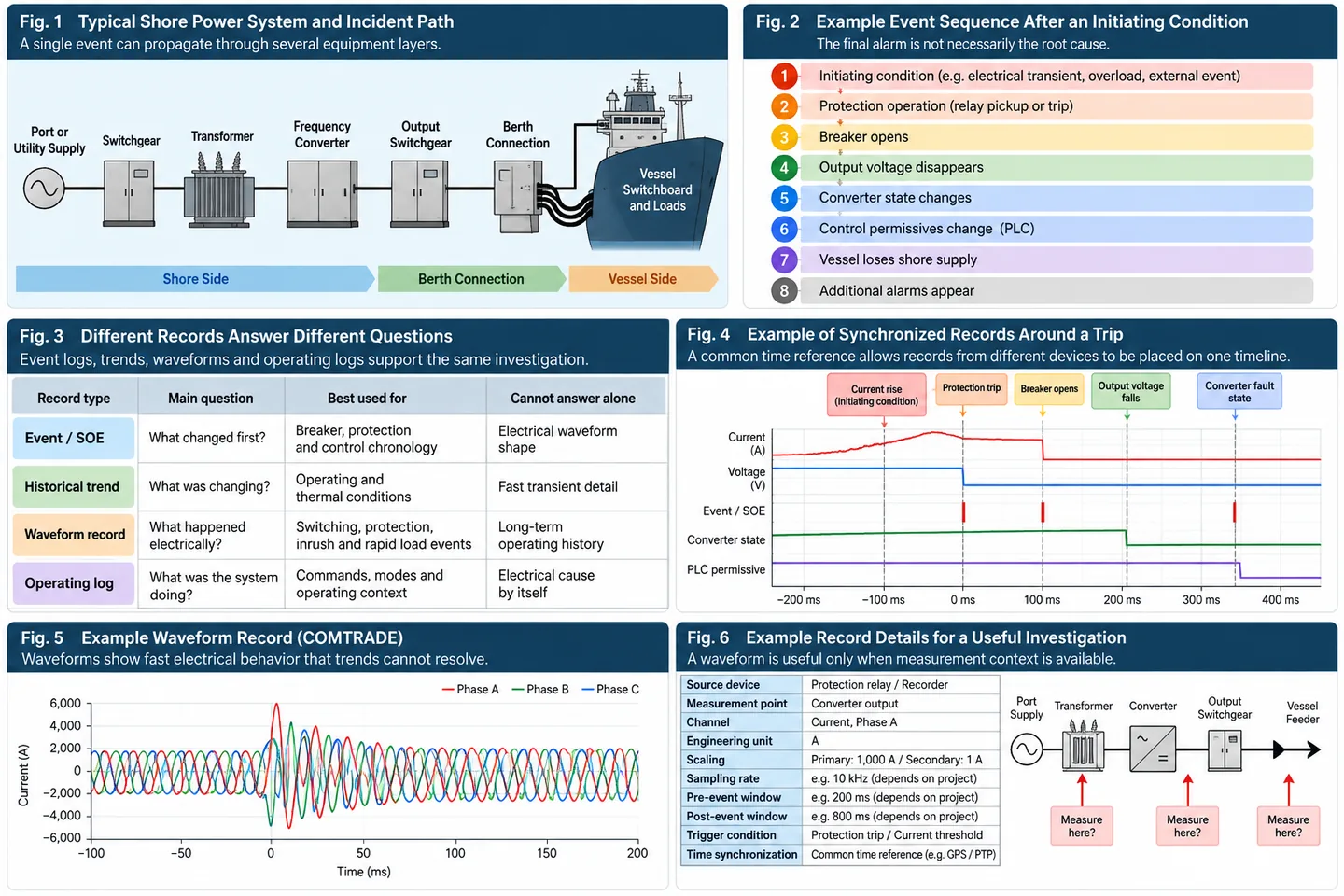
事件日志、趋势和波形解答了不同的问题
这些记录都与同一项调查有关,但它们执行不同的任务。.
| 记录类型 | 主要问题 | 最好用在 | 无法单独回答 |
|---|---|---|---|
| 活动/SOE | 什么先发生了变化? | 断路器保护与控制历史 | 电信号波形形状 |
| 历史趋势 | 到底发生了什么变化? | 操作和热条件 | 快速的瞬态细节 |
| 波形记录 | 电气方面发生了什么事? | 开关、过流保护、瞬态负载事件 | 长期运营历史 |
| 操作日志 | 系统当时在做什么? | 命令、模式和操作环境 | 电气原因本身 |
趋势显示发展态势
历史趋势有助于显示停机后的运行状况。.
根据诊断范围的不同,有用的信号可能包括:
- 电压
- 当前
- 频率
- 主动功率和被动功率
- 功率因数
- 变压器温度
- 温度转换器
- 冷却系统或辅助系统状态
一种趋势可以显示出旅行之前是否存在某种状况的发生。例如,温度的逐渐升高是一种不同于突然发生的短暂现象的证据。.
因此,记录间隔应该遵循每个信号的用途。 缓慢的热态条件和快速的电场活动具有不同的时间尺度。.
波形显示快速的电气行为
历史上的趋势可能在断电之前显示出正常电压,而在断电之后又显示出零电压,而没有透露这两段期间发生了什么情况。.
对于快速的事件,工程师可能需要即时的电压和电流记录,以便检查以下情况:
- 当前上涨
- 电压波动
- 瞬态切换
- 变压器供电
- 发动机启动
- 快速加载应用或拒绝应用
- 同步问题
- 保护行动
对于正常运行历史而言,适合的趋势仍然可能不够快,无法解释快速切换或保护事件。.
瞬态波形和事件数据是电力系统中建立的工程记录类型。IEC 60255-24定义了COMTRADE格式,用于交换瞬态波形、事件、故障和测试数据。.
COMTRADE 不属于所有岸电项目所必备的必备条件,但通过标准化出口,可以更轻松地在设备所在国以外交换和查看相关数据记录。.
保留旅行之前发生的事情
如果记录器启动时间过晚,则会保留系统的响应,但却不会捕捉导致该响应的条件。.
如果记录仅在触发器发生时开始,那么启动过程中的部分电气行为可能已经完成。.
这就是为什么干扰记录可以包含事件前和事件后的信息。.
为什么预赛数据很重要
假设在变压器启动时发生了一起开关故障。最终的事件记录可能只显示了一起开关故障,而更有用的诊断问题在于在故障发生之前,电压和电流发生了什么变化。.
关于这一特定瞬态的更多细节可以在 岸上供电系统的过流电流 .
当大型船舶的载荷开始增加时,或者同步转移造成系统条件迅速变化时,同样也适用该原则。 在传输过程中逆功率行为将在单独的章节中讨论。 在从岸上转移到舰艇期间逆变电源 .
预活动窗口应该足够长,能够捕捉到引发触发事件之前的状况。.
岸电系统的预触发时间没有统一的标准。这取决于所调查的事件、保护程序、记录仪的功能以及调查的目的。.
只有在知道它是在哪里测量的情况下,波形才是有用的。
没有测量背景的信息的波形很难可靠地解释。.
以下可能成为目前纪录:
- 港口或公用事业的进料供应
- 转换器输入
- 转换器输出
- 岸上输送机
- 船载式输送机
同样的当前增长在每个点上可能具有不同的含义。.
因此,有效的干扰记录需要足够的信息来识别信号及其位置,包括相关信息:
- 源设备
- 测量点
- 频道
- 阶段
- 工程部门
- 信息的可扩展性
如果船流在电压扰动之前出现上升,则船侧操作事件可能值得调查。如果首先出现的是上游岸边扰动,而船流尚未发生变化,则调查的方向就会改变。.
因此,应将波形与单行图表以及事件时间线结合解读,而不是将其视为孤立的图像。.
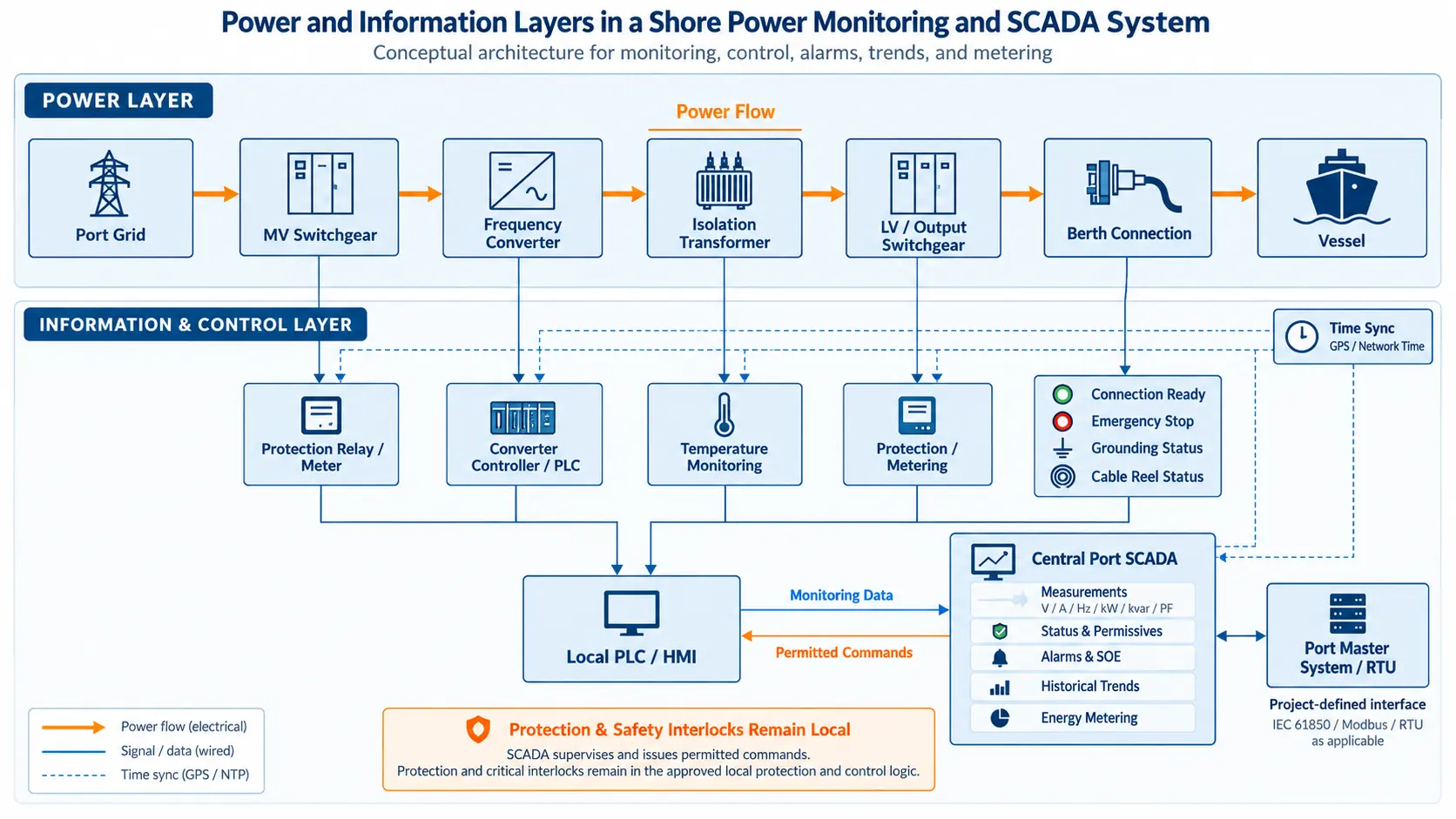
沿岸的证据——埃 V塞尔电力走廊
岸上电源事件可以通过多个设备层传播:
报告最后行程的设备并不一定是事件起源的地点。.
例如,转换器故障指示可能是在下游电气事件或上游切换条件响应的一部分。.
因此,调查应该遵循权力与控制的路径,而不应该停留在第一个报告故障的设备上。.
比较 Shore 和 Vessel 信息(如有)
有些事件会越过海岸线——也就是船只的界限。.
相关船舶信息可能包括:
- 发电转移状态
- 重大负载操作
- 船只控制面板状态
- 大功率电机启动
- 连接和传输序列
在其中一个船舶连接项目中,操作过程包括对发电机负荷转移和船上泵启动测试。这些都是控制操作事件,而非故障事件,但它们说明了船舶操作如何能够对岸上系统产生可见的电气变化。.
如果船上记录有,那么与岸上数据进行比较可以帮助区分:
各项目提供的船身信息量各不相同。 这种接口应该在系统工程阶段定义,而不是在事件发生后才假设存在。.
关于更广泛的设备和连接相关内容,请参阅我们的 商业岸上电力系统 .
Preserve the Record Long Enough to Investigate It
A fault record is useful only if it is still available when the engineering investigation begins.
This matters in shore power applications because operation can be intermittent. An event may occur during one vessel call while detailed technical review takes place later.
Additional events can be recorded in the meantime, and some recording systems can overwrite older disturbance records when their allocated storage becomes full.
Retention is therefore part of diagnostic design.
Retention Should Follow the Investigation Workflow
The required retention period depends on factors such as:
- vessel-call frequency
- expected event frequency
- reporting procedure
- likely delay before engineering review
- waveform file size
- contractual or regulatory recording requirements
The useful design question is not simply:
那就是:
Export the Record for Engineering Review
Important records also need to be retrievable in a form engineers can use.
An investigation may require comparison of:
- relay events
- converter records
- SCADA history
- waveform files
- breaker states
- operating logs
The project should therefore define how relevant event and disturbance records can be exported for engineering review.
Include Operator Actions in the Incident Timeline
Not every important event is generated automatically.
The timeline may also include:
- manual breaker commands
- start or stop commands
- 重置操作
- operating-mode changes
- parameter adjustments
Shore power control projects can record relevant operations and parameter changes so they remain available during later investigation.
A command immediately before a trip may be relevant, but the electrical measurements, protection records and equipment response still need to establish how that action relates to the event.
The operating log completes the timeline. It does not assign blame.
Verify the Recording Chain Before the First Real Incident
A history page on an HMI does not prove that the available records will be sufficient after a real trip.
The recording chain should be checked under controlled conditions during FAT or commissioning.
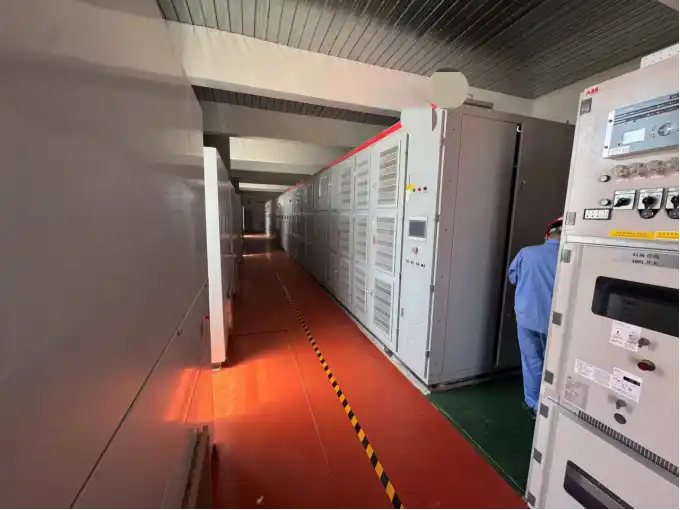
A practical verification can follow a known event from beginning to end.
1. Create a Known Event
Use an approved test condition such as a simulated alarm, controlled state transition, permitted breaker operation or controlled electrical event.
2. Confirm the Local Device Record
Check that the relevant relay, controller or converter identifies the expected event and records the required timestamp and state.
3. Check PLC, HMI and SCADA Records
Confirm that the event reaches the expected higher-level system and appears in a consistent sequence.
4. Check the Historical Trend
Verify that useful operating data are available before and after the event.
5. Check the Disturbance Record
Where waveform recording is required, verify:
- trigger operation
- pre-event data
- post-event data
- correct channels
- phase identification
- measurement location
- scaling
6. Compare Device Timing
Confirm that records from separate devices can be placed on a usable common timeline.
7. Export the Records
Check that an engineer can retrieve the event and waveform files outside the live HMI session.
8. Reconstruct the Known Event
The final question is simple:
In project testing, waveform recording has been used throughout controlled tests so that electrical responses could be reviewed afterward.
That same principle can be applied to the diagnostic recording chain before commissioning is complete. For related manufacturing and verification work, see 岸电制造和FAT .
Define the Diagnostic Recording Scope Before Procurement
A specification that says only “monitoring system with alarm history” does not define a complete fault-diagnosis capability.
The recording scope should be agreed before equipment selection and control-system configuration are complete.
Event Records
- required protection events
- breaker states
- important control states
- relevant operator actions
- event-resolution requirement
Time Synchronization
- devices requiring synchronization
- supported synchronization method
- required timing accuracy
- response to loss of the time source
Historical Trends
- required channels
- recording intervals
- retention
Waveform Records
- electrical channels
- measurement points
- trigger conditions
- pre-event window
- post-event window
- required sampling capability
Data Handling
- retention
- storage and overwrite behavior
- export requirements
- backup requirements where applicable
Shore–Vessel Information
- vessel-side signals available to the shore system
- transfer and operating information that can be retained
- responsibility for post-event data collection
V验证
- FAT recording checks
- commissioning or SAT checks
- required exported test evidence
These requirements should follow the diagnostic problems the project actually needs to solve.
Higher sampling rates, more recording channels and longer retention can provide more information, but they also increase storage, configuration, integration and review effort.
常见问题解答
事件日志和趋势之间的区别是什么?
An event log records discrete changes such as a breaker opening, protection operation or control-state change with a timestamp.
A trend records how a measured value such as voltage, current, power or temperature changes over time. They answer different diagnostic questions and are often used together.
何时需要进行波形记录?
Waveform recording is useful when an investigation depends on fast electrical behavior that ordinary historical trends cannot resolve adequately.
Examples include switching events, protection operation, transformer energization, rapid load changes and synchronization-related disturbances. The required channels and sampling capability depend on the project.
为什么岸上供电故障诊断中需要同步时间?
Because event records can come from several devices. If relay, converter, PLC and SCADA timestamps cannot be compared reliably, engineers may not be able to determine which event occurred first.
The required synchronization method and accuracy depend on the events that need to be distinguished.
岸上供电故障记录应该保留多久?
There is no universal retention period. Retention should reflect vessel-call frequency, event frequency, reporting requirements and the realistic delay between an incident and engineering review.
Critical disturbance records also need to remain available before they are overwritten.
HMI 能自动识别岸电装置故障的根本原因吗?
An HMI can present alarms, trends and event history, but those records still require engineering interpretation.
Root-cause diagnosis may require event chronology, electrical measurements, protection records, waveform data and shore–vessel operating context. A final alarm alone cannot reconstruct every incident.
技术参考
- IEC/IEEE 80005-1 — High-voltage shore connection systems; system scope includes control, monitoring, interlocking and power-management functions.
- IEC 60255-24 — COMTRADE format for transient waveform, event, fault and test data.
- IEC/IEEE 61850-9-3 — Precision time protocol profile for power utility automation.
Build Fault Records Before the First Incident
Fault diagnosis is much easier when the recording scope is defined before commissioning rather than after the first unexplained trip.
For an engineering review, provide the available:
- single-line diagram
- protection and control architecture
- required event signals
- timing and synchronization requirements
- trend channels
- waveform measurement points
- trigger requirements
- retention and export requirements
- FAT or SAT recording scope
SDACME can review how event records, trends, disturbance waveforms and control-system data should work together within the shore power system.
提交您的项目需求