Microwave Generator FAT, SAT & Acceptance Testing
Factory-side verification helps confirm the agreed microwave generator configuration, operating functions, microwave-output related test items, interfaces and project acceptance requirements before shipment. FAT scope is defined according to the selected equipment and supply boundary, while SAT addresses installed equipment and site conditions when included in the project scope.
- Factory-Side Verification
- Project-Specific FAT Scope
- Acceptance Documentation

Functional Verification Before Shipment
Operating status and applicable functional test items can be checked under the agreed factory test scope before shipment.
FAT items, test conditions, acceptance criteria and records are defined according to the applicable generator configuration, supply boundary and project requirements.
What Does a Microwave Generator Factory Acceptance Test Verify?
A microwave generator factory acceptance test (FAT) is a structured factory-side verification of the agreed equipment scope before shipment. It goes beyond a simple power-on check by reviewing the applicable configuration, functional operation, microwave-output related test items, interfaces, interlocks, protection functions and project acceptance records.
01 More Than a Power-On Check
Power-up and self-check are only part of factory verification. Depending on the applicable generator and project scope, FAT may also include electrical checks, functional testing, microwave output verification, interlock and protection checks, operating tests and final inspection.
02 Defined by the Project Scope
FAT is not necessarily identical for every microwave generator project. Applicable test items, conditions, acceptance criteria, records and witness requirements are reviewed against the selected equipment, supply boundary and technical agreement.
Configuration
Confirm the supplied generator identification, applicable configuration and project-specific items included in the agreed supply scope.
Functional Operation
Check power-up, operating status and the functional items that form part of the agreed factory test scope.
Test & Protection Functions
Verify applicable microwave-output related checks, interlocks, monitoring indications and protection functions without exposing internal control logic or protected engineering parameters.
Records
Prepare the applicable inspection and test documentation according to the agreed FAT and project delivery scope.
FAT Scope Follows the Agreed Supply Boundary
The applicable FAT is determined by the generator configuration, supplied equipment, project interfaces and acceptance requirements. Test conditions, duration and acceptance criteria are therefore confirmed for the relevant project rather than presented as one universal test recipe for every system.
Direct Answer
Is FAT the same as product certification?
No. FAT is a project verification and acceptance process performed against an agreed test scope before shipment. Product certification, compliance documentation and factory acceptance records are separate forms of technical evidence.
What Can Be Verified Before Shipment?
Factory testing can move through a structured verification sequence covering the supplied configuration, electrical readiness, functional operation, microwave-output related checks, interlocks, protection functions and acceptance records. The applicable items are selected according to the generator configuration and agreed FAT scope.
Factory Verification Sequence
The sequence below represents the main verification categories. Exact procedures and acceptance criteria remain project-specific.
Configuration Review
Confirm equipment identification, applicable supplied configuration and project-specific items before functional testing begins.
Electrical & Pre-Power Checks
Review applicable incoming-power, grounding and electrical readiness conditions before the equipment proceeds to powered testing.
Functional Testing
Check power-up, operating status, applicable control functions and other functional items included in the factory test scope.
Microwave Output Verification
Perform the applicable output-related checks under the defined factory test setup and agreed acceptance conditions.
Interlock & Protection Checks
Verify the applicable safety interlocks, alarm indications and protection functions included in the agreed FAT scope.
Operating & Final Checks
Complete applicable operating, continuous-run or final inspection items before the equipment proceeds to packing and shipment preparation.
FAT Records
Compile the applicable inspection and testing records according to the agreed FAT documentation and delivery scope.
Verify What Is Being Tested
Equipment identification, supplied configuration and applicable electrical prerequisites establish the starting point for the factory test.
Verify How the Supplied Equipment Operates
Functional operation, microwave-output related checks, operating indications, interlocks and protection functions can be reviewed according to the agreed FAT scope.
Verify the Agreed Acceptance Evidence
Applicable final checks and FAT records provide documented evidence against the acceptance items defined for the project.
Project Boundary
One Verification Framework, Project-Specific Acceptance Criteria
The factory verification framework can cover multiple stages, but the actual test conditions, duration, limits, acceptance criteria and required records are confirmed according to the applicable microwave generator, supplied scope and technical agreement. They are not treated as one universal test recipe for every project.
What is verified before a microwave generator is shipped?
Depending on the agreed FAT scope, pre-shipment verification can cover equipment configuration, electrical readiness, functional operation, microwave-output related tests, interlocks, protection functions, operating checks and the required factory acceptance records.
Functional and Dummy-Load Testing
Functional testing checks whether the supplied microwave generator operates as expected within the agreed factory test scope. Where applicable, a microwave generator dummy load test provides a controlled factory condition for selected microwave-output and operating checks before shipment.
From Power-Up to Controlled Factory Testing
The applicable functional test sequence can verify basic operation and selected output-related functions without depending on the customer’s final process equipment or site installation.
Power-Up & Operating Status
Confirm applicable start-up, self-check and operating status before proceeding to further factory test items.
Functional Operation
Verify the operating functions included in the supplied generator and agreed FAT scope.
Output Adjustment
Check applicable output adjustment and operating response under the defined factory test condition.
Dummy-Load Verification
A suitable microwave test load may be used for applicable factory output testing where included in the agreed FAT configuration.

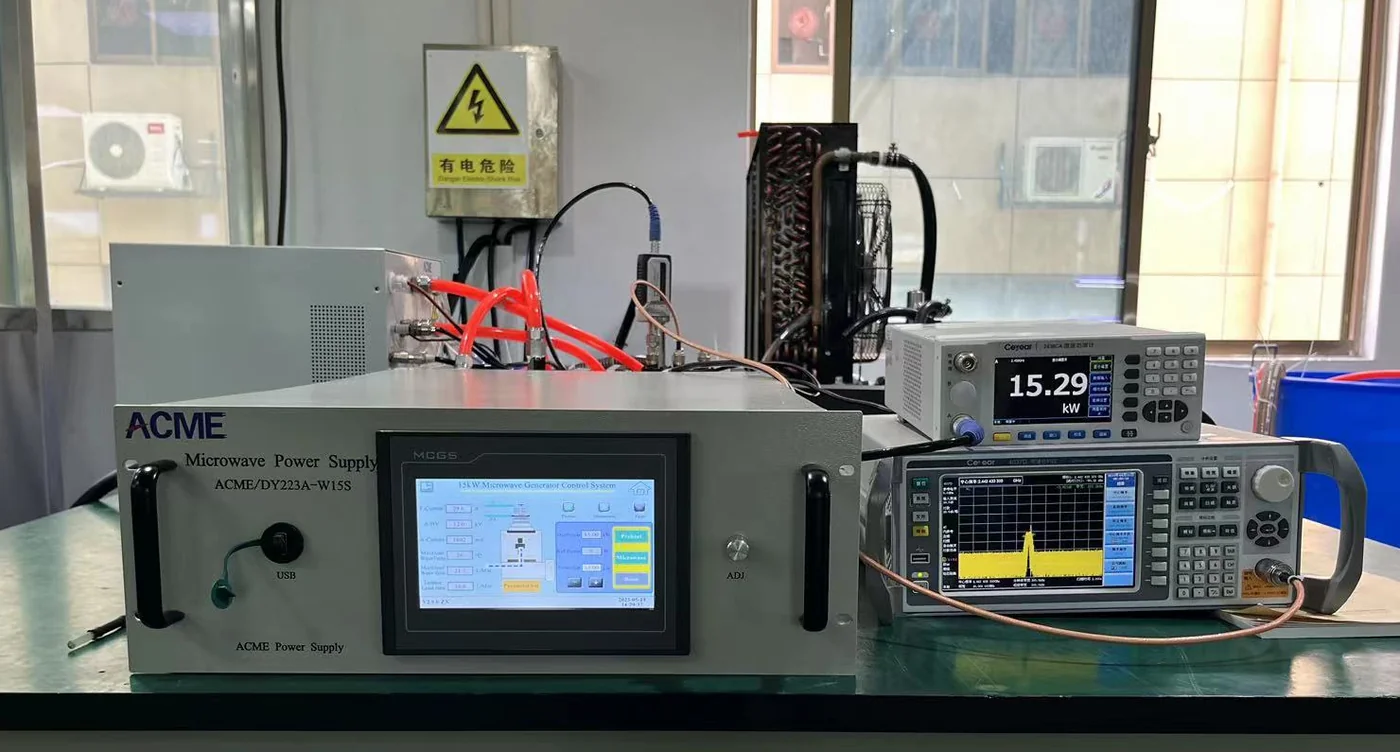
Functional Verification Under Factory Test Conditions
Real factory testing evidence from a 15 kW microwave generator. The image demonstrates the testing process; specific test items and acceptance criteria remain dependent on the applicable generator and agreed FAT scope.
Controlled Test Condition
Why Use a Dummy Load During Factory Testing?
A suitable test load can provide a controlled condition for applicable microwave-output testing before the generator is connected to the customer’s final process equipment. The test load, operating condition and acceptance items are selected according to the relevant generator and FAT specification.
Functional FAT confirms the agreed equipment functions under defined factory conditions. It does not replace final installation, process-load integration or site-specific acceptance testing where those activities are required by the project.
Microwave Power and Output Verification
Applicable factory testing can include forward-power, reflected-power, output-adjustment and operating-stability related checks under defined test conditions. The actual measurement method, duration and acceptance criteria are confirmed according to the applicable generator and agreed FAT specification.
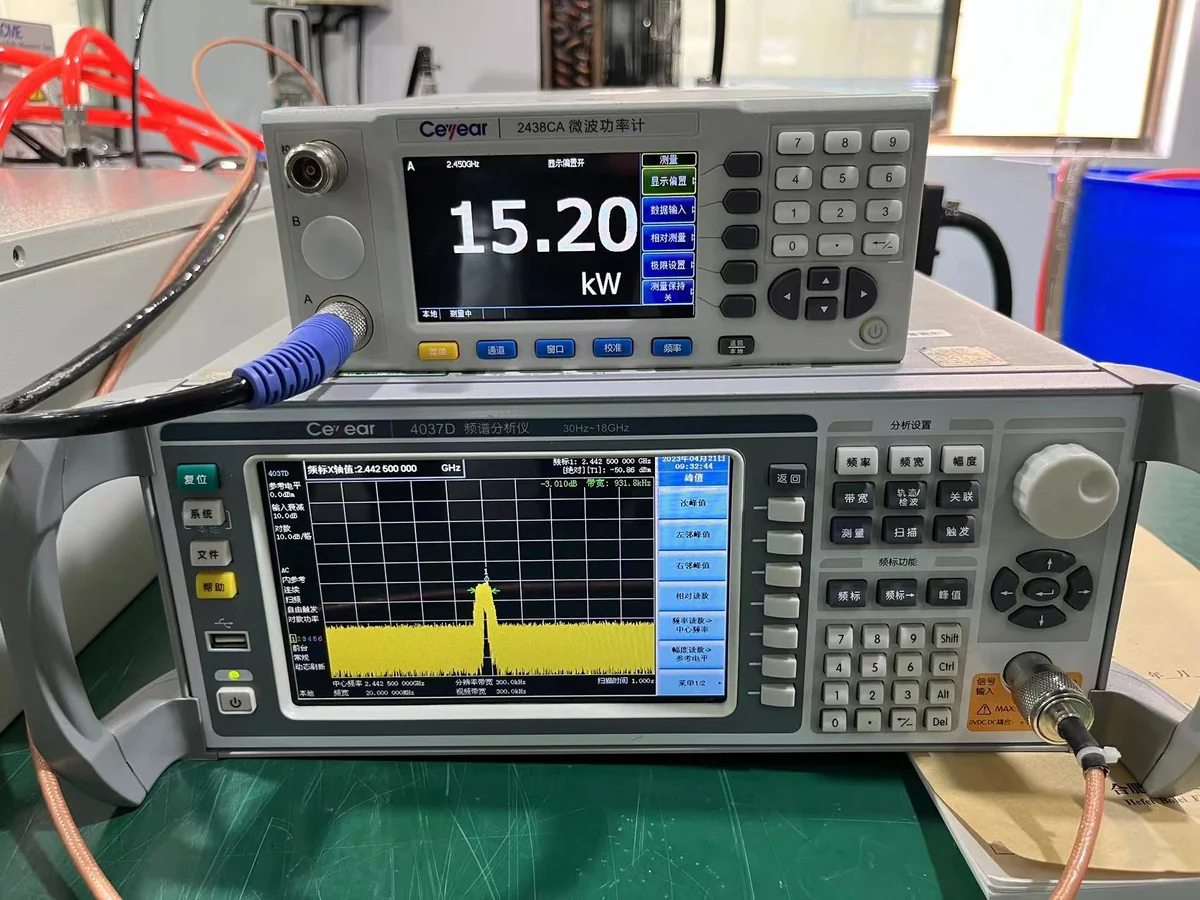
Measurement Evidence During Factory Testing
Test instrumentation used during factory verification of a 15 kW microwave generator. This image provides evidence of the testing process and is not presented as a universal performance result or certification for all generator configurations.
Output-Related FAT Items
The applicable measurement items depend on the selected generator, test setup and acceptance specification agreed for the project.
Forward Power
Forward-power measurement can form part of the agreed microwave generator FAT under the defined factory test configuration.
Reflected Power
Reflected-power related conditions may be monitored or checked as applicable to the generator, load and agreed test scope.
Output Adjustment
Applicable output adjustment and operating response can be reviewed under the defined factory test conditions.
Operating Stability
Microwave generator power stability can be evaluated over the test condition and duration defined for the applicable FAT procedure.
Acceptance Criteria
Measurements Must Be Read Against the Agreed Test Condition
A measured value only becomes meaningful for project acceptance when it is read together with the generator configuration, test load, operating condition, measurement method and agreed acceptance criteria. For this reason, FAT results are evaluated against the applicable project specification rather than one universal public limit.
Test Condition
Defined Factory Setup
Factory output verification is performed under the applicable test configuration rather than under the customer’s final process environment.
Project Criteria
Agreed Acceptance Basis
Required measurements and acceptance criteria are aligned with the selected model, technical agreement and project FAT scope.
Evidence
Results Within Context
Test records should identify the relevant test context so that measured results can be interpreted against the agreed acceptance requirement.
How is microwave generator output verified before shipment?
Depending on the agreed FAT scope, output verification can include forward-power, reflected-power, output-adjustment and operating-stability related tests under defined factory conditions. The test method and acceptance criteria are confirmed for the applicable generator and project specification.
Control, Monitoring, Interlock and Protection Checks
Factory acceptance testing can verify whether the agreed control, operating-status, alarm, interlock and protection functions respond as required within the selected FAT scope. The purpose is to confirm functional behavior before shipment—not to expose the internal control strategy or protected engineering parameters.
Verify the Agreed Functions, Not the Internal Recipe
The applicable FAT checks focus on whether customer-visible and project-relevant functions operate as expected under defined factory test conditions.
Control Response
Check applicable operating commands and functional responses included in the agreed generator test scope.
Monitoring & Status
Confirm applicable operating indications, alarm information and customer-visible status functions during testing.
Safety Interlocks
Verify applicable safety and external interlock functions included in the project FAT specification.
Protection Functions
Check the applicable protection-function response against the agreed test requirement without publishing internal thresholds, timing or recovery logic.
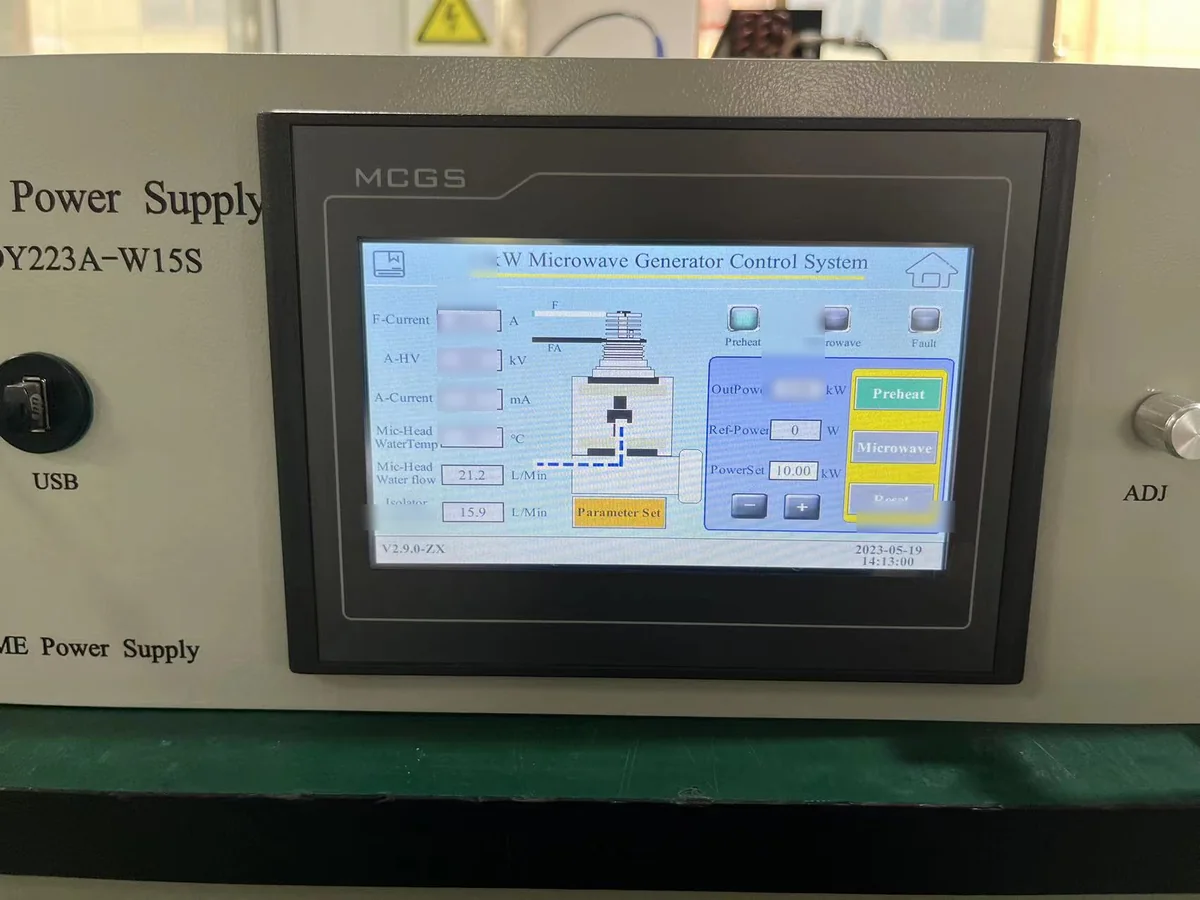
Customer-Visible Operating Status During Testing
The HMI can provide visible operating and status information during applicable functional verification. Specific control parameters, protected settings and internal logic are outside the scope of this public testing page.
FAT Verification
What the Customer Needs to Confirm
Whether the agreed control response, operating indication, alarm, interlock and protection functions are available and operate as required within the applicable FAT scope.
Engineering Protection
What Is Not Required for Public Acceptance Evidence
Internal control logic, protection thresholds, timing sequences, register maps, I/O point lists, detailed wiring and other implementation-level engineering information are handled at the appropriate project documentation level.
Direct Answer
Are Protection Functions Checked During FAT?
Applicable protection and interlock functions can be verified during FAT when they are included in the agreed test scope. Factory acceptance testing confirms functional response under the defined test condition; detailed protection thresholds and internal implementation remain part of controlled engineering documentation.
Looking for the system-level capability rather than the acceptance test? See the dedicated page for microwave generator controls, monitoring and protection.
Controls & Protection →Cooling, Connections and External Interface Verification
FAT can also confirm whether the supplied equipment matches the agreed cooling, electrical, microwave-output and external interlock interface requirements. The purpose is to reduce avoidable integration issues before shipment while keeping final site installation responsibilities clearly defined.
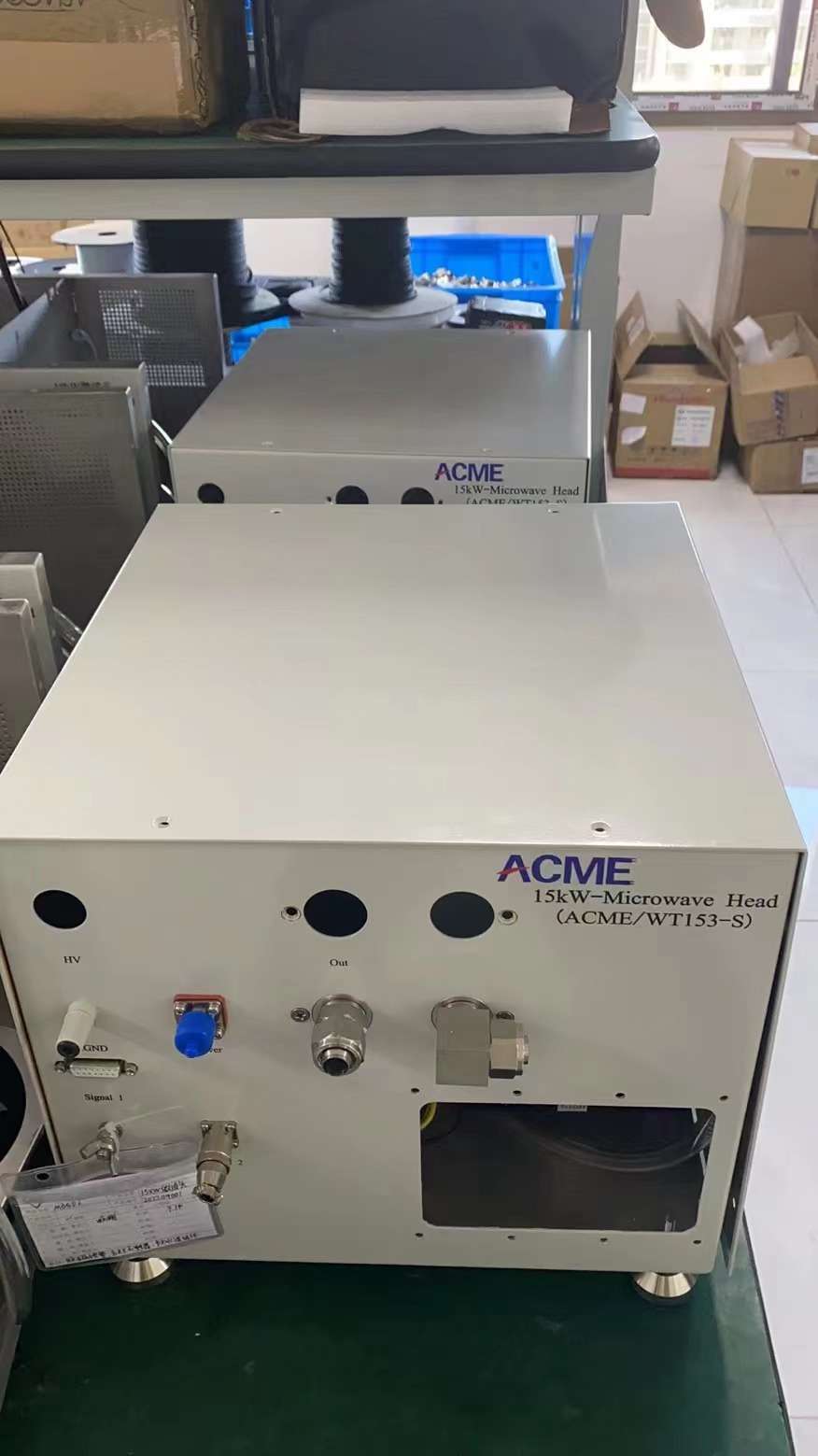
Physical Interfaces Must Match the Agreed Project Configuration
Cooling and external connections shown on a 15 kW microwave generator head. Interface details vary by model and project configuration and should be confirmed against the applicable supply scope.
Interface Items That Can Be Reviewed
Factory-side interface verification focuses on whether the supplied equipment corresponds to the agreed project boundary before it leaves the factory.
Cooling Connections
Review the applicable cooling connections and external utility interface requirements for the supplied generator configuration.
Electrical Connections
Confirm applicable external power and control connection conditions against the agreed equipment and project scope.
Microwave / Waveguide Interface
Verify the supplied microwave-output interface against the selected generator and agreed integration configuration.
External Interlocks
Confirm applicable external interlock interface requirements where they form part of the agreed FAT and integration boundary.
Factory Verification
Confirm the Supplied Interface
FAT can verify the applicable connections and interface configuration included in SDACME's agreed supply scope before shipment.
Site Integration
Confirm the Installed System Condition
Final piping, utilities, cabling, waveguide installation, customer equipment and site integration are evaluated according to the project responsibility boundary and applicable SAT scope.
Before FAT
Define the External Interface Boundary Early
Interface verification is most useful when the cooling requirement, electrical supply, microwave interface, external interlocks and customer-side equipment are identified before the FAT scope is finalized.
Are cooling and external interfaces checked during FAT?
Applicable cooling, electrical, microwave-output and external interlock interfaces can be reviewed during FAT when they are included in the agreed supply and test scope. Final site utilities, installation and customer-side integration remain subject to the defined project and SAT boundary.

Project-Specific FAT and Factory Integration Testing
The appropriate FAT depends on what SDACME is actually supplying and what the customer expects to verify before shipment. A generator-only FAT, subsystem verification and a microwave generator factory integration test do not necessarily require the same test boundary, equipment or acceptance documentation.
Supply Boundary
FAT Depth Follows the Equipment Scope
Defining the supply boundary first prevents a generator FAT from being confused with complete process-system acceptance. The wider the supplied integration scope, the more interface and coordinated functional verification may need to be included.
Equipment Scope
Microwave Generator Supply
FAT primarily verifies the supplied generator configuration, applicable operating functions, output-related test items, protection functions and agreed external interfaces.
Equipment Scope
Microwave Subsystem Supply
Where additional microwave components form part of the supply, FAT can review applicable component interfaces and coordinated subsystem functions within the defined factory test boundary.
Equipment Scope
OEM / Integrated System Scope
A factory integration test can be defined when multiple supplied components require coordinated verification before delivery to the OEM, integrator or final project site.
From Supply Definition to Acceptance
A clear project FAT starts with the commercial and technical supply boundary—not with a generic test checklist.
01
Define Supply
Identify the generator, microwave components and other equipment included in the confirmed supply.
02
Define Interfaces
Separate SDACME-supplied interfaces from customer, OEM or site-side equipment and utilities.
03
Define Test Items
Confirm the applicable functional, output, interlock, integration and documentation requirements.
04
Define Acceptance
Align the FAT records and acceptance basis with the agreed technical specification and project scope.
Before the FAT Is Finalized
Information That Helps Define the Project Test Scope
For project-specific acceptance, provide enough information to distinguish the factory-testable supply from customer-side or site-dependent conditions.
- Generator model / power / frequency
- Confirmed supply boundary
- Customer-supplied equipment
- Required external interfaces
- FAT acceptance specification
- Required test load or setup
- Required FAT records
- Witness requirements, if applicable
SDACME Supply
Factory-Testable Equipment
Equipment and functions included in the confirmed supply can be reviewed against the applicable FAT specification.
Customer / OEM Scope
External Integration Conditions
Customer-supplied process equipment, utilities and interfaces should be clearly identified when they affect the intended integration or acceptance method.
Project Site
Site-Dependent Verification
Installation, actual site utilities, process loading and complete-system operation may require SAT rather than being treated as factory acceptance items.
What is a microwave generator factory integration test?
A microwave generator factory integration test verifies agreed coordinated functions and interfaces when the factory supply includes more than a standalone generator. The actual integration-test boundary depends on which microwave components, controls, accessories and interfaces are included in the project supply.
Need a project-specific FAT? Send the supply boundary, integration interfaces and acceptance specification before the test scope is finalized.
Submit FAT RequirementsFAT Records and Acceptance Documentation
Factory acceptance is more useful when the agreed test activities are supported by clear records. Depending on the project scope, inspection checklists, test reports, photographs or video, and selected test data can be prepared as part of the applicable FAT documentation package.
Record Type 01
Inspection Checklist
Records can identify applicable configuration, inspection and pre-shipment verification items included in the agreed FAT scope.
Record Type 02
Test Report
Applicable test items and project acceptance results can be recorded in the agreed factory test documentation.
Record Type 03
Photo / Video Evidence
Photographs or video may be included where visual confirmation of applicable factory testing or inspection activities is required.
Record Type 04
Selected Test Data
Applicable measured or recorded data can be included according to the agreed FAT requirement and document-release scope.
Acceptance Package
Documentation Should Follow the Test Scope
The FAT document package should reflect what was agreed to be tested and what evidence the project requires. A generator-only supply and an integrated system project may therefore require different documentation.
01
Identify the Equipment
Link the applicable test record to the generator or supplied configuration being verified.
02
Identify the Test Scope
Record the applicable inspection or test items defined for the project FAT.
03
Record the Acceptance Evidence
Provide the applicable results or evidence needed to support the agreed acceptance review.
Document Scope
Project Records Are Defined Before Delivery
The customer-facing FAT package is defined according to the project requirement, technical agreement and delivery scope. It does not automatically mean that every internal engineering record, protected parameter or complete raw test file forms part of the customer documentation package.
Before Testing
Define What Evidence Is Required
If a tender, OEM specification or customer quality plan requires specific FAT records, identify those requirements before the test scope and document package are finalized.
Before Shipment
Review the Applicable Acceptance Package
The applicable records can then be reviewed against the agreed FAT items so that factory-side acceptance evidence remains aligned with the actual equipment and project boundary.
What documents can be provided after microwave generator FAT?
Depending on the agreed project scope, FAT documentation can include inspection checklists, test reports, photographs or video, and selected test data. The exact document package should be confirmed together with the FAT requirements before testing and shipment.
FAT vs SAT: Where Factory Verification Ends and Site Acceptance Begins
A microwave generator factory acceptance test (FAT) verifies the agreed equipment scope before shipment, while a microwave generator site acceptance test (SAT) verifies the installed equipment under applicable site and system conditions when SAT is included in the project scope.
Before Shipment
FAT
Factory Acceptance Test
After Installation
SAT
Site Acceptance Test
Acceptance Sequence
From Factory Verification to Installed System Acceptance
FAT and SAT address different stages of the same project. Factory verification reduces pre-shipment uncertainty; site acceptance confirms the agreed installed condition.
Factory Preparation
Confirm the supplied configuration, FAT specification and applicable test conditions.
FAT
Verify the agreed equipment functions and acceptance items before shipment.
Installation & Integration
Connect the generator with the applicable site utilities, waveguide, load and customer-side equipment.
SAT, If Included
Verify agreed site-side acceptance items under the installed project conditions.
Define the Responsibility Boundary Before Testing
SAT depends on more than the microwave generator alone. Project responsibilities should identify who supplies, installs and verifies the site-side conditions that affect final acceptance.
Equipment Supplier
Supplied Generator Scope
The agreed factory-tested equipment, functions, interfaces and documentation should be clearly defined in the supply scope.
OEM / Integrator
System Integration Scope
System-level installation, interface coordination and customer-supplied equipment may form part of the OEM or integrator responsibility.
Project Site
Site Conditions
Actual utilities, installation, process loading and site-side operating conditions should be available before applicable SAT items can be evaluated.
Direct Answer
What Is the Difference Between FAT and SAT?
FAT verifies the agreed microwave generator scope before shipment under defined factory conditions. SAT verifies the installed equipment under applicable project-site conditions when SAT is included in the agreed project scope. FAT therefore reduces factory-side uncertainty, while SAT addresses installation and site-dependent acceptance.
A successful FAT confirms the agreed factory-side acceptance scope before shipment. Site acceptance, where required, is then verified after installation under the applicable site power, cooling, waveguide or load, customer equipment and system integration conditions.
Microwave Generator FAT, SAT & Acceptance Testing FAQ
Direct answers to common procurement and engineering questions about factory acceptance testing, site acceptance testing, test scope and project documentation.
Acceptance Principle
Test the Agreed Scope Against the Agreed Criteria
FAT and SAT are most useful when the equipment boundary, test items, acceptance criteria, documentation and responsibility split are defined before testing begins. They are project verification processes rather than standalone product certifications.
01 What is included in a microwave generator FAT?
A microwave generator FAT can include configuration and electrical checks, functional testing, applicable microwave-output verification, interlock and protection checks, operating or final inspection items, and agreed FAT records. The exact test scope depends on the selected generator, supply boundary and project acceptance specification.
02 Is FAT the same as product certification?
No. FAT is a factory-side verification and acceptance process performed against an agreed project test scope. Product certification or compliance documentation is separate from FAT records and should be confirmed according to the applicable product and project requirement.
03 What is the difference between FAT and SAT for a microwave generator?
FAT is performed before shipment under defined factory conditions. SAT is performed after installation under applicable project-site conditions when site acceptance is included in the agreed scope.
FAT focuses on the supplied equipment and factory-testable functions. SAT can additionally depend on site power, cooling, installation, waveguide or load configuration and customer-side system integration.
04 How is microwave generator output verified before shipment?
Depending on the agreed FAT scope, microwave-output verification can include forward-power, reflected-power, output-adjustment and operating-stability related checks under defined factory conditions.
Measurement methods, test duration and acceptance criteria are confirmed for the applicable generator and project specification rather than treated as one universal public test limit.
05 Can customers define project-specific FAT acceptance items?
Yes. Project-specific acceptance items can be reviewed against the selected generator configuration, confirmed supply boundary, interface requirements and technical agreement.
Customer FAT specifications are best provided before the test plan and acceptance documentation are finalized.
06 What documents can be included with FAT records?
Depending on the agreed document scope, FAT records can include inspection checklists, test reports, photographs or video, and selected test data.
The customer-facing document package should be agreed for the project and does not automatically include every internal engineering file or protected test parameter.
07 Can customer or third-party witness requirements be included?
Customer, remote or third-party witness requirements can be submitted for project review. The witness method, applicable test items, scheduling and required records should be confirmed before the FAT scope is finalized.
Have a Project-Specific Acceptance Requirement?
Send the generator configuration, supply boundary, FAT / SAT specification and required acceptance records for project review.
Define Your Microwave Generator FAT / SAT Requirements
Send us your generator configuration, supply boundary and acceptance requirements so the applicable factory and site verification scope can be reviewed before order confirmation or project testing.
RFQ Information
Information That Helps Us Review the Acceptance Scope
Not every project requires the same FAT or SAT. These inputs help distinguish the factory-testable equipment scope from integration and site-dependent acceptance conditions.
01
Generator Configuration
Model or required power, operating frequency, quantity and applicable generator configuration.
02
Supply Boundary
Generator-only supply, microwave subsystem, OEM integration or other confirmed equipment scope.
03
FAT Items
Required functional, output-related, interface, interlock, protection or other factory acceptance items.
04
Acceptance Specification
Customer, OEM, tender or project requirements that define the applicable acceptance basis.
05
Documentation
Required inspection records, test reports, photo or video evidence, or selected test data.
06
FAT / SAT Requirement
Clarify whether the project requires factory acceptance only or also includes site acceptance activities.
07
Integration Interfaces
Cooling, power, microwave or waveguide, control, external interlocks and customer-side equipment relevant to testing.
08
Witness & Schedule
Customer or third-party witness requirements and the applicable project testing or delivery schedule.
Project Review
Confirm the Acceptance Boundary Before Testing
Test conditions, duration, acceptance criteria, required records and witness arrangements are reviewed according to the applicable microwave generator, confirmed supply scope and agreed project requirements. SAT requirements, where applicable, should also identify the relevant site and integration conditions.
Next Step
Send Your Acceptance Specification Before the Test Scope Is Finalized
Our team can review the requested FAT / SAT items against the applicable generator configuration, supply boundary and project interfaces before the acceptance plan is confirmed.
