How to Select a Shore Power System for Your Vessel or Berth
Selecting a shore power system requires more than choosing a kVA rating. The shore-side grid, vessel voltage and frequency, operating load, motor starting conditions, cable route, connection interface and installation environment all affect the final configuration.
01 · Selection Inputs
Start With the Shore Grid, Vessel and Load Data
Reliable shore power selection begins with three sets of information: the available shore-side electrical supply, the vessel electrical requirements and the actual operating load profile.
Shore-Side Grid
Define what electrical supply is actually available at the berth.
- Input voltage
- Input frequency
- Available grid capacity
- Short-circuit level, if available
- Earthing method
- Existing single-line diagram
Vessel Requirements
Confirm the electrical conditions required at the ship connection.
- Required connection voltage
- Required frequency
- Required capacity
- Power factor
- Existing shore connection arrangement
- Vessel electrical specification
Operating Load Profile
Identify how the vessel actually uses electrical power in operation.
- Continuous loads
- Peak and intermittent loads
- Largest motors
- Motor starting methods
- Starting current, if available
- Simultaneous loads and operating sequence
02 · Capacity Sizing
How to Calculate the Required Shore Power Capacity
There is no single universal formula for shore power capacity. Required kVA should be reviewed from the operating load profile and starting conditions, not by simply adding every connected load.
Continuous Load
Establish the electrical demand expected to operate continuously while the vessel is connected.
Peak & Simultaneous Load
Identify which additional loads may operate together rather than assuming every connected device operates simultaneously.
Largest Motor
Large pumps, compressors, HVAC equipment and other motors may influence sizing beyond their normal running power.
Starting & Inrush Demand
Review motor size, starting method, starting current and the loads already operating during the start.
Diversity & Sequence
Determine which loads can realistically operate together and whether major loads are intentionally started in sequence.
Power Factor
Use the actual or expected power factor when converting the operating demand into the required electrical capacity.
Engineering Margin
Apply an appropriate project margin after the actual load and starting conditions are understood.
Final Capacity Review
Confirm capacity together with voltage, cable suitability, vessel connection and the final electrical architecture.
The required capacity depends on continuous load, peak demand, largest motor, starting method, simultaneous loads, power factor, operating sequence and the required engineering margin. Final sizing should be confirmed against the actual vessel load list.
03 · Voltage & Frequency
Check Shore-Side and Vessel Voltage and Frequency Compatibility
Voltage and frequency should be checked separately. A project may need frequency conversion, voltage transformation, both, or neither depending on the shore grid and vessel requirements.
Voltage Matches · Frequency Matches
Frequency conversion may not be required. Other switching, protection, grounding, monitoring and connection requirements should still be reviewed.
Voltage Matches · Frequency Differs
Evaluate 50Hz-to-60Hz or 60Hz-to-50Hz shore power frequency conversion according to the vessel requirement.
Voltage Differs · Frequency Matches
Evaluate the required voltage transformation and the appropriate converter or transformer configuration.
Voltage Differs · Frequency Differs
Evaluate a coordinated architecture combining frequency conversion and voltage transformation.
Yes. A system can be configured for 50Hz-to-60Hz conversion after the shore input, vessel voltage, capacity and project architecture are confirmed.
Yes. Reverse frequency conversion can also be configured when the shore grid is 60Hz and the vessel requires 50Hz.
04 · LV or HV
Should You Choose Low-Voltage or High-Voltage Shore Power?
There is no universal kVA or MVA threshold that determines every LV/HV decision. Vessel connection voltage, operating current, cable route, load conditions and the shore grid should be evaluated together.
Evaluate Low Voltage
- The vessel uses a low-voltage shore connection.
- Required operating current remains practical.
- Cable length and voltage drop can be managed.
- The required connection equipment is suitable for the current level.
- The project can be served effectively through low-voltage distribution.
Evaluate High Voltage
- The vessel requires a medium- or high-voltage connection.
- A low-voltage arrangement would result in impractical current.
- Cable distance or voltage drop favors a higher connection voltage.
- Higher-capacity distribution must be evaluated.
- Multiple independent outputs or berth expansion are part of the project.
05 · Grid & Cable
Check Shore Grid and Cable Conditions Before Final Sizing
The shore power equipment should be reviewed together with the electrical network and cable route that connect the shore supply to the vessel.
Cable Voltage Drop
A voltage-drop review should use the actual operating current and cable conditions.
- Cable length and conductor arrangement
- Operating current
- Connection voltage
- Power factor
- Installation and routing conditions
Short-Circuit Capacity
Available shore-grid short-circuit capacity is reviewed with the supply voltage, earthing arrangement, switchgear and protection architecture.
- Grid strength
- Incoming switchgear
- Protection coordination
- Earthing conditions
Single-Line Diagram
An existing SLD helps define the boundary between the grid, shore power equipment and vessel connection.
- Incoming supply
- Existing transformer and switchgear
- Bus arrangement
- Earthing arrangement
- Vessel connection point
06 · Ship-to-Shore Compatibility
How to Check Ship-to-Shore Power Compatibility
Electrical capacity is only one part of compatibility. The complete shore-to-vessel interface should be checked before the final configuration is confirmed.
Voltage
Confirm whether shore and vessel voltages match or whether transformation is required.
Frequency
Confirm 50Hz or 60Hz and whether frequency conversion is required.
Phase Sequence
Confirm the vessel phase requirement and whether project-configured phase-sequence switching is required.
Neutral & Grounding
Review the shore-grid earthing method, vessel electrical system and selected architecture together.
Plug & Socket
Confirm connection voltage, current rating, connector arrangement, cable quantity and mechanical interface.
Communication
Define required monitoring, commands, status signals and the agreed ship-shore communication interface.
Interlocks
Identify the required shore-to-vessel operating permissions and interlock functions before power transfer.
Vessel Retrofit
For existing vessels, review the onboard distribution, connection equipment, available space and existing documentation.
07 · Multi-Berth & Multi-Vessel
Can One Shore Power System Supply Multiple Berths or Vessels?
Multi-berth and multi-vessel configurations can be evaluated, but the number of independent outputs, simultaneous demand and switching arrangement are project-specific.
→ Berth A
→ Berth B
Conceptual architecture only. Actual feeder quantity and berth allocation are defined for the project.
Multiple Berths
A multi-berth arrangement can be evaluated according to required independent outputs and berth operating conditions.
Multiple Vessels
Review the number of vessels that may require power simultaneously and the load allocated to each connection.
Parallel Operation
Parallel operation can be evaluated for applicable project configurations with coordinated control and protection.
Future Expansion
Planned berth expansion should be identified early so distribution and equipment boundaries can be evaluated accordingly.
08 · Installation Arrangement
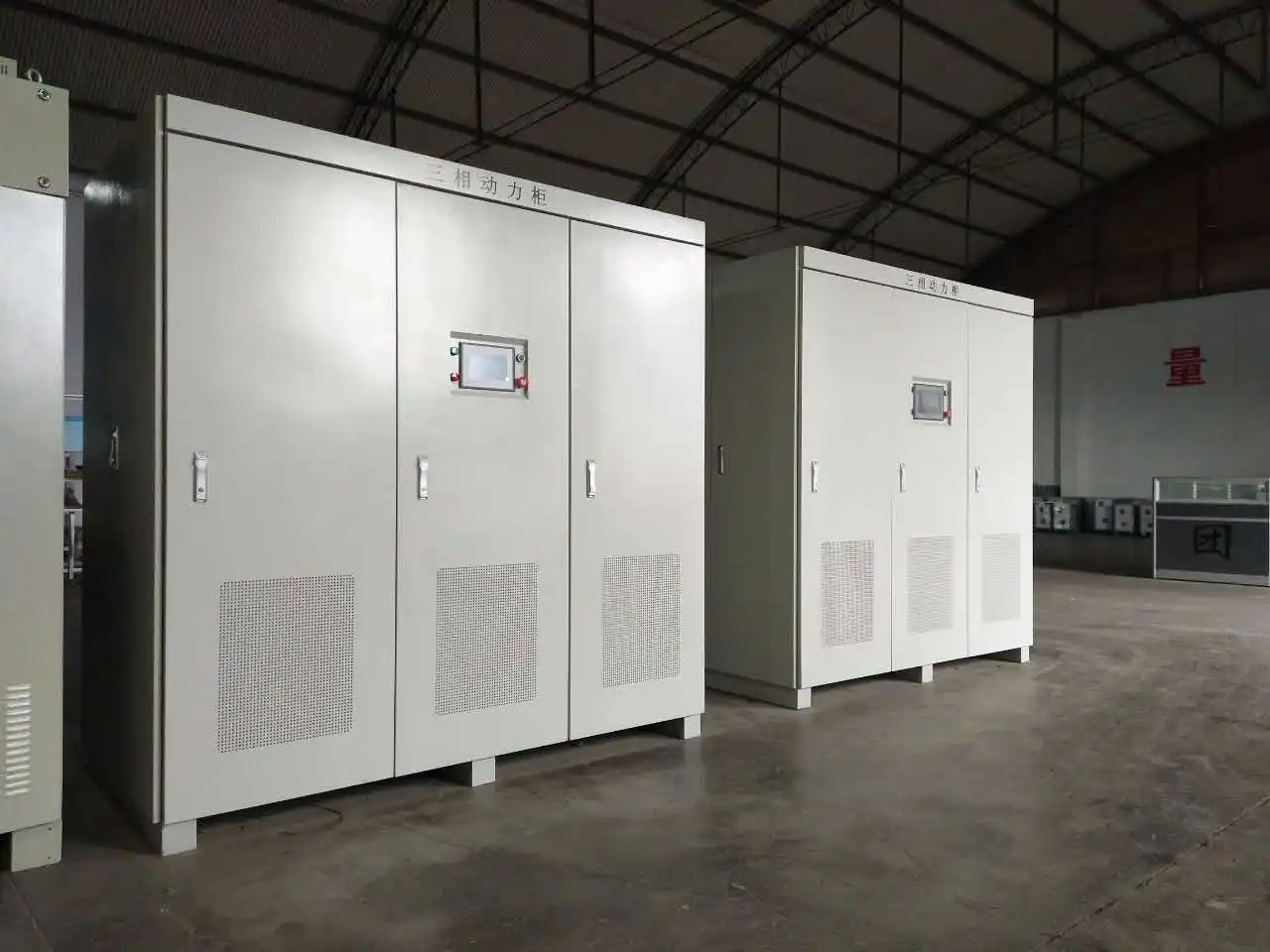
Choose the Installation Arrangement After the Electrical Architecture
Low voltage or high voltage describes the electrical architecture. Indoor, outdoor or containerized describes how the selected equipment is installed and integrated.
09 · System Scope & Specification
What Should Be Included in a Shore Power System Specification?
Not every project requires the same equipment boundary. Define what must be included before comparing technical proposals or quotations.
Power Conversion
- Frequency converter
- Required conversion direction
- Voltage transformation requirement
Electrical Distribution
- Transformer
- Input/output switchgear
- Protection and metering
Ship-Shore Interface
- Connection equipment
- Plug/socket interface
- Cable management requirement
Monitoring & Control
- Local operating interface
- Remote monitoring
- Required communication interface
Installation
- Indoor room
- Outdoor enclosure
- Containerized integration
Project Services
- FAT / SAT
- Installation guidance
- Commissioning and training
10 · Selection Examples
See How Different Project Conditions Change the Selection
These examples illustrate selection logic rather than universal system templates. Final configuration depends on the actual project data.
50Hz Grid → 60Hz Vessel
Evaluate frequency conversion, then confirm vessel voltage, capacity, starting loads and LV/HV architecture.
Medium-Voltage Grid → Low-Voltage Vessel
Evaluate the required voltage transformation and final low-voltage output rather than assuming shore-grid voltage determines vessel voltage.
High-Voltage Vessel + MVA-Class Load
Evaluate high-voltage architecture together with cable distance, current, grid conditions and required independent outputs.
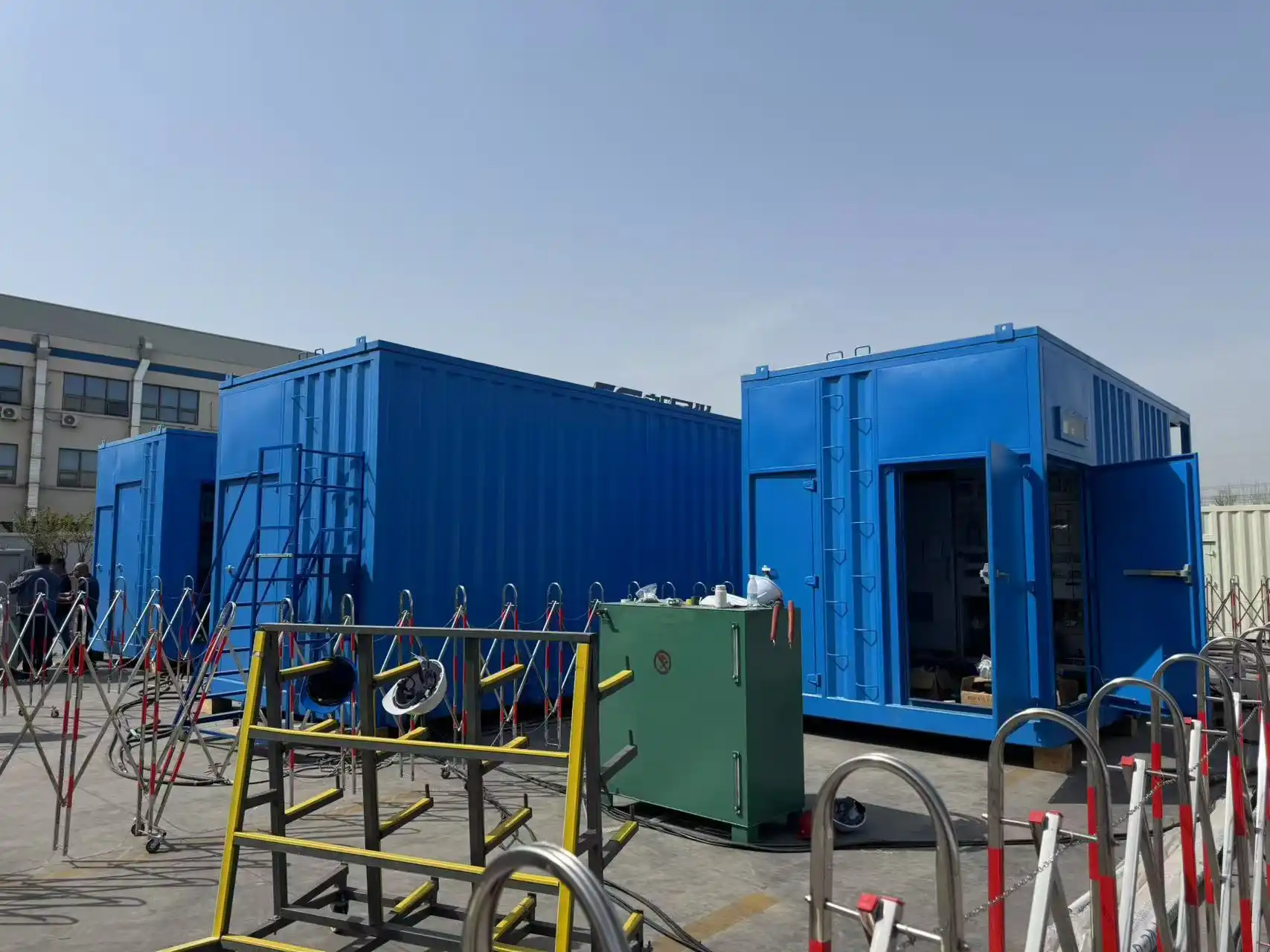
Outdoor Site Without an Electrical Room
After the electrical architecture is defined, evaluate containerized integration according to the site and environmental conditions.

Indonesia · 2 × 1200 kVA
Two-unit shore power frequency conversion reference demonstrating how capacity and project configuration are selected from the actual application.
5 MVA · Two Independent Outputs
Reference configuration with 10 kV / 50 Hz input and two independent 6.6 kV / 60 Hz output feeders. Output quantity is project-specific.
Shore Power Selection FAQ
Frequently Asked Questions About Shore Power Selection
Direct answers to common capacity, compatibility and configuration questions.
How do I select a shore power system?
Start with the shore-side voltage, frequency, available capacity, short-circuit level and earthing method. Then define the vessel voltage, frequency, load profile, starting loads and connection requirements before evaluating capacity, LV/HV architecture, interfaces and installation.
How many kVA do I need for shore power?
Required kVA depends on continuous load, peak demand, power factor, simultaneous loads, the largest motor, starting method, starting current, operating sequence and engineering margin. A vessel load list is the preferred starting point.
How do I calculate shore power capacity?
Begin with continuous and simultaneous operating loads, then evaluate major starting loads, power factor and operating sequence. Capacity should be confirmed from the actual load profile rather than a universal multiplier.
Can 50Hz shore power supply a 60Hz ship?
Yes. A shore power system can be configured for 50Hz-to-60Hz conversion when the shore input, vessel voltage, required capacity and project architecture are confirmed.
Can 60Hz shore power supply a 50Hz ship?
Yes. A system can also be configured for 60Hz-to-50Hz conversion according to the vessel and shore-side conditions.
Can a shore power system change both voltage and frequency?
Yes, according to configuration. Frequency conversion is provided by the converter, while voltage matching may use the selected converter output design, transformer configuration or a combination of both.
How do I choose between low-voltage and high-voltage shore power?
Review the vessel connection voltage, required current, cable distance, voltage drop, load characteristics, shore-grid conditions and berth arrangement. Capacity alone should not determine the LV/HV decision.
Can one shore power system supply multiple vessels or berths?
It can be configured for multiple independent outputs when simultaneous demand, feeder arrangement, switching, protection and control requirements are engineered for the project.
How do I check ship-to-shore power compatibility?
Check voltage, frequency, phase sequence, grounding, neutral arrangement, connector requirements, communication interface, interlocks, load characteristics and the existing vessel electrical system.
What information is needed for a shore power quotation?
Provide the available shore-grid data, vessel voltage and frequency, load profile, major starting loads, berth arrangement, cable and installation conditions, required equipment scope and available technical documents.
Project Selection Review
Send Your Project Data for a Shore Power Selection Review
You do not need to have every parameter available before contacting us. Send the information currently available and we can review the voltage, frequency, capacity, compatibility and initial system direction.
Shore-Side Input
- Input voltage
- Input frequency
- Available grid capacity
- Short-circuit capacity, if available
- Earthing method
Vessel Requirements
- Required voltage
- Required frequency
- Required capacity
- Continuous and peak load
- Power factor
Starting Loads
- Largest motor
- Motor rating
- Starting method
- Starting current, if available
- Operating sequence
Berth & Connection
- Number of berths or vessels
- Simultaneous operation requirement
- Cable distance
- Existing plug/socket information
- Connection arrangement
Installation Conditions
- Indoor / outdoor
- Available installation space
- Ambient conditions
- Marine exposure
- Cable-routing limitations
Useful Documents
- Load list
- Single-line diagram
- Vessel electrical specification
- Project technical specification
- Existing connection data
A load list, single-line diagram and vessel electrical specification are especially useful, but missing information can be clarified during the technical review.