Shipyard & Dry-Dock Shore Power Systems
SDACME supplies project-configured shore power systems for shipyards, dry docks, vessel repair and maintenance operations. Each system is selected according to the available shore grid, vessel voltage and frequency, required load capacity, starting loads, operating conditions and installation environment.

Shore Power for Ship Repair, Dry Docks and Maintenance Berths
Shipyard shore power is used to supply vessel electrical loads while a ship is undergoing repair, maintenance, inspection, commissioning or other yard operations. Unlike general shipyard industrial distribution, the shore power system is configured around the vessel electrical requirements and the shore-to-vessel power interface.
Ship Repair & Maintenance
A ship repair shore power system can supply onboard electrical loads during vessel repair, inspection and maintenance. Typical operating loads may include HVAC equipment, pumps, motors, electrical testing and other vessel-side systems required during the maintenance period.
Dry-Dock Shore Power
A dry dock shore power system provides shore-side electrical power to the vessel while it is in dry dock for repair, maintenance or technical work.
Maintenance Berth Shore Power
Maintenance berth shore power can support vessels that remain alongside for planned repair, service, commissioning or technical work.
Shore-side vessel power can also be evaluated for selected outfitting or commissioning stages where a temporary ship construction power supply is required for onboard electrical loads. The final configuration should still be based on the actual vessel and project requirements.
What Determines the Right Shipyard Shore Power System?
A shore power system for a shipyard should not be selected from rated kVA alone. The engineering review needs to match the available shore-side electrical supply with the vessel voltage, frequency, operating load, starting conditions and installation environment. These factors determine whether frequency conversion, voltage transformation and additional project-specific equipment are required.
Available Shore Grid
The engineering review starts with the available shore-side electrical source. Input voltage, frequency, supply capacity and grounding arrangement define the conditions from which the vessel supply must be created.
If the shore grid does not match the vessel voltage or frequency, the system may require frequency conversion, voltage transformation or both. Available grid capacity can also limit the practical operating load.
Vessel Voltage & Frequency
The vessel-side electrical system defines the required output conditions. Different vessels may require different voltage levels or operate at a frequency that does not match the local shipyard grid.
A frequency mismatch may require a shore power frequency converter. A voltage mismatch may require transformation. When both differ, the conversion architecture must address both conditions within the same project configuration.
Continuous & Peak Load
Shore power capacity should be based on the electrical loads expected to operate during the actual repair, maintenance or commissioning period rather than on a nominal vessel power figure alone.
The continuous load determines the normal operating demand, while short-duration peak conditions may require additional system capability. The expected combination of operating loads should therefore be reviewed before final sizing.
Motor Starting & Inrush
Pumps, fans, compressors and other onboard equipment can require substantially more power during starting than during normal operation. Transformer energization can also create short-duration inrush demand.
A shore power system selected only from continuous kVA may not provide adequate dynamic capability during these events. Starting method and the largest individual starting load should therefore be included in the engineering review.
Load Operating Sequence
The same vessel loads can produce very different demands depending on whether major equipment starts simultaneously or is brought online in a controlled sequence.
Simultaneous starting can create a higher short-duration demand on the converter and transformer than sequential starting. Understanding the planned operating sequence can therefore influence practical system sizing.
Cable & Environment
Shipyard installations may involve long cable routes, outdoor exposure and marine environmental conditions. These factors should be considered together with the electrical operating requirements.
Cable distance can affect voltage drop and current requirements, while outdoor installation, salt fog, condensation and cooling conditions can influence enclosure, ventilation and equipment protection decisions.
Shore Power Configurations for Different Shipyard Requirements
There is no single fixed architecture for every shipyard shore power system. The appropriate configuration depends on the available shore grid, vessel voltage and frequency, required power level, cable conditions, installation environment and the equipment scope required for the project. Low-voltage, high-voltage, frequency-conversion and containerized solutions therefore represent different engineering paths rather than interchangeable product options.
Low-Voltage Shore Power
A low-voltage shore power configuration can be considered where the vessel-side electrical system requires a corresponding low-voltage supply. The final arrangement still depends on required current, power capacity, frequency, cable distance and the vessel operating load.
This path is appropriate when the required vessel output can be supplied within the selected low-voltage system range. It can be used for ship repair, maintenance and other vessel-service applications where the current and cable requirements remain practical for the project.
Lower voltage means higher current for the same power level. Cable length, conductor size, connection method and voltage drop therefore become increasingly important as system capacity increases.
High-Voltage Shore Power
High-voltage shore power may be required where the vessel electrical interface or project capacity makes a higher-voltage connection more appropriate. The complete system can involve transformation, switchgear, protection, grounding and shore-to-vessel connection equipment.
This path is generally reviewed for higher-capacity projects or vessels requiring a medium- or high-voltage electrical interface. It may also reduce current compared with delivering the same power entirely at low voltage.
Higher-voltage systems require careful definition of the transformer arrangement, switchgear, grounding, protection, interlocking and connection interface. These requirements should be reviewed as one coordinated system rather than as separate equipment selections.
Shore Power Frequency Conversion
Frequency conversion is required when the shipyard grid and vessel electrical system operate at different frequencies. A shore power frequency converter can be configured for 50 Hz-to-60 Hz or 60 Hz-to-50 Hz operation while the required output voltage and capacity are defined for the vessel.
This configuration is relevant when a vessel cannot use the local shore frequency directly. It is particularly important in international ship repair and shipyard operations where vessels with different electrical standards may be serviced at the same location.
Frequency conversion does not remove the need to review voltage and load compatibility. The required output voltage, continuous load, peak demand and motor-starting conditions still determine the overall system configuration.
Containerized Shore Power
A containerized configuration can be considered where the shipyard requires outdoor installation, has limited electrical-room space or prefers selected shore power equipment to be integrated into a pre-assembled enclosure before shipment.
This arrangement is useful where site conditions favor an outdoor equipment package or where converter, transformer, switchgear and control equipment need to be organized into one defined installation footprint.
Containerization affects enclosure layout, ventilation or cooling, cable entry, maintenance access and environmental protection. The internal equipment arrangement therefore needs to be designed together with the electrical configuration.
Temporary or Long-Term Shore Power for Shipyard Operations
Shore power requirements in a shipyard may be temporary for a defined repair project or configured for repeated vessel service over a longer operating period.
Temporary Shipyard Power Supply
A temporary shipyard power supply can be configured for defined vessel repair, maintenance, commissioning or other project periods.
- Defined repair or maintenance period
- Project-specific vessel electrical requirements
- Temporary outdoor or containerized installation where required
- Electrical compatibility still verified before operation
Long-Term Shipyard Shore Power
A longer-term installation may be suitable for shipyards or maintenance berths that repeatedly serve different vessels.
- Expected vessel range considered during selection
- Repeated connection and operating procedures
- Marine environmental exposure and maintenance access
- Future operating conditions considered where practical
What Information Is Needed for a Shipyard Shore Power Project?
For an initial engineering review, provide the shore-side electrical data, vessel requirements, load information and installation conditions. This allows the system configuration to be evaluated before detailed quotation.
Shore-Side Electrical Data
- Input voltage
- Input frequency
- Grounding information
- Available supply capacity
Vessel Requirement
- Required voltage
- Required frequency
- Vessel electrical information
Load Information
- Required kVA
- Continuous load
- Peak load
- Largest starting load
Operating Conditions
- Simultaneous loads
- Starting sequence
- Expected operating period
Installation Conditions
- Indoor or outdoor
- Cable distance
- Available installation space
- Marine environment
Required Equipment Scope
- Converter or integrated system
- Transformer / switchgear
- Connection requirements
- FAT / documentation requirements
Shore Power Systems Proven in Real Shipyard Applications
Real project references provide more useful engineering context than nominal equipment ratings alone. The following Singapore and Indonesia shipyard projects show two confirmed shore power configurations with different capacities, installation formats and electrical requirements. Each system was configured for its own project conditions, including the available shore supply and required vessel-side output.

Indonesia 2 × 1200 kVA Shore Power Project
Two 1200 kVA shore power frequency-conversion units were supplied for a shipyard application in Indonesia. The project was configured to accept 380 VAC ±15% at 50 Hz ±5% and provide adjustable 380–480 VAC output at 60 Hz, allowing the shore-side electrical source to be matched to the required vessel-side operating conditions.
The project demonstrates a higher-capacity low-voltage shore power configuration for shipyard vessel service. The two-unit arrangement was supplied according to the project requirement rather than treated as a universal shipyard capacity or standard system architecture.
A shipyard shore power solution can require both frequency conversion and an adjustable vessel-side voltage range. Capacity, input tolerance and output conditions therefore need to be defined from the actual shore grid and vessel electrical requirements instead of selected from kVA alone.
For a similar project, the review should start with the available shore voltage and frequency, required vessel output range, operating load, starting conditions and whether one or multiple supply units are required.
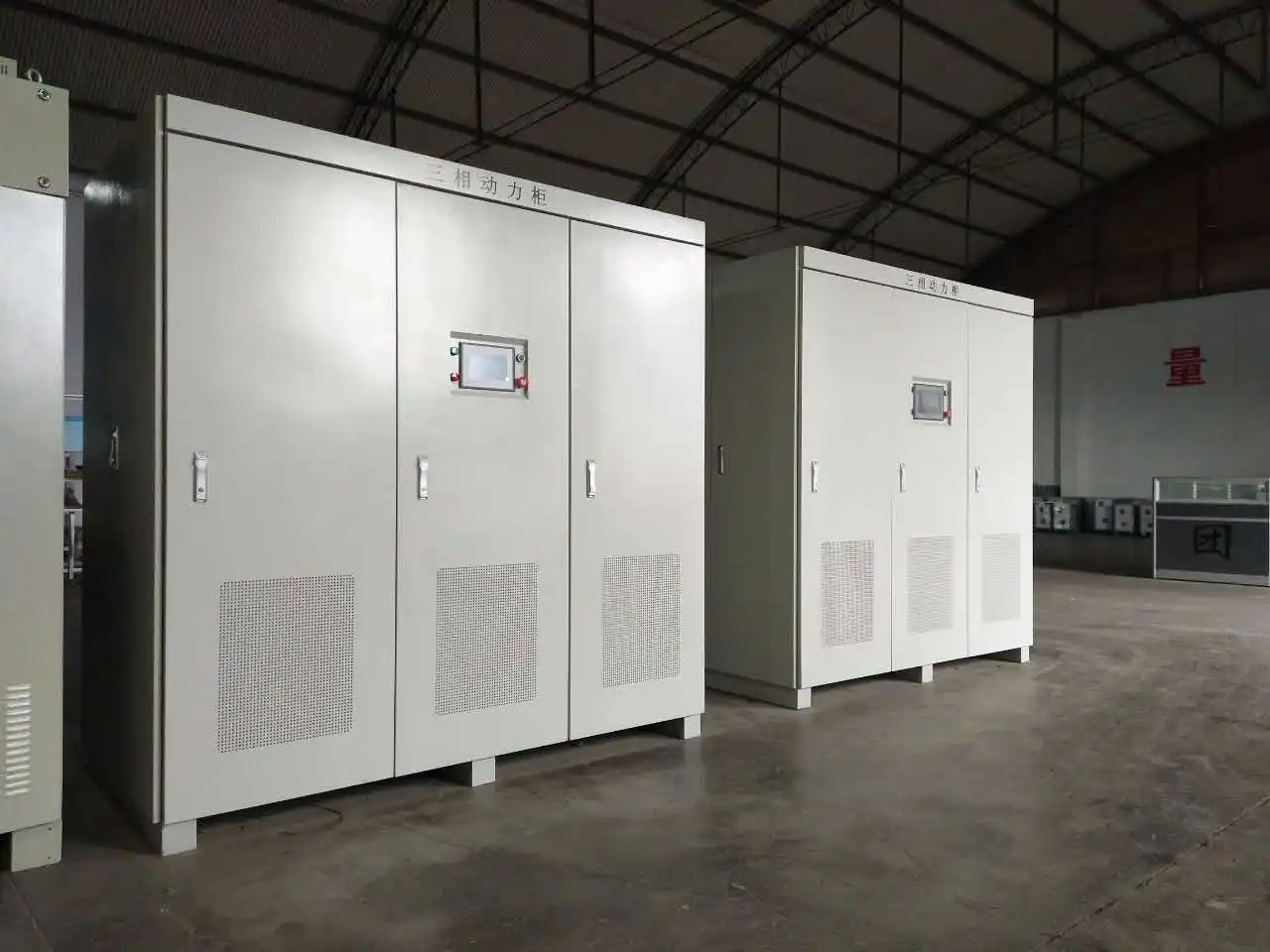
Singapore 400 kVA Containerized Shore Power Project
A 400 kVA outdoor containerized shore power system was supplied for a shipyard project in Singapore. The system was configured for 415 V / 50 Hz input and 415 V / 60 Hz output. Selected electrical equipment was integrated into an outdoor container for factory assembly, internal wiring and testing before shipment.
This project demonstrates a compact outdoor integration path for shipyard shore power where selected electrical equipment can be organized inside a containerized enclosure instead of relying entirely on a conventional indoor electrical room.
Even when input and output voltage remain the same, frequency conversion may still be required because the shore grid and vessel operate at different frequencies. The 415 V / 50 Hz to 415 V / 60 Hz configuration is a practical example of this requirement.
Containerized integration should be reviewed together with electrical requirements. Equipment layout, cooling, cable entry, outdoor environmental conditions and maintenance access can influence the final enclosure configuration.

Shipyard & Dry-Dock Shore Power FAQ
These answers address common engineering and selection questions about shipyard shore power systems, dry-dock applications, vessel repair, frequency conversion, temporary operation and the project data required before system selection.
What is a shipyard shore power system?
A shipyard shore power system supplies shore-side electrical power to a vessel during repair, maintenance, inspection, commissioning or other shipyard operations.
The shore supply cannot automatically be connected to every vessel. The available grid voltage and frequency must be compared with the vessel electrical requirements. Where they differ, the system may require frequency conversion, voltage transformation, switchgear, protection and other project-specific equipment.
The required capacity also depends on the actual operating load, peak demand and major starting loads expected during ship repair or maintenance.
What is a dry dock shore power system?
A dry dock shore power system provides shore-side electrical power to the vessel while it is in dry dock for repair, maintenance, inspection or technical work.
Dry-dock loads can differ from normal vessel operating loads. During repair, equipment such as pumps, ventilation systems, motors, electrical test equipment and other onboard systems may operate in different combinations.
The system therefore needs to be reviewed against the available dry-dock supply, vessel voltage and frequency, required continuous load, peak demand, motor-starting conditions, cable route and connection arrangement.
Is shipyard shore power the same as general shipyard industrial power?
No. In this application, shipyard shore power refers specifically to shore-side electrical supply for the vessel, not general electrical distribution for the entire shipyard.
General shipyard industrial power may supply cranes, welding equipment, workshops, lighting or other facility loads. Shore power has a different engineering responsibility: it must create an electrical supply compatible with the vessel-side system.
This can require specific voltage, frequency, grounding, protection and shore-to-vessel connection arrangements that are not defined by normal yard distribution alone.
Can a 50 Hz shipyard supply power to a 60 Hz vessel?
Yes. Where the shipyard grid operates at 50 Hz and the vessel requires 60 Hz, a shore power frequency converter can be configured to provide 50 Hz-to-60 Hz frequency conversion.
Frequency conversion solves the frequency mismatch, but voltage compatibility still needs to be reviewed separately. If shore and vessel voltage are also different, voltage transformation may need to be incorporated into the system.
Required converter capacity should then be checked against the vessel continuous load, peak demand and major starting conditions.
Can shore power be used during ship repair and maintenance?
Yes. Shore power for ship repair can supply onboard electrical loads required during vessel maintenance, inspection, equipment testing and commissioning work.
Typical vessel-side loads during maintenance may include HVAC equipment, pumps, fans, motors and electrical test loads. The actual combination of operating equipment can differ significantly between repair projects.
Some equipment may also create motor-starting or energization demand above its normal operating load. This means the shore power system should be reviewed from both steady-state capacity and dynamic operating conditions.
Can shipyard shore power be temporary?
Yes. A temporary shipyard power supply can be configured for a defined vessel repair, maintenance, commissioning or project period.
Temporary operation changes the installation and project duration, but it does not remove the need to verify electrical compatibility. Input voltage and frequency, vessel output requirements, load capacity, starting demand and connection method still need to be defined.
Outdoor conditions, cable routing, available installation space and whether a containerized package is appropriate may also influence the temporary configuration.
What information is needed to select a shipyard shore power system?
At minimum, provide the shore-side input voltage and frequency, vessel required voltage and frequency, required kVA, operating load, major starting loads and installation conditions.
Additional information improves the quality of the initial engineering review. Useful data includes continuous and peak load, largest motor, motor starting method, simultaneous load sequence, cable distance, grounding information, indoor or outdoor installation and available equipment space.
The required supply scope should also be defined—for example, whether the project requires only frequency conversion or a broader system including transformers, switchgear, protection, containerized integration or project documentation.
Planning Shore Power for a Shipyard or Dry Dock?
Send us the available shore-grid voltage and frequency, required vessel voltage and frequency, expected load, major starting loads, installation conditions and required equipment scope. SDACME can review the project information and help define an appropriate shipyard shore power system configuration for vessel repair, dry-dock maintenance, commissioning or repeated shipyard operation.
