Custom Thin Film Deposition Systems
Configure the deposition system around your process — not the other way around.
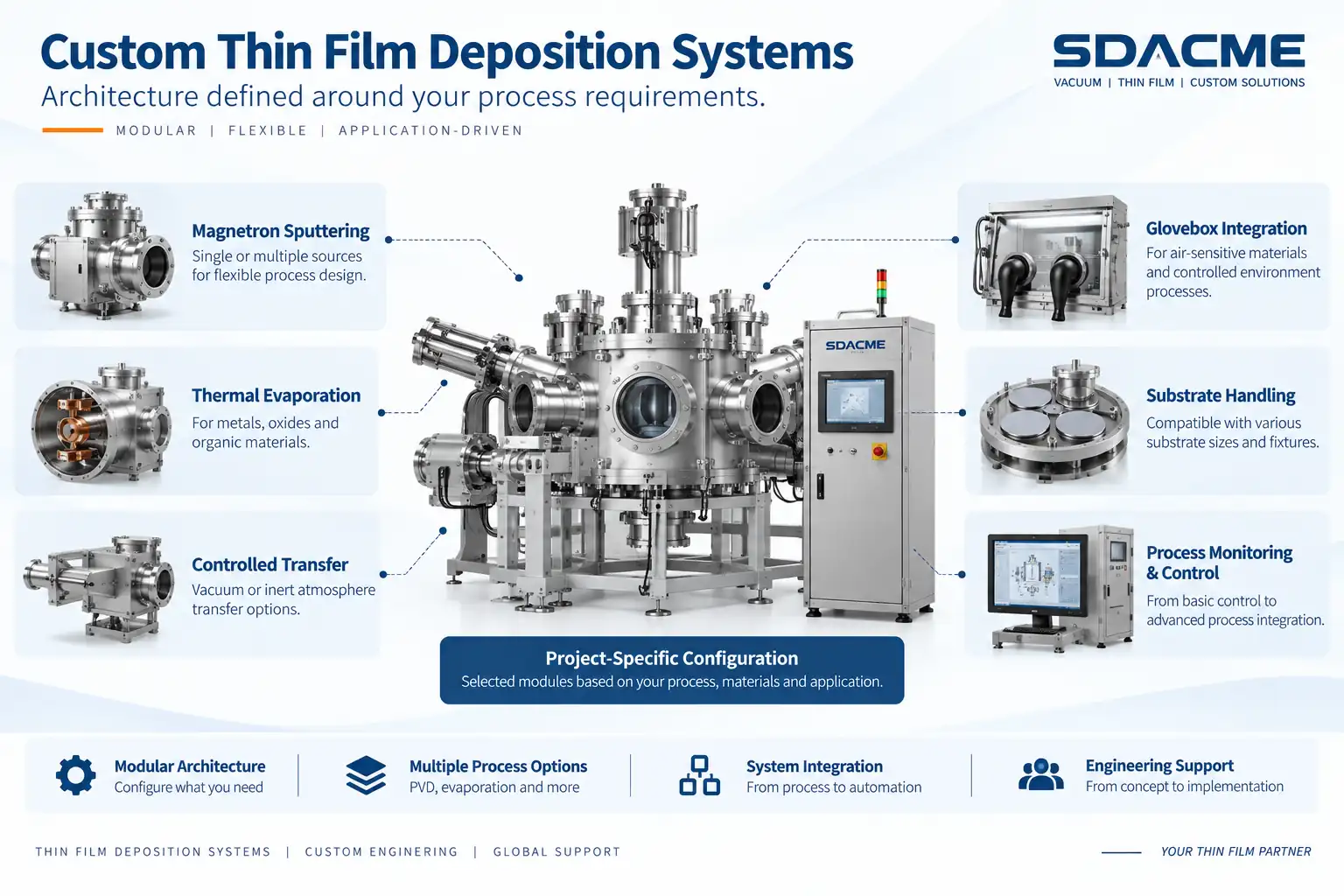
When a standard single-process platform cannot match your deposition sequence, SDACME can evaluate a project-specific thin film deposition system around the required process steps, materials, substrate handling, transfer environment, monitoring, and control interfaces.
From magnetron sputtering and thermal evaporation requirements to glovebox integration, controlled transfer, and multi-process projects, the system architecture is defined according to the actual process and project scope.
When a Standard Deposition System Is Not Enough
A standard deposition system is usually the right starting point when the process is based on one established deposition method and the substrate, source, transfer and control requirements are straightforward. A custom thin film deposition system becomes relevant when the process sequence itself begins to determine the equipment architecture.
More Than One Deposition Step
Multiple deposition or treatment stages can change chamber layout, source arrangement, contamination control, transfer and substrate positioning.
Review InputRequired process order, deposition materials and whether atmospheric exposure is acceptable between steps.
Controlled Transfer Between Processes
Air-sensitive substrates or deposited layers can make transfer conditions part of the system definition rather than a simple loading function.
Review InputIdentify which process stages must remain under vacuum, inert atmosphere or another controlled environment.
Special Substrate Handling
Substrate dimensions, motion, temperature, orientation, electrical conditions or custom fixturing can change both mechanical and process configuration.
Review InputSubstrate material, dimensions, batch quantity, operating temperature and any required movement or electrical conditions.
Sources Defined by the Film Stack
A multi-material or multi-process project should begin with the required layer structure rather than a fixed number of deposition sources.
Review InputDeposition materials, required method for each material and whether the layers are sequential or part of a combined process requirement.
Integration With Existing Equipment
Gloveboxes, existing chambers, customer fixtures, utilities or monitoring equipment can change the mechanical, vacuum, electrical and control boundary.
Review InputAvailable interface drawings, utility information, existing equipment details and the required connection boundary.
More Than Basic Manual Operation
Coordinated sequencing, process monitoring, thickness-related monitoring, data records or external control interfaces can affect the control architecture.
Review InputDefine which process parameters must be monitored, controlled, recorded or coordinated during operation.
Standard System or Custom System?
If the project is mainly based on one established deposition method with conventional process requirements, start with the relevant dedicated system family.
Define the Deposition Process Sequence First
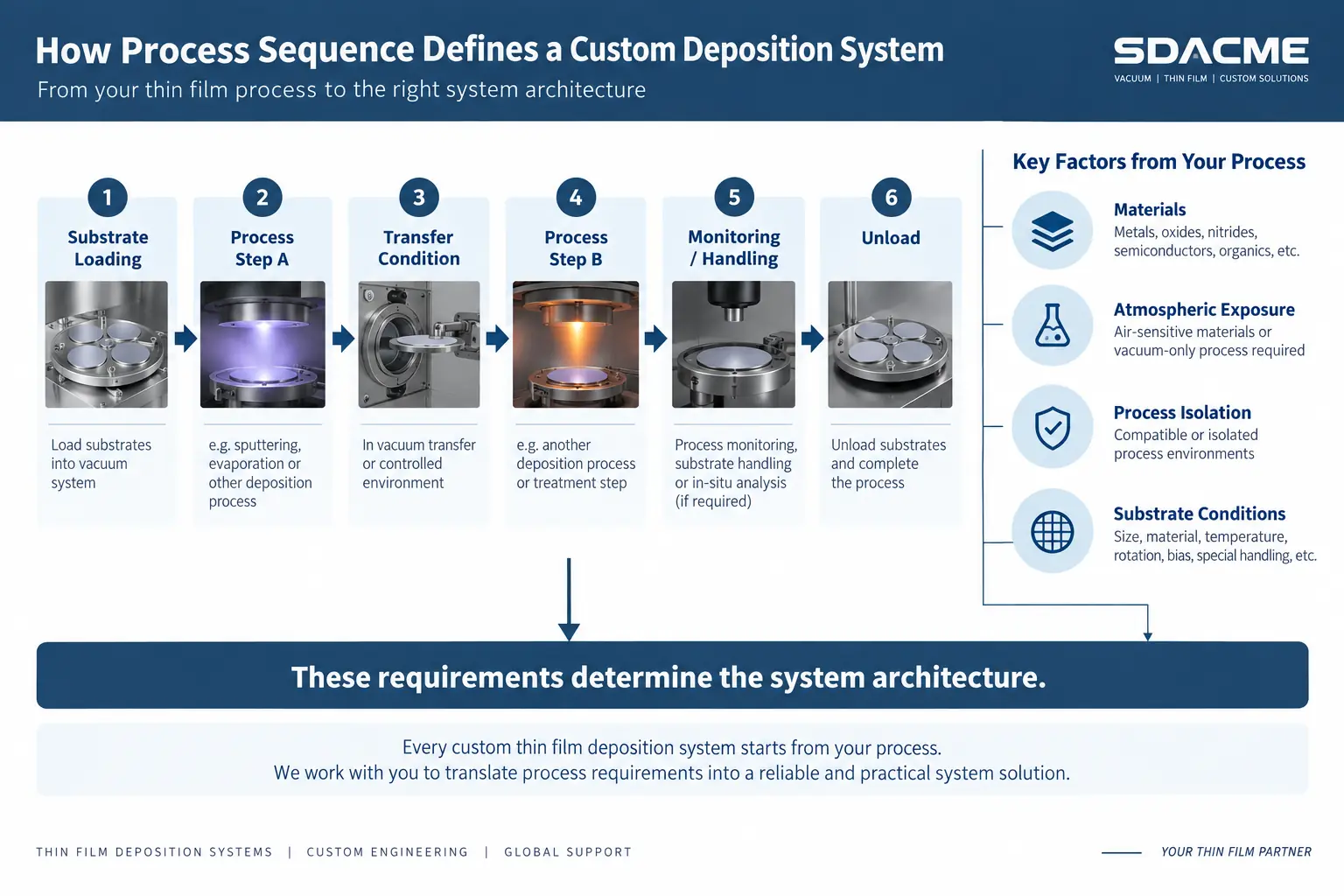
A custom deposition system should start with the required process sequence, not with a predefined chamber or equipment model. Materials, process order, allowable transfer conditions and required interfaces determine how the architecture should be evaluated.
Start With the Required Process Steps
Define what must happen to the substrate from loading through each deposition or treatment stage to final unloading.
Magnetron Sputtering as Part of the Process
If sputtering is one of the required steps, target materials, substrate, process conditions and the required sputtering configuration should first be defined.
Review magnetron sputtering system configuration →Thermal Evaporation as Part of the Process
If thermal evaporation is required, the evaporation material, deposition sequence, substrate requirements and monitoring needs should be reviewed before integration into a larger system.
Review thermal evaporation systems →Multi-Process Requirements Need Architecture Review
Combining several process steps is not simply a matter of adding more sources. The sequence determines which functions can share an environment and which require separation or controlled transfer.
Choose the Chamber and Transfer Architecture Around the Process
Chamber quantity and transfer architecture depend on how the substrate moves through the process and whether different process steps can share the same environment. Architecture should therefore follow the process requirement.

Process Separation
Different process steps may have different material, vacuum, contamination or operating requirements. Where separation matters, the chamber arrangement should be reviewed accordingly.
Controlled Transfer
If the substrate or deposited layer should not be exposed to the normal ambient environment between stages, transfer conditions become part of the architecture definition.
Glovebox Integration
A glovebox interface may be relevant where substrate handling or transfer requires a controlled environment. Interface and system boundary are defined according to the project.
Multi-Chamber or Cluster-Type Requirement
Where several isolated process environments or coordinated stages are required, multi-chamber or cluster-type architecture can be evaluated as a project requirement.
Configure the System Around Materials, Sources and Substrates
Once the process sequence and architecture are understood, the materials, source requirements, substrate conditions and process environment become the main inputs for configuration review.
Deposition Materials and Source Requirements
Start with the materials and required deposition method for each process step. Source type and quantity should be defined only after the confirmed process scope.
- Materials involved
- Required deposition method
- Number of deposition steps
- Sequential or combined process requirement
Substrate Size and Loading
Substrate information affects chamber space, fixtures, source-to-substrate geometry and handling requirements.
- Substrate material
- Dimensions and quantity
- Orientation
- Loading and fixture requirements
Substrate Process Conditions
Where relevant, identify the process need for temperature control, movement, rotation, electrical conditions or custom fixturing.
- Temperature requirement
- Movement or rotation requirement
- Electrical bias requirement
- Special fixture requirement
Vacuum and Process Environment
Define the required environment for each step, including any restrictions on atmospheric exposure or controlled transfer between processes.
- Vacuum requirement
- Process atmosphere
- Allowable exposure between steps
- Controlled environment requirements
Define the Required Level of Control, Monitoring and Automation
A custom deposition project does not automatically require maximum automation. The appropriate control scope follows the process sequence, operator workflow, parameters that must be monitored and interfaces with other equipment.
Process Control
Identify which process steps must be coordinated and which operating parameters need controlled adjustment during the deposition sequence.
Process Monitoring
Define which process status, deposition conditions, thickness-related information, vacuum information or other project-specific signals need to be visible to the operator.
Data and Process Records
If experimental records, operating data or process traceability are required, identify the necessary data scope during engineering review.
Automation and External Interfaces
Multi-step sequencing, automatic transfer or coordination with external equipment can be evaluated according to the actual project requirement.
Define the Project Interfaces, Verification and Supply Scope
Custom thin film deposition projects often involve more than the deposition equipment itself. Facility conditions, existing equipment, project interfaces, verification requirements and supply boundaries should be reviewed before the final configuration is defined.
Equipment and Facility Interfaces
Provide relevant electrical supply, utilities, installation conditions, mechanical interfaces, vacuum interfaces and other project connections where applicable.
Existing Equipment Integration
If the system must connect to a glovebox, chamber, customer fixture, monitoring device or other equipment, available interface information should be reviewed before the boundary is confirmed.
Define What Needs to Be Verified
Project-specific functions and interfaces can be included in the agreed verification scope where applicable. Verification items should be defined during engineering review rather than assumed after completion.
Define the Supply Boundary
A custom proposal should distinguish what is included in the system and what belongs to the customer facility, existing equipment or other project responsibilities.
Existing Platforms Relevant to Custom Thin Film Projects
Not every custom thin film project begins from a completely new equipment concept. Existing SDACME deposition and thin film preparation platforms can provide reference points during engineering review, while the final configuration remains defined by the actual project requirement.
DM400 Glove Box Evaporation System
An existing SDACME evaporation platform for projects involving glovebox integration. For a new project, deposition source configuration, glovebox interface, transfer requirement and final system scope are defined according to the application.
DM300 Thin Film Preparation System
An existing SDACME thin film preparation platform that can serve as a reference during custom-system engineering review. The process combination and project-specific configuration should be defined according to the required application.
Need a Dedicated Single-Process System?
If the project can be handled by one established deposition method, review the dedicated process family before moving to a custom integrated architecture.
How to Start a Custom Thin Film Deposition Project
You do not need to define the complete equipment architecture before contacting us. Start with the process requirement. The engineering review can then convert those inputs into a proposed system scope.
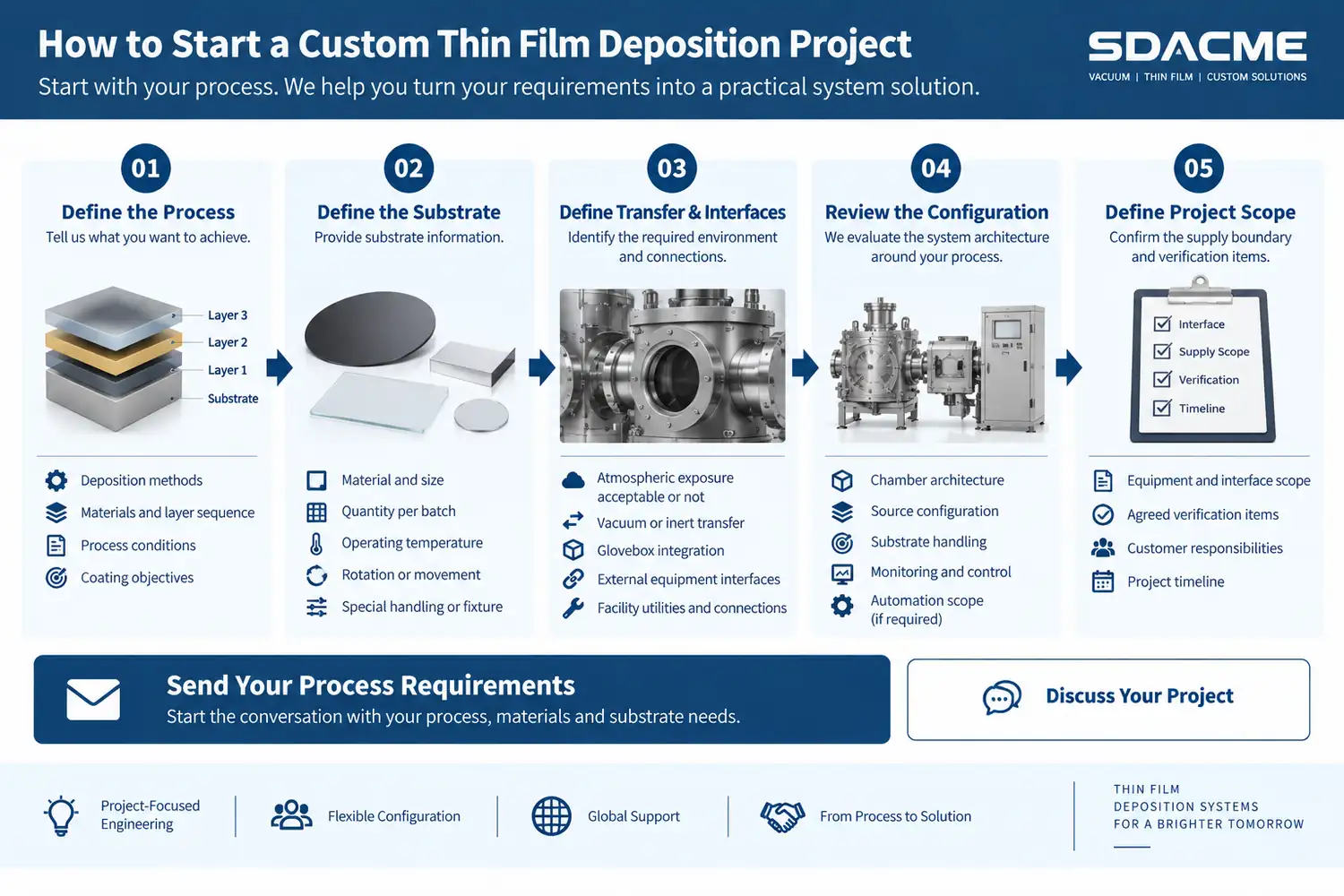
Define the Process
Provide the required deposition steps, materials and intended sequence.
Define the Substrate
Provide substrate material, dimensions, quantity and operating conditions.
Define Transfer & Interfaces
Identify controlled transfer, glovebox or external equipment requirements.
Review the Configuration
Review chamber architecture, sources, handling, monitoring and control.
Define Project Scope
Confirm proposed supply boundary, interfaces and applicable verification items.
Custom Thin Film Deposition System FAQ
Can sputtering and thermal evaporation be combined in one custom project?
They can be evaluated as part of the same project requirement. The final architecture depends on process sequence, materials, process separation, transfer conditions, source arrangement and system interfaces. The combination should therefore be reviewed as a project-specific configuration rather than assumed as one standard system.
When should I consider a multi-chamber or cluster deposition system?
A multi-chamber or cluster-type requirement becomes relevant when the process needs separate environments, multiple coordinated stages or controlled transfer between those stages. The actual architecture should be determined from the process sequence.
Do I need a glovebox-integrated deposition system?
Glovebox integration should be considered when substrate handling or transfer requires a controlled environment outside the deposition chamber. Provide the required transfer environment and interface conditions so the integration scope can be reviewed.
Do I need a load lock or controlled transfer system?
That depends on the required loading workflow and whether atmospheric exposure is acceptable at each stage. Describe the loading and transfer sequence first; the appropriate architecture can then be reviewed.
Can the custom deposition system be automated?
Automation requirements can be evaluated as part of the project. The required level depends on process sequence, transfer operations, parameters that must be controlled or monitored, and any external equipment interfaces.
What information do you need to evaluate a custom system?
Start with the process steps, deposition materials, substrate information, transfer requirements, required interfaces, control or monitoring needs and expected project verification conditions. You do not need to complete the equipment design before sending an inquiry.
Can you provide sample coating or process validation before equipment purchase?
Verification requirements are reviewed according to the project. Where a project requires sample-based or process validation, the applicable verification scope must first be confirmed during engineering review.
Send Your Process Requirements
You do not need a finished equipment specification to start a custom thin film deposition project. Send the process you need to achieve together with the materials, substrate, transfer and interface requirements you already know.