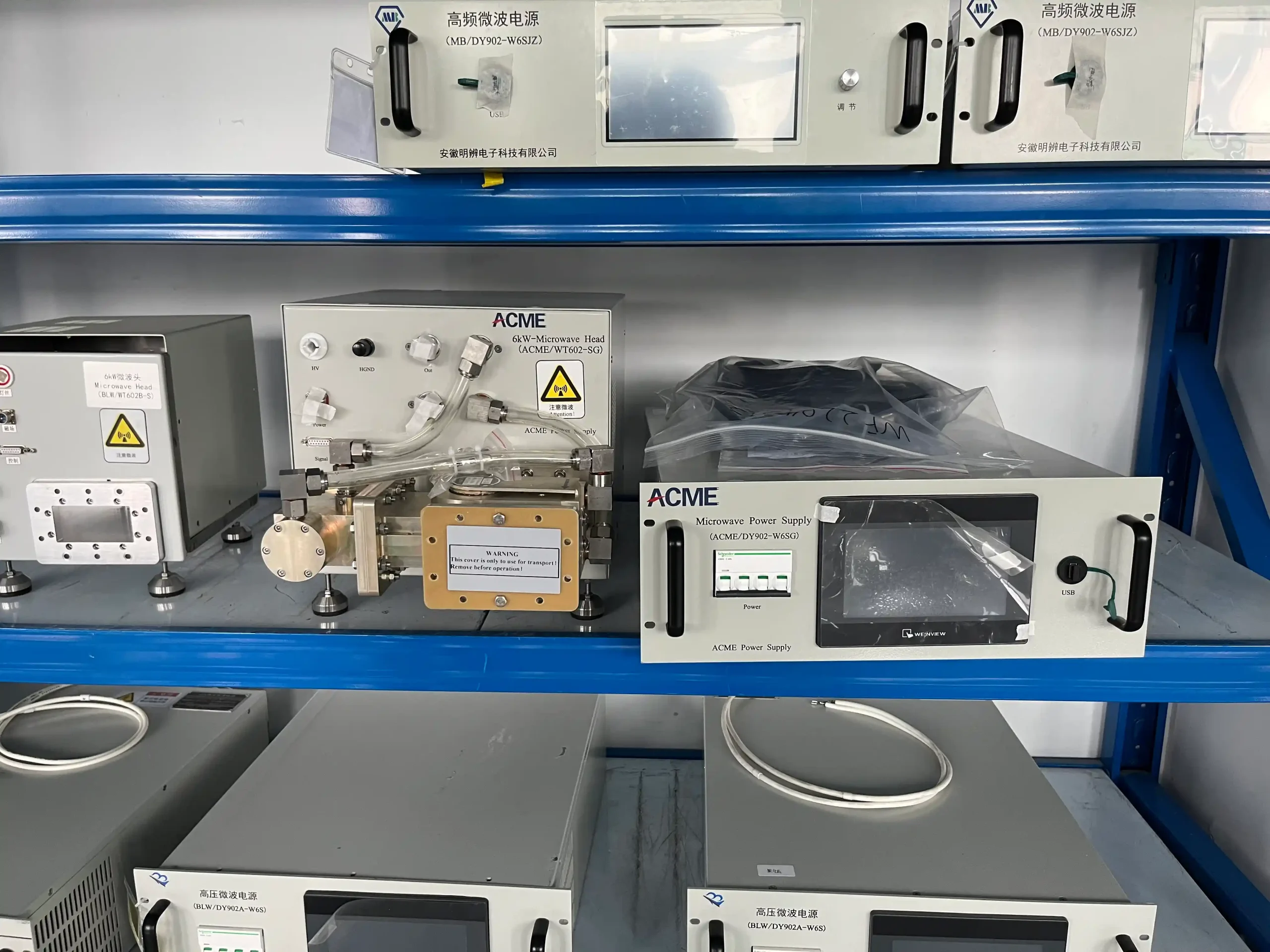
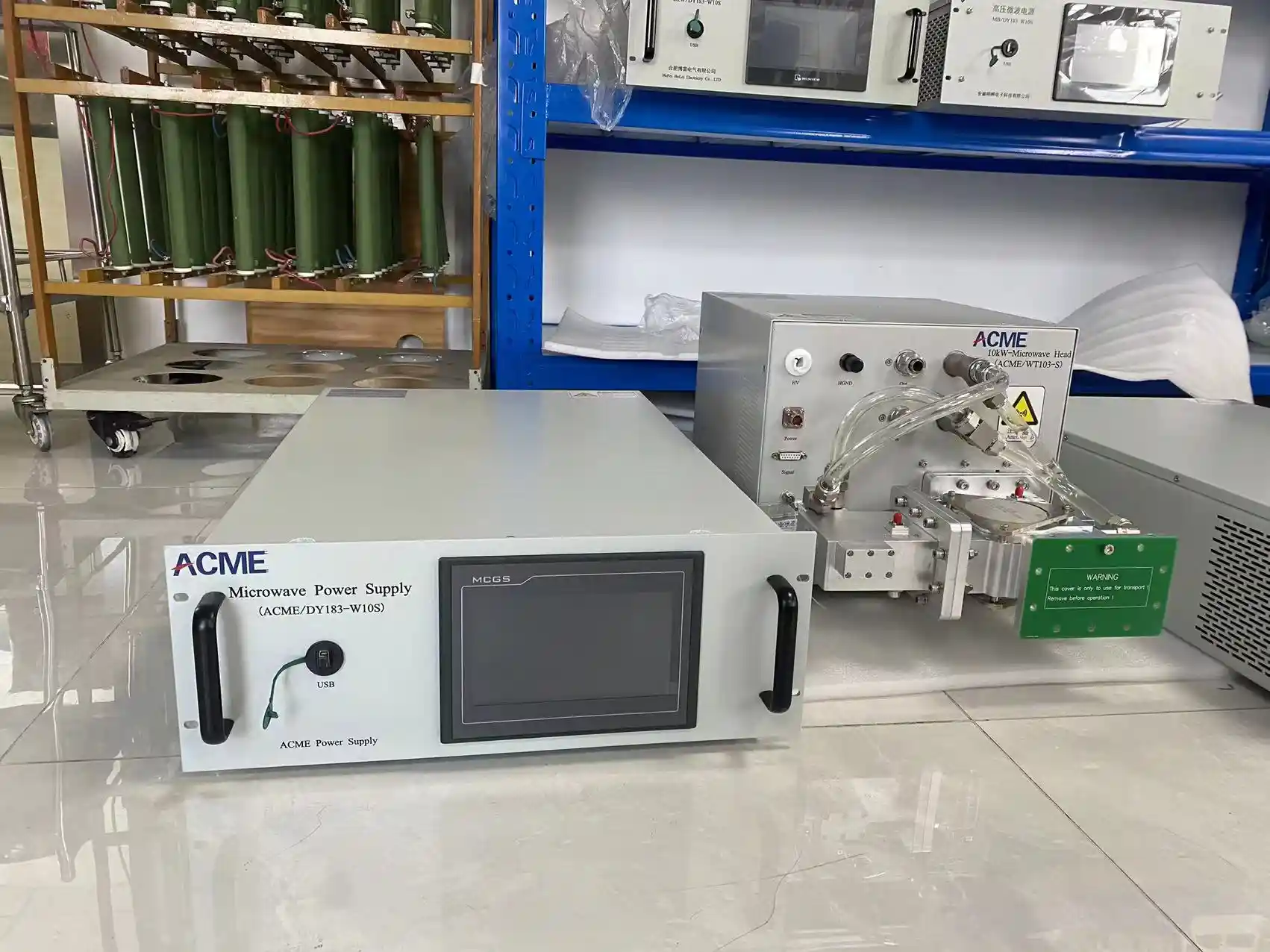
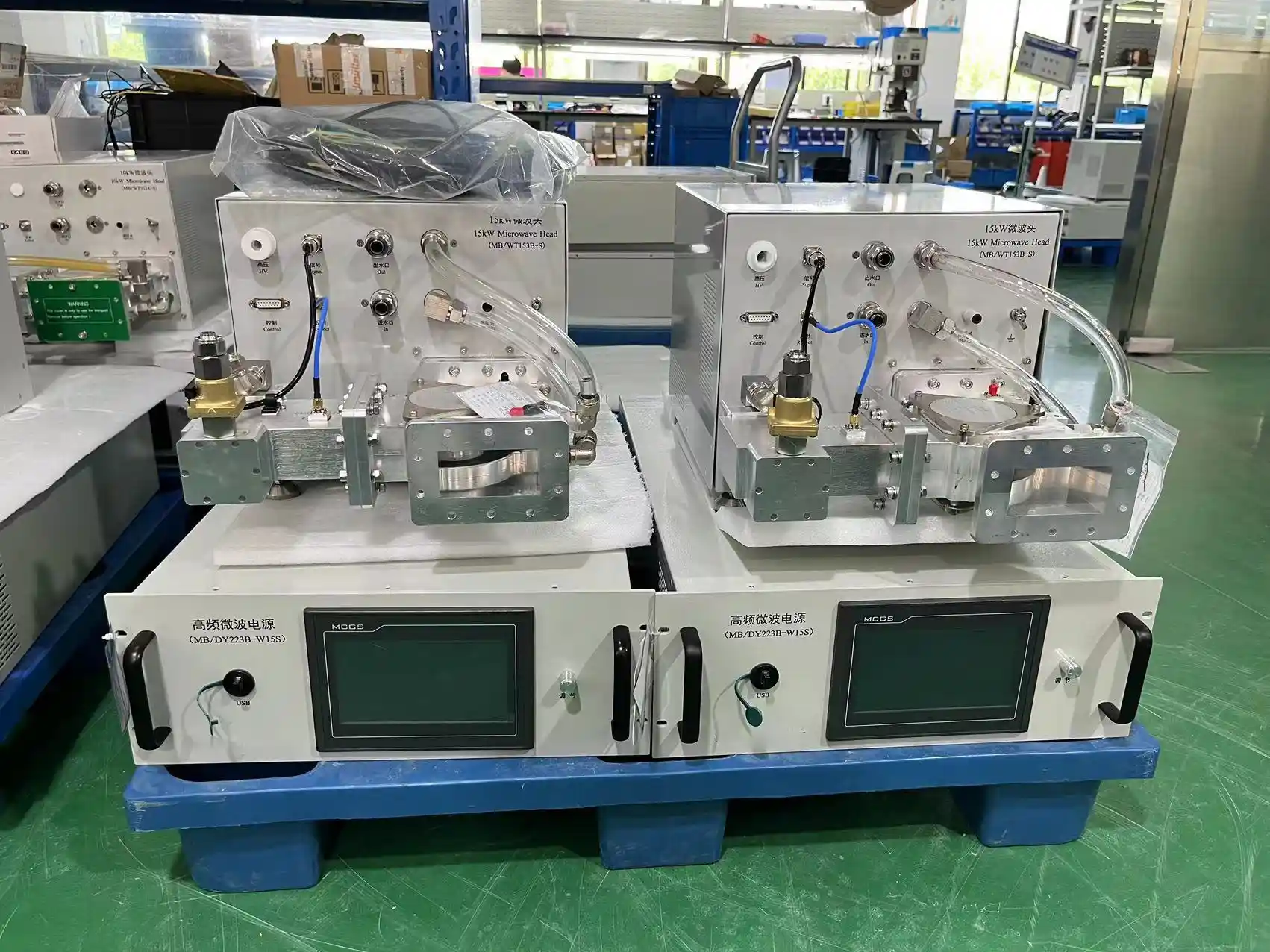
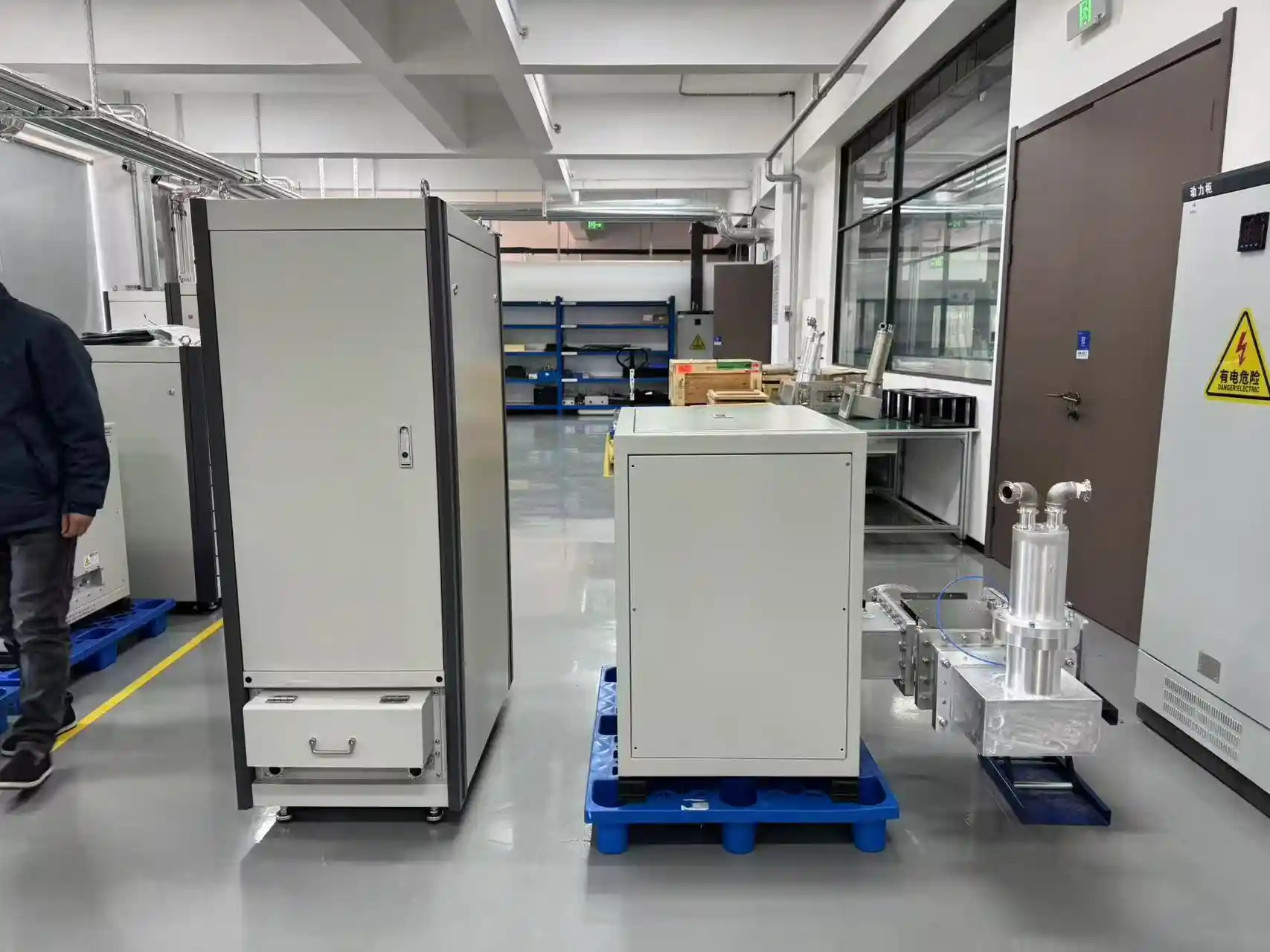
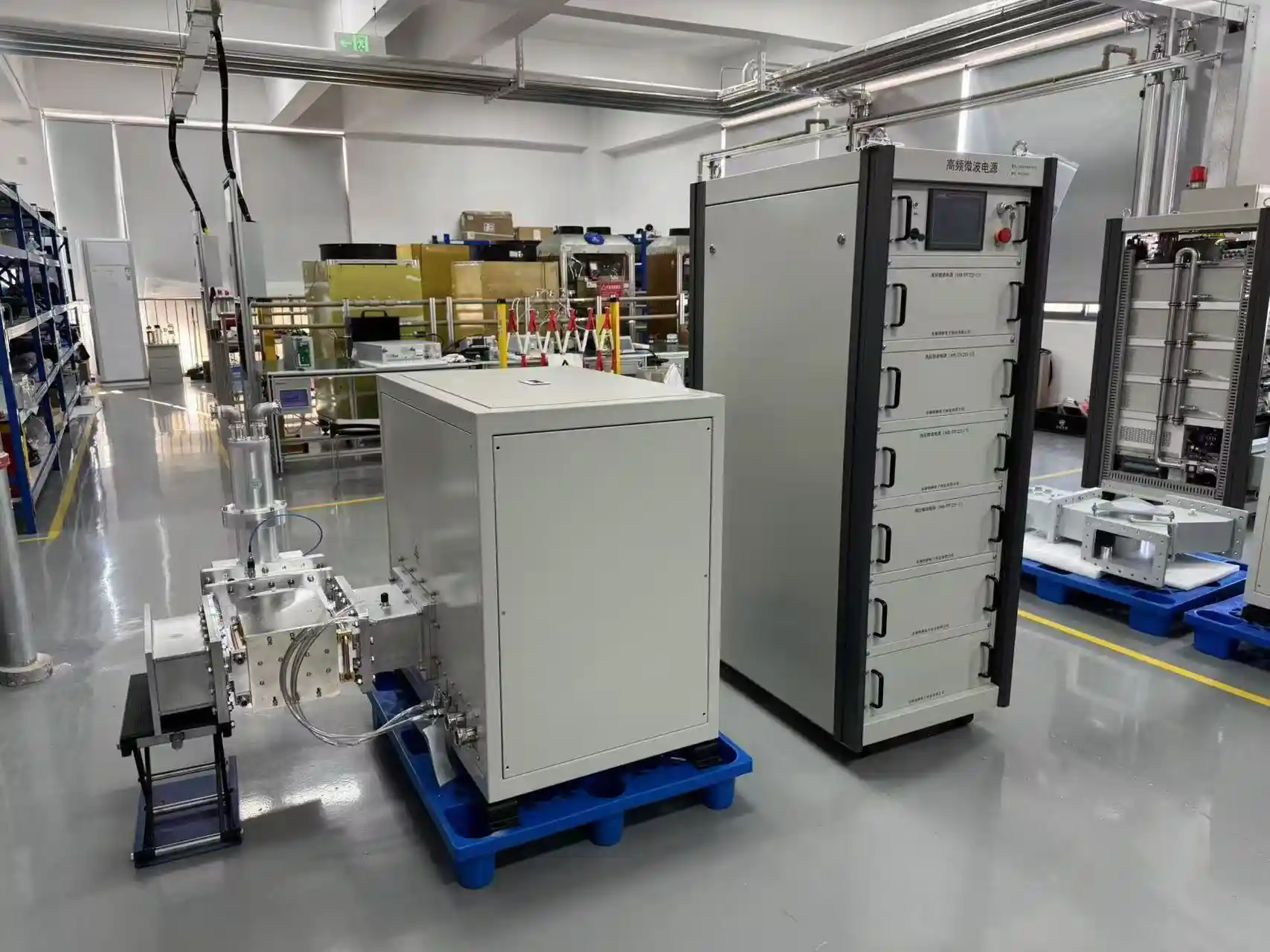
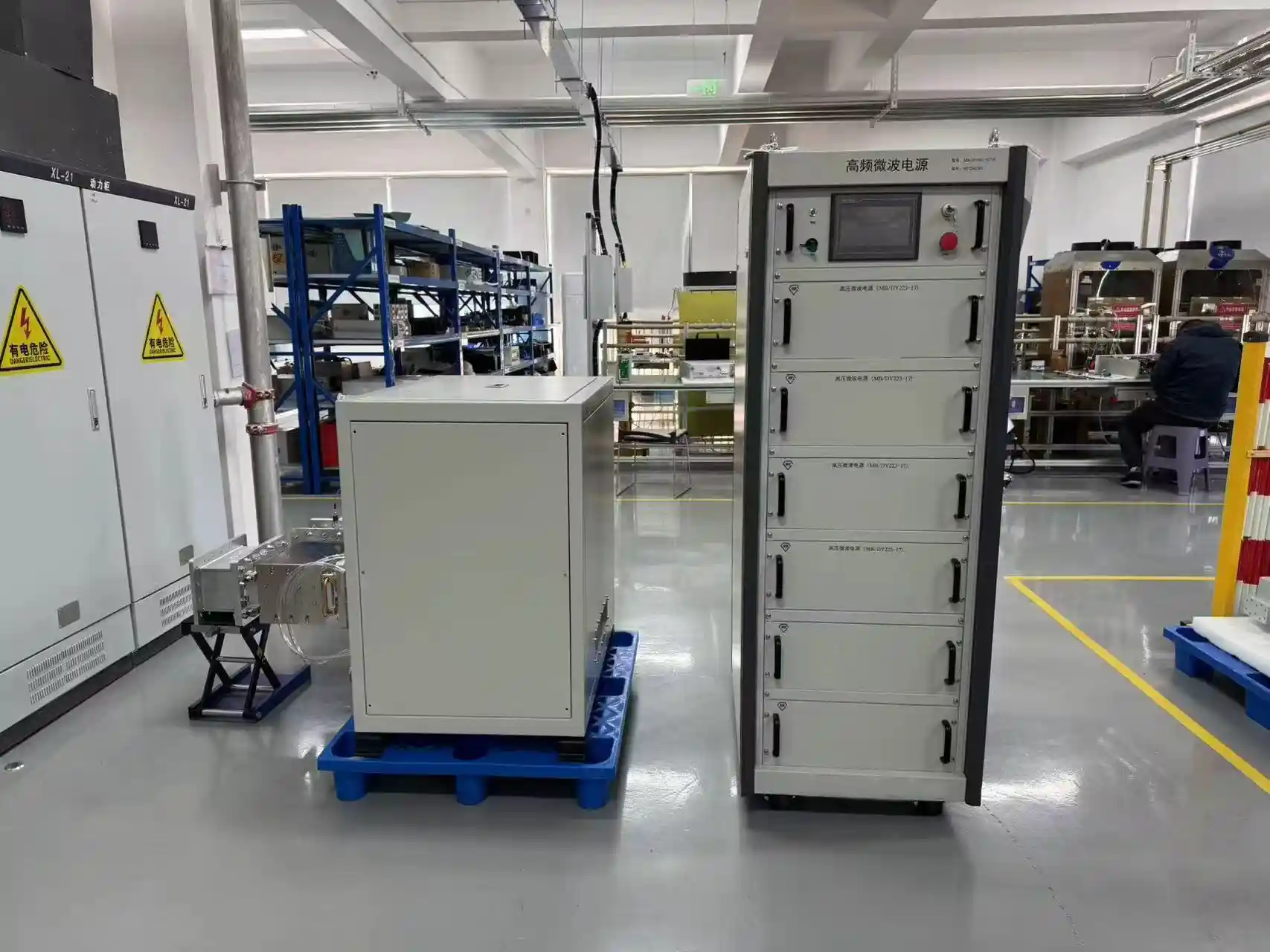
- More compact microwave generator and system design
- Suitable for plasma, CVD and precision material processing
- Commonly used in laboratory and small-to-medium industrial systems
- Well suited for coupling with plasma generators and process chambers
- Available SDACME power range: 6kW, 10kW and 15kW
FAQ
The correct power level depends on your application, load or reactor, required processing area, operating mode, microwave interface and site conditions.
Our 2450MHz range includes 6kW, 10kW and 15kW models. Higher-power 915MHz configurations, including 25kW, 75kW and 100kW, are evaluated according to the specific industrial system.
We can provide a preliminary quotation based on the requested power. However, the final configuration should be confirmed after reviewing the application, reactor or load, waveguide interface, control requirements and cooling conditions.
Microwave power alone cannot be used to guarantee processing speed, temperature, production capacity, diamond growth rate or other process results.
2450MHz microwave generators are generally used for more compact plasma, CVD, MPCVD, laboratory and medium-power industrial systems. SDACME’s 2450MHz range mainly includes 6kW, 10kW and 15kW models with BJ26 microwave output.
915MHz is normally selected for higher-power systems and larger industrial loads. SDACME can evaluate 25kW, 75kW and 100kW configurations according to the project. The 75kW system, for example, uses a BJ9 microwave output and requires substantially higher cooling capacity than the smaller 2450MHz models.
The two frequencies are not directly interchangeable. Selection must be based on the required power, load dimensions, reactor or applicator design and process requirements.
A typical microwave generator system may include:
- High-frequency microwave power supply
- Microwave head
- Magnetron
- Excitation cavity
- Local control system
- RS485 communication interface
- Connecting cables
- Microwave circulator or isolator
- Reflected-power load or water load
Depending on the project, waveguides, three-stub tuners, reflected-power monitoring, customized control interfaces, cooling equipment and installation accessories may be supplied as optional components.
The external electrical supply, cooling water or chiller, reactor, applicator, installation space and site utilities are normally confirmed separately. The exact standard configuration, optional items and customer-supplied items will be listed in the final quotation and technical agreement.
Yes. SDACME can evaluate replacement projects, but direct drop-in compatibility cannot be confirmed from the power rating alone.
For technical evaluation, please provide:
- Existing brand and model
- Equipment nameplate
- Microwave frequency and output power
- Input voltage and frequency
- Waveguide type and dimensions
- Installation dimensions
- Cooling method
- Control signals
- Communication protocol
- Reflected-power requirements
- Electrical drawings
- Photos of the existing microwave source and system
Adapter components, wiring changes, control modifications or mechanical modifications may be required. Final compatibility will be confirmed after engineering review.
The confirmed 6kW, 10kW and 15kW microwave generators support local touchscreen control and remote RS485 communication.
Depending on the selected model, the control system can provide:
- Microwave preheating and start/stop control
- Output-power setting
- Output-power monitoring
- Reflected-power monitoring
- Anode voltage and current monitoring
- Water-flow and temperature monitoring
- Operating-status feedback
- Fault and alarm feedback
- Historical data and fault-record storage
- USB data export on applicable models
Standard Modbus RTU communication is available on confirmed models, including the 10kW and 15kW systems. The final communication protocol, register list, commands and feedback signals will be confirmed for each project.
External water cooling is required for magnetron microwave generators. The required flow rate, water temperature, pressure and number of cooling circuits depend on the model and system configuration.
For reference:
- The 6kW generator module requires a cooling-water flow of at least 8L/min, with an inlet-water temperature of 0–40°C.
- The 10kW generator module requires at least 8L/min, with an inlet-water temperature of 0–40°C.
- The 15kW system uses separate cooling circuits. The microwave power supply requires at least 8L/min, while the microwave head/circulator and water-load circuits each require at least 15L/min. The specified inlet-water temperature is 0–35°C.
- The 75kW system requires separate cooling for the power cabinet, microwave head and water load. Its specified flow requirements are at least 25L/min, 35L/min and 100L/min respectively, with water temperature of 10–30°C and pressure of 0.4–0.6MPa.
Cooling requirements for 25kW and 100kW systems will be confirmed according to the final configuration. Unless the quotation specifically includes a chiller, the external cooling system is normally prepared by the customer.
Protection functions vary by model and project configuration. Confirmed functions may include:
- Reflected-power protection
- Filament undercurrent and overcurrent protection
- Anode overvoltage and overcurrent protection
- Magnetron overtemperature protection
- Power-supply overtemperature protection
- Arc or ignition protection
- Waveguide arc protection on applicable models
- Water-flow protection
- Water-temperature protection
- Magnetic-field overcurrent protection on applicable models
- Fault-code display and fault-record storage
- Remote alarm feedback
When the reflected power or another protected parameter exceeds the configured limit, the system may automatically stop the microwave output and report the fault. The exact protection logic and shutdown action will be confirmed in the technical agreement.
For an initial quotation, please provide at least:
- Application
- Required microwave power
- Required frequency, if known
- Quantity
- Destination country
For a confirmed technical proposal, we may also need:
- Load, reactor or applicator information
- Input voltage and frequency
- Continuous or other operating requirements
- Waveguide or microwave output interface
- Local and remote control requirements
- Communication protocol
- Cooling-water or chiller conditions
- Installation dimensions
- Required scope of supply
- Project schedule
For replacement projects, please also provide the existing brand and model, nameplate, fault description, interface drawings and system photos. When important technical information is missing, SDACME can provide only a preliminary reference configuration rather than a final confirmed proposal.