Industrial Microwave Generators
Magnetron-based 2450 MHz and 915 MHz microwave generator solutions for equipment manufacturers, system integrators, and industrial users. The current product range includes 6 kW, 10 kW, 15 kW, 25 kW, 75 kW, and 100 kW, configured around the application, load, interface, control, cooling, and project supply scope.
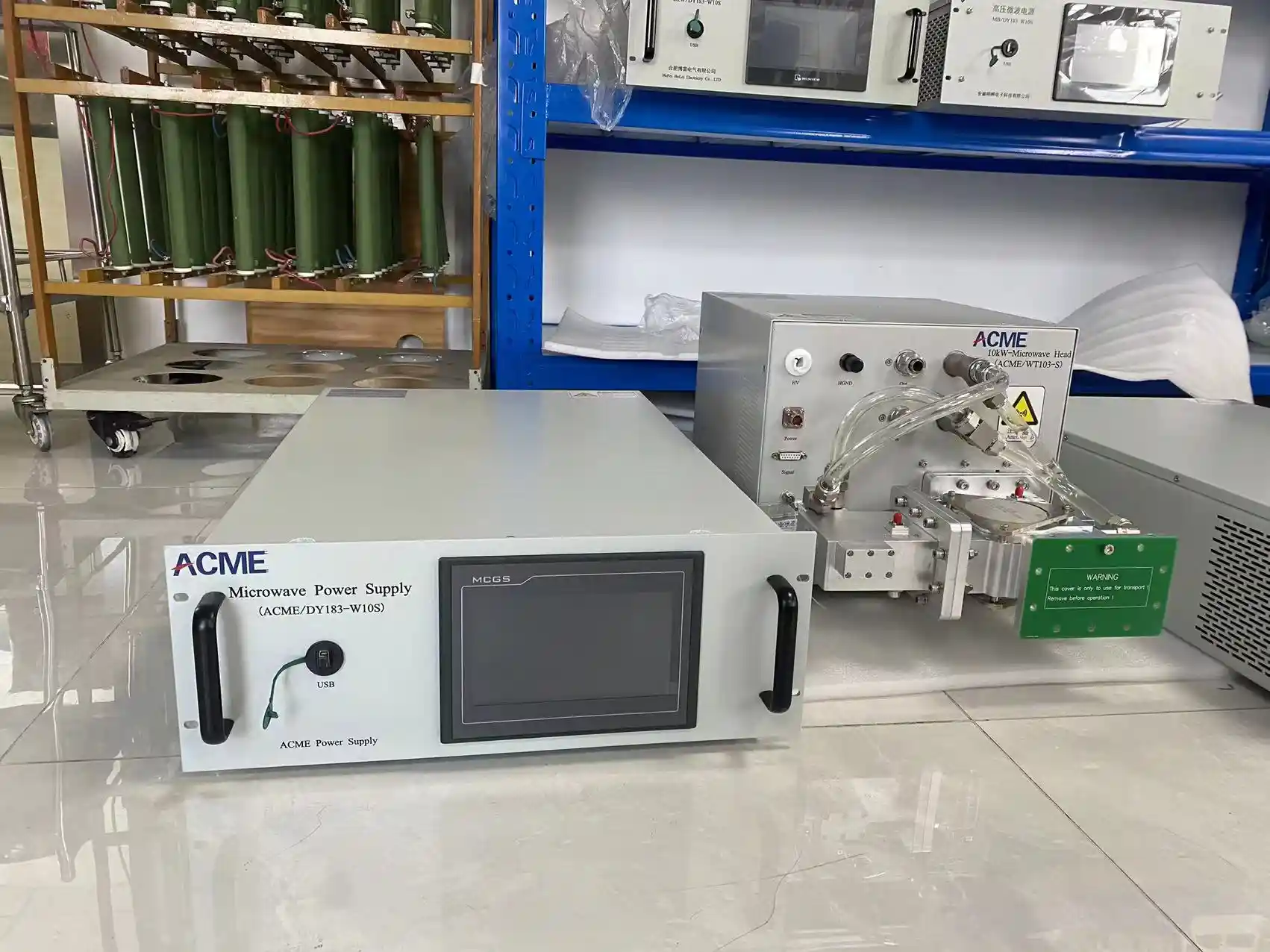
Frequency and power are reviewed together with the chamber, load, waveguide, control, and cooling conditions.
The quotation clearly lists the generator, included components, project options, and customer-side utilities.
Waveguide, electrical connection, local operation, communication, and equipment integration are matched to the selected model.
Each generator is function-tested before delivery, with FAT documentation and customer witnessing available for applicable projects.
On This Page
Select Frequency and Power From the Complete System Conditions
Frequency and rated power are only the starting points. Generator selection should also consider the application chamber or load, waveguide interface, control and communication requirements, cooling capacity, reflected-power conditions, and the required supply scope.
What Process or Equipment Will Use the Microwave Energy?
MPCVD, diamond growth, microwave plasma, semiconductor or diamond-wafer equipment, and other industrial loads may require different frequency, power, and system configurations.
What Chamber, Load, and Waveguide Interface Already Exist?
Existing equipment power is useful for initial selection, while chamber geometry, load variation, flange, waveguide, and coupling conditions also need to be reviewed.
How Will the Generator Be Controlled and Cooled?
Local control, communication, equipment interlocks, site electrical capacity, cooling water, temperature, flow, and operating duty affect the final configuration.
What Should Be Included in the Supply Scope?
Define whether the project needs only the core generator or also isolation, monitoring, tuning, waveguide, and other application-specific components.
Available Frequency and Power Ranges
Use the following ranges for initial comparison, then confirm the final model through an engineering review.
2450 MHz
Commonly selected for MPCVD, diamond-growth equipment, microwave plasma systems, research equipment, and OEM integration.
- Available interfaces include BJ26 and model-specific BJ22 or BJ26 configurations.
- Confirm chamber, load, control, communication, cooling, and operating duty.
- Diamond growth performance also depends on chamber design, gas chemistry, pressure, cooling, coupling, and process settings.
915 MHz
Commonly selected for high-power microwave plasma, semiconductor and diamond-wafer equipment, and project-configured industrial systems.
- The current 915 MHz series uses the BJ9 output interface and water cooling.
- Confirm site power, load, waveguide, reflected-power management, control, and cooling.
- Material quality and processing performance also depend on the complete equipment and process conditions.
Provide the application, required or existing power, quantity, and destination country. For a replacement project, also send the current brand and model, nameplate, fault, dimensions, waveguide, cooling, and control information.
Industrial Microwave Generator Models
SDACME’s magnetron-based range includes three 2450 MHz power levels and three 915 MHz high-power levels. Use the overview below to compare frequency, power, interface, control, and cooling options. The final configuration is matched to your application and equipment requirements.
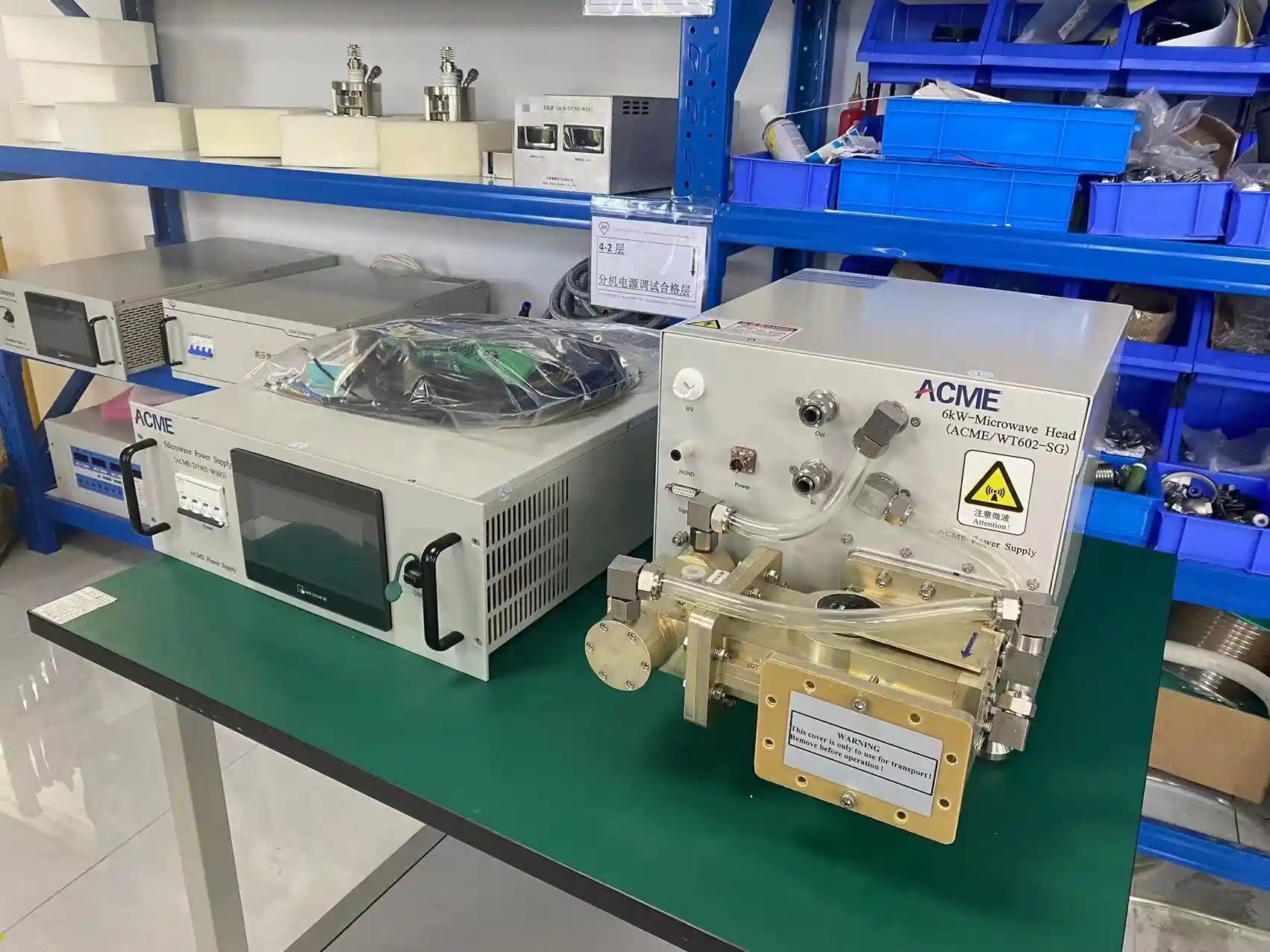 2450 MHz
6 kW
Magnetron Microwave Generator
ACME/WF602-STypical applications: MPCVD, microwave plasma, and selected research equipment.
Request 6 kW Technical Review2450 MHz10 kW
Magnetron Microwave Generator
ACME/WF103-STypical applications: MPCVD, microwave plasma, and OEM equipment integration.
Request 10 kW Technical Review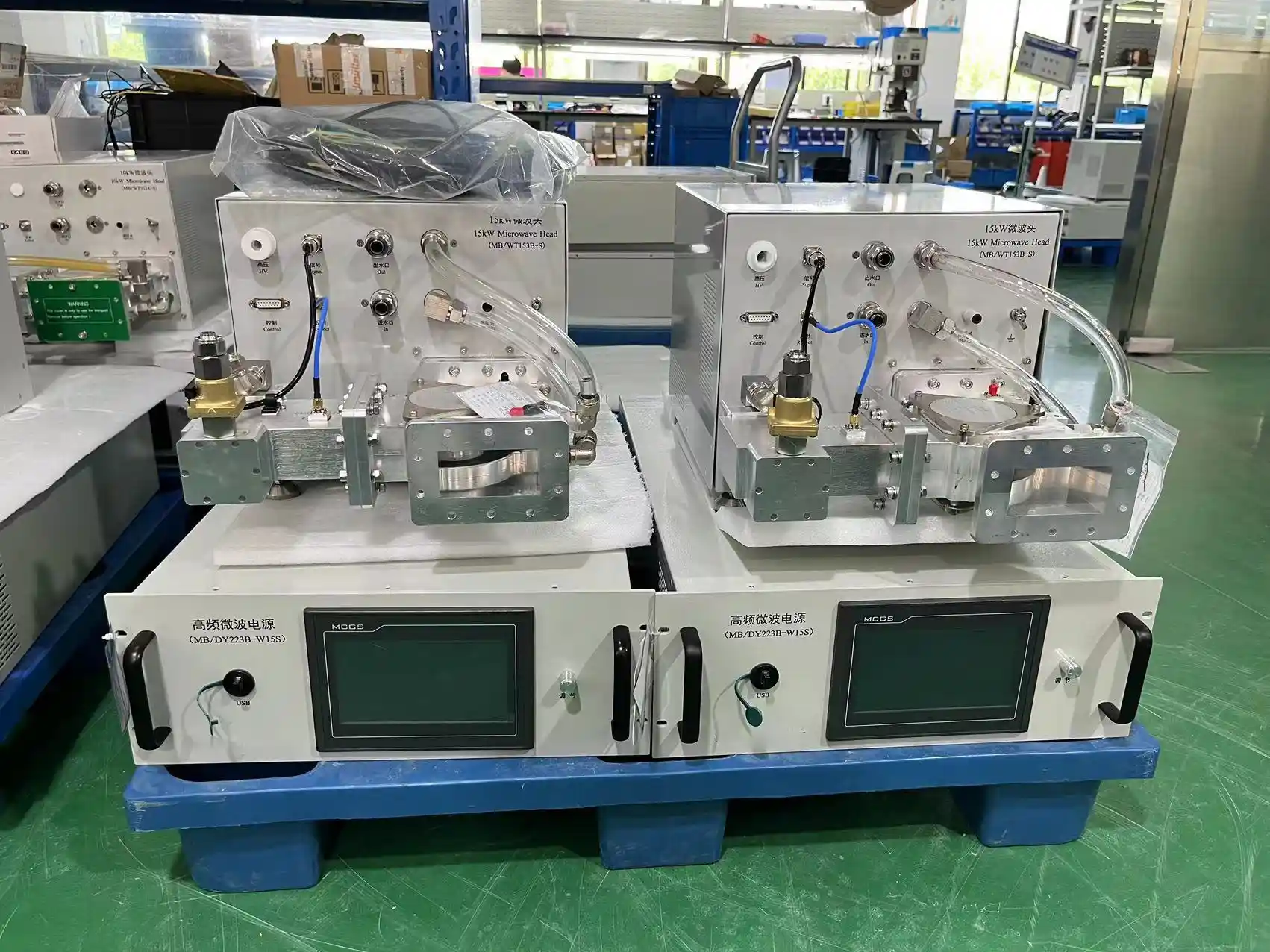 2450 MHz
15 kW
Magnetron Microwave Generator
ACME/WF153-STypical applications: Higher-power MPCVD, microwave plasma, and OEM equipment projects.
Request 15 kW Technical Review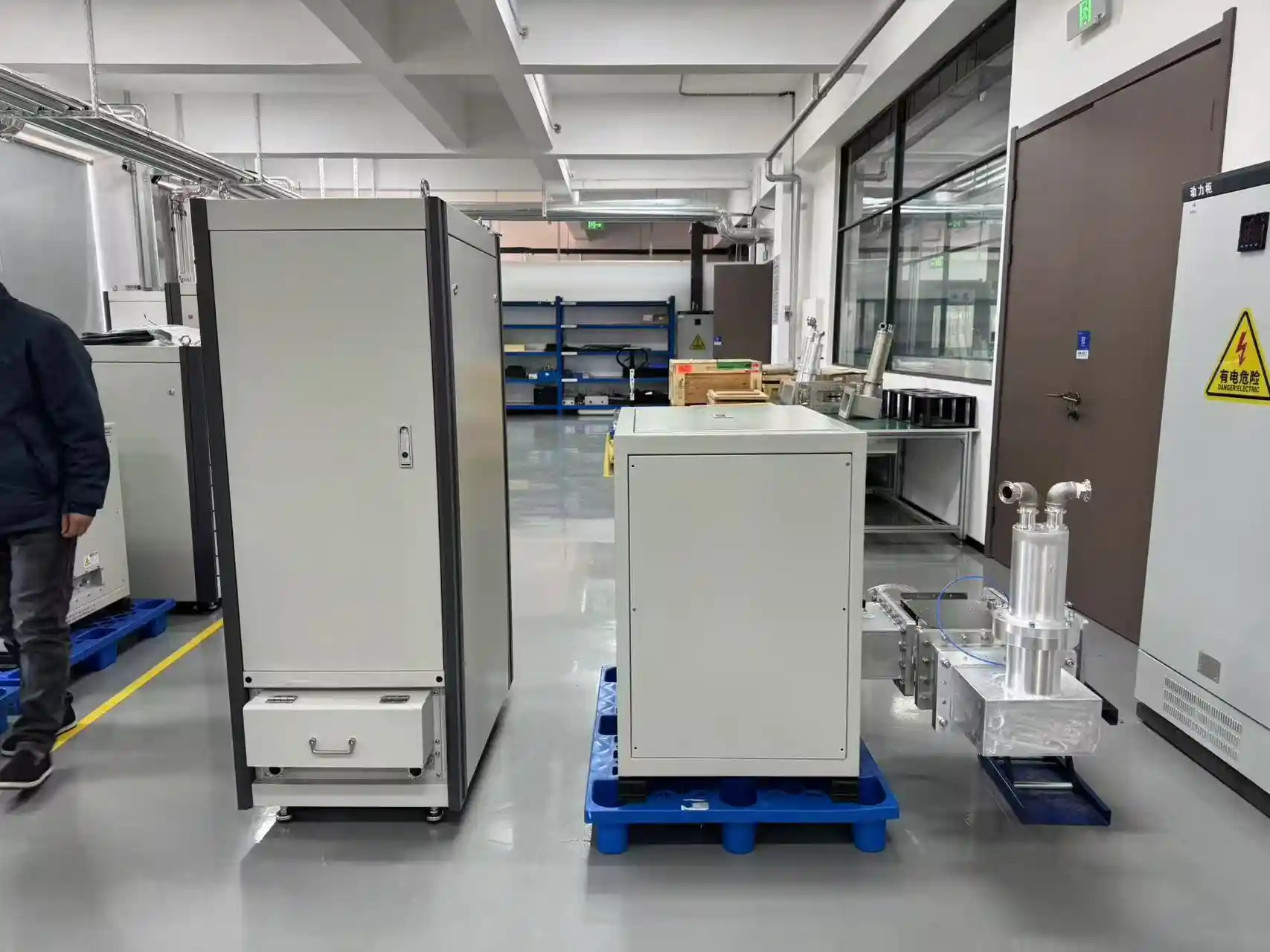 915 MHz
25 kW
High-Power Microwave Generator
25 kW Project ConfigurationTypical applications: High-power microwave plasma and project-based industrial systems.
Request 25 kW Technical Review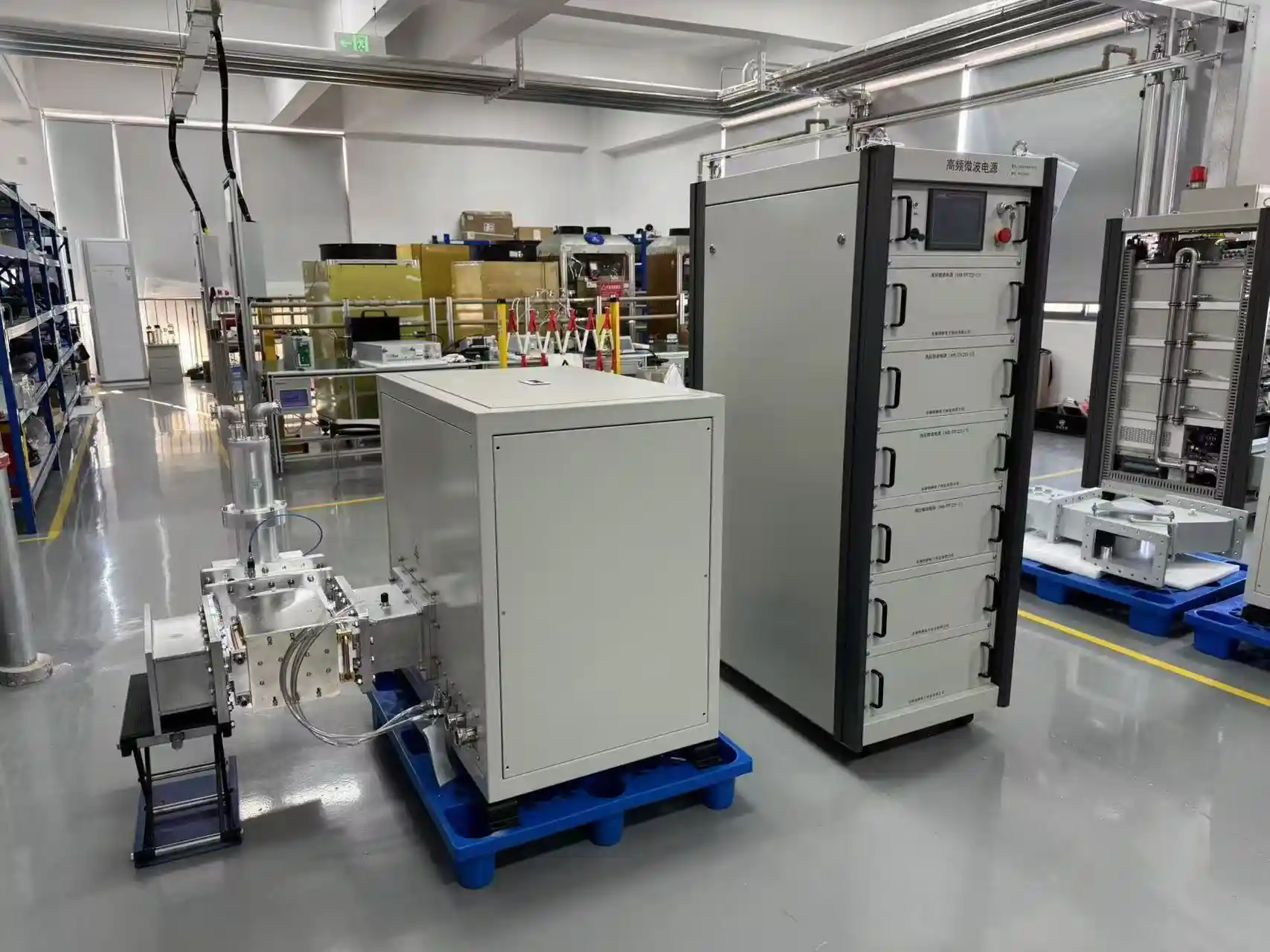 915 MHz
75 kW
High-Power Microwave Generator
ACME/WF753-LTypical applications: Semiconductor, diamond-wafer, and high-power plasma systems.
Request 75 kW Technical Review 915 MHz
100 kW
High-Power Microwave Generator
ACME/WF104-LTypical applications: High-power plasma, advanced materials, and project-configured industrial systems.
Request 100 kW Technical ReviewNot Sure Which Model Fits Your Equipment?
Provide the application, required or existing power, chamber or load, waveguide interface, control, cooling, quantity, and destination country for an initial engineering review.
Industrial Microwave Generator Applications
SDACME microwave generators are developed for equipment manufacturers, industrial users, and system-integration projects. Chamber or load conditions, waveguide connection, control, cooling, operating mode, and system scope are reviewed together with the required power level.
MPCVD & Diamond Growth
2450 MHz · 6 / 10 / 15 kWThe 2450 MHz series is available for MPCVD and diamond-growth equipment in the 6 kW, 10 kW, and 15 kW power classes.
- Existing or target equipment power
- Chamber and load conditions
- Waveguide and interface requirements
- Control, cooling, and operating mode
- Estimated quantity and destination
Microwave Plasma Systems
2450 MHz or 915 MHzMicrowave plasma projects may use different frequency and power levels depending on the chamber, plasma load, reflected-power conditions, operating duty, and system configuration.
- Plasma application and target power
- Chamber, load, and material information
- Waveguide, flange, and transmission path
- Continuous or intermittent operation
- Reflected-power and control requirements
Semiconductor & Diamond Wafer Systems
915 MHz · 25 / 75 / 100 kWThe 915 MHz high-power series can be evaluated for microwave-energy systems used in semiconductor, diamond-wafer, and related advanced-material equipment.
- Equipment and material-processing type
- Target power and load conditions
- BJ9 or existing waveguide interface
- Site electrical and cooling capacity
- Control, communication, and test needs
What Engineers Review Across All Applications
The same rated power may require different transmission, protection, control, cooling, or installation arrangements in different applications.
Microwave Power Is One Part of the Complete Process
Final equipment performance depends on the microwave system, chamber coupling, load, material, cooling, control, matching, installation, and process parameters—not only the generator’s rated output power.
Have a Different Industrial Microwave Application?
Provide your process, required frequency or power, equipment information, load, interface, cooling, and operating conditions for an initial technical review.
How a Complete Microwave Generator System Works
Microwave energy starts from the site power supply, enters the power-supply and control unit, is generated by the microwave head and magnetron, and is delivered to the customer’s chamber or load through model- or project-specific isolation, monitoring, tuning, and waveguide components.
Site Power
Provides the electrical input required by the selected microwave generator.
Power Supply & Control
Provides magnetron drive, power adjustment, local or communication control, and fault management.
Microwave Head & Magnetron
Generates microwave energy at the selected frequency and power level.
Circulator / Isolator
Helps manage reflected microwave energy and protect the source.
Power Monitoring / Tuner
Monitors forward and reflected power and helps match the system to the load.
Waveguide
Transfers microwave energy from the generator to the application equipment.
Applicator / Chamber / Load
Receives microwave energy and performs the MPCVD, plasma, wafer, or other industrial process.
Configure the System Around Your Equipment
Your quotation will clearly list the generator, included components, project options, and customer-side utilities required for installation.
Standard, Optional and Customer-Side Scope
Compare the complete equipment list, interfaces, utilities, documentation, and test scope—not only the rated power.
Typical Core Generator
Main components forming the microwave source
- Microwave power supply and control unit
- Microwave head
- Magnetron
- Core connection cables
Depending on Model
Included when matched to the selected configuration
- Circulator or isolator
- Water load
- Forward and reflected-power monitoring
- Model-specific protection functions
Project Options
Configured around the application and customer equipment
- Three-stub tuner
- Special waveguide and flange configuration
- Additional power monitoring
- Interface customization
- Control and communication customization
Customer-Side Utilities
Site utilities and final process equipment
- Site input power
- External cooling-water system or chiller
- Final applicator chamber or process load
- Vacuum system
- Gas system
Points to Check When Comparing Quotations
Similar power ratings may include different components and services.
Check the microwave head, isolation components, waveguide, monitoring, controls, cables, and documents.
Provide dimensions, drawings, nameplates, and clear photos when existing equipment will be retained.
Provide the available water flow, temperature, pressure, and interface information.
Your Quotation Lists the Exact Supply Scope
The quotation lists the exact components, interfaces, options, documents, and services included with the selected configuration.
Control, Communication, Monitoring and Protection
Industrial microwave generators work together with the customer’s equipment and safety logic. Depending on the selected model and configuration, available functions may include local HMI or touchscreen control, equipment communication, operating-data monitoring, alarms, protection, emergency stop, and safety interlocks.
Control Options Matched to the Selected Model
Control and protection functions are configured around the selected generator and the customer’s equipment. Interface layout, monitored values, communication, alarms, and interlocks are confirmed during the technical review.
- Local start and stop
- Microwave power setting
- Operating-status display
- Alarm and fault viewing
- Equipment communication
- Emergency and interlock logic
Main Control and Protection Functions
The available functions below are matched to the selected generator and the customer’s integration requirements.
Local Control
HMI or touchscreen operation at the generator
Generator start and stop, microwave power setting, operating-status display, alarm viewing, and fault information.
Model configuration: screen layout, user permissions, status values, and settings are matched to the ordered model.
Communication
Interface with customer equipment and control systems
Selected models support RS485 communication. Additional communication requirements can be reviewed for OEM and integration projects.
Communication selection: provide the required protocol, data points, commands, and controller information.
Operating-Data Monitoring
View key operating conditions and fault information
Output or reflected power, current, voltage, temperature, cooling-water status, alarms, and fault codes.
Monitoring configuration: displayed items, records, sampling, and export functions are matched to the selected model.
Protection
Protective response to abnormal operating conditions
Electrical faults, overtemperature, cooling-water or water-flow faults, arcing, excessive reflected power, and abnormal-load conditions.
Protection configuration: thresholds, alarms, shutdown actions, and recovery logic are matched to the model and equipment.
Example Control Functions by Model
The examples below show available functions on selected models. The final control package is matched to the ordered generator configuration.
15 kW · 2450 MHz
- Local touchscreen control
- RS485 communication
- Historical operating-data records
- USB data export
75 kW · 915 MHz
- Local touchscreen control
- RS485 communication
- High-power system control interface
- Project-matched control functions
Confirm the Required Communication Before Ordering
State the required control mode, communication protocol, data points, command permissions, alarm signals, connector type, and customer-controller information during the inquiry.
Reliable Operation Depends on the Complete System
Reliable operation depends on correct chamber coupling, waveguide matching, cooling, site power, load conditions, control logic, and equipment interlocks. These conditions are reviewed together when the generator is selected and integrated.
Define Your Control and Safety Requirements
Provide the required local controls, communication protocol, customer controller, monitored data, alarm signals, interlocks, operating mode, and test requirements.
OEM Integration, Replacement and Factory Testing
SDACME supports standard generator supply, OEM equipment integration, and replacement of existing industrial microwave sources. Each project is reviewed around the application, power, frequency, installation, waveguide, control, communication, cooling, testing, and delivery requirements.
OEM Equipment Integration
Coordinate the microwave source with the customer’s enclosure, controls, communication, waveguide, cooling, and equipment architecture.
Existing-System Replacement
Review existing generators, interfaces, dimensions, cooling, controls, and waveguide conditions before preparing a replacement proposal.
Factory Testing Before Shipment
Confirm generator operation, controls, alarms, protection, interlocks, and agreed project functions before delivery.
OEM Integration and Replacement Services
Provide the available equipment information at the beginning of the project. SDACME will review the required interfaces and prepare a recommended generator and integration configuration.
OEM Equipment Integration
Integrate a standard or project-configured microwave generator into industrial equipment developed by the customer.
- Enclosure and installation dimensions
- Electrical and control interfaces
- Communication with customer equipment
- Waveguide and flange connection
- Cooling-water interface
- OEM labeling and documentation
- FAT and witness requirements
- Application and target power/frequency
- Estimated quantity
- Equipment layout and dimensions
- Control and communication requirements
- Waveguide and cooling information
- Required documents and test items
Replacement and Retrofit
Replace an existing microwave generator or power-supply section while retaining suitable parts of the original equipment.
- Existing power and frequency
- Installation dimensions and space
- Waveguide and flange connection
- Electrical input and output interfaces
- Control, communication, and interlocks
- Cooling-water conditions
- Existing brand and model
- Nameplate and current fault
- Overall and installation dimensions
- Waveguide and flange photographs
- Electrical and communication drawings
- Existing cooling information
Typical Project Process
The same structured process is used for standard, OEM, and replacement projects.
From Engineering Confirmation to Shipment
Each generator is assembled, wired, configured, and tested according to the confirmed model and project requirements before export packaging and delivery.
Engineering Confirmation
Confirm the selected model, interfaces, controls, cooling, components, and supply scope.
Assembly & Wiring
Assemble the power supply, microwave head, controls, cables, and selected system components.
Functional Verification
Check power-on operation, local control, communication, alarms, protection, and status.
Factory Acceptance Test
Complete the agreed generator and integration checks before shipment.
Export Packaging
Prepare suitable wooden-case packaging, moisture protection, and export documents.
Typical Factory Acceptance Checks
FAT activities are selected according to the generator model and agreed project configuration.
- Power-on and operating-status checks
- Local HMI and control-function checks
- Communication-interface checks
- Alarm and protection checks
- Emergency-stop and interlock checks
- Project-specific functional checks
Technical and Delivery Documents
Documents can be prepared according to the selected model and project requirements.
Remote video witnessing or an arranged factory witness can be included for applicable projects. Please state the required FAT and witness arrangements during the technical review.
Discuss an OEM or Replacement Project
Send the application, target or existing model, dimensions, waveguide, electrical interface, communication, cooling, quantity, and test requirements for an initial engineering review.
Technical Resources and Frequently Asked Questions
Request the technical information needed to compare models, plan installation, integrate the generator with your equipment, and prepare a quotation. Include the required power, frequency, application, and model so the most relevant documents can be prepared.
Available Technical Resources
Technical documents are matched to the selected generator model and project requirements. State the required power, frequency, application, and intended use when submitting a document request.
Datasheet / Specification
Review generator power, frequency, output range, interface, control, cooling, and main dimensions.
User Manual
Reference information for installation, operation, cooling, alarms, safety, inspection, and routine maintenance.
Outline & Interface Data
Mechanical installation, cabinet dimensions, waveguide connection, electrical interfaces, cooling interfaces, and equipment integration information.
FAT and Test Information
Review the factory checks planned for generator operation, controls, communication, alarms, protection, and project-specific functions.
Selection and RFQ Checklist
Organize the application, power, frequency, chamber, waveguide, control, cooling, quantity, and replacement information required for selection and quotation.
Include the Model or Power Level in Your Request
For faster document matching, include the required power, frequency, application, product model when known, quantity, and whether the request is for new equipment, OEM integration, or replacement.
Frequently Asked Questions
These answers cover the main questions about industrial microwave generator selection, system scope, cooling, control, and replacement projects.
01 What is an industrial microwave generator?
An industrial microwave generator converts electrical power into controllable microwave energy and delivers it to an applicator chamber or load. A typical generator includes the power and control section, microwave head, magnetron, and core connection cables.
Isolation, power monitoring, tuning, waveguide, and other transmission components can be added according to the selected model and system configuration.
02 How should I choose between 915 MHz and 2450 MHz?
Select the frequency according to the application, existing chamber or load, waveguide system, target power, and equipment architecture.
- The current 2450 MHz range includes 6 kW, 10 kW, and 15 kW models.
- The current 915 MHz range includes 25 kW, 75 kW, and 100 kW models.
The two frequencies use different system and transmission configurations, so an existing installation should be reviewed before changing frequency.
03 What microwave power level should I select?
The power class of the existing or target equipment provides a useful starting point. Final power selection should also consider:
- Chamber or load conditions
- Continuous or intermittent operation
- Waveguide and coupling conditions
- Cooling capacity
- Control and reflected-power conditions
Processing output, speed, stability, and material quality depend on the complete equipment and process conditions as well as generator power.
04 Are a microwave generator and a microwave power supply the same product?
The two terms are sometimes used interchangeably. On this page, Microwave Generator refers to the complete microwave source, including the power and control section, microwave head, magnetron, and core connections.
A Power Supply Cabinet may refer only to the electrical power and control section. State whether you require the complete microwave source or only the power-supply section when sending an inquiry.
05 What is included in a complete microwave generator system?
The core generator normally includes the microwave power supply and control unit, microwave head, magnetron, and core connection cables.
Depending on the model and application, the system can also include:
- Circulator or isolator
- Water load
- Forward and reflected-power monitoring
- Three-stub tuner
- Project-specific waveguide and interfaces
Your quotation will list the exact generator, options, transmission components, documents, and services included.
06 Does the customer need to prepare a water chiller?
The current industrial microwave generator range is water-cooled. The external cooling-water system or chiller is normally prepared at the installation site.
Cooling requirements are matched to the selected model, including:
- Water-flow capacity
- Inlet-water temperature
- Water quality
- Pressure and connection interface
07 Is PLC or RS485 control supported?
Selected models support local HMI or touchscreen control and RS485 communication. Customer-equipment control and additional communication requirements can be reviewed for OEM and system-integration projects.
Include the required protocol, data points, commands, alarms, interlocks, connector type, and customer-controller information in your inquiry.
08 What information is required for a quotation or replacement project?
For a standard inquiry, provide:
- Application
- Required power or existing equipment power
- Required frequency when known
- Quantity
- Destination country
For an existing-system replacement, also provide the current brand and model, fault description, nameplate, dimensions, waveguide and flange information, control and communication details, cooling conditions, and available drawings or photographs.
Need a Model-Specific Answer or Document?
Send the application, power, frequency, model, equipment information, and required document type. SDACME will match your request to the appropriate generator configuration and technical information.
Send Your Application Requirements
Tell us about your application, required power, frequency, equipment, chamber or load, waveguide, control, cooling, and quantity. Our team will review the information and recommend a suitable microwave generator configuration.
What Happens After You Submit
- 01 Application Review We review the process, target power, frequency, equipment, and operating conditions.
- 02 Generator Selection We match the application to a suitable generator, interface, control, and cooling configuration.
- 03 Technical Proposal and Quotation You receive the recommended configuration, supply scope, project options, and commercial quotation.
Have Photos, Drawings or a Nameplate?
After opening WhatsApp, you can send equipment photographs, chamber or waveguide drawings, nameplates, interface dimensions, and existing generator information for a more efficient technical review.
Request a Technical Proposal
Complete the available information below. Fields marked with an asterisk are required.
Prefer a Direct Conversation?
Open WhatsApp and describe the application and required power.