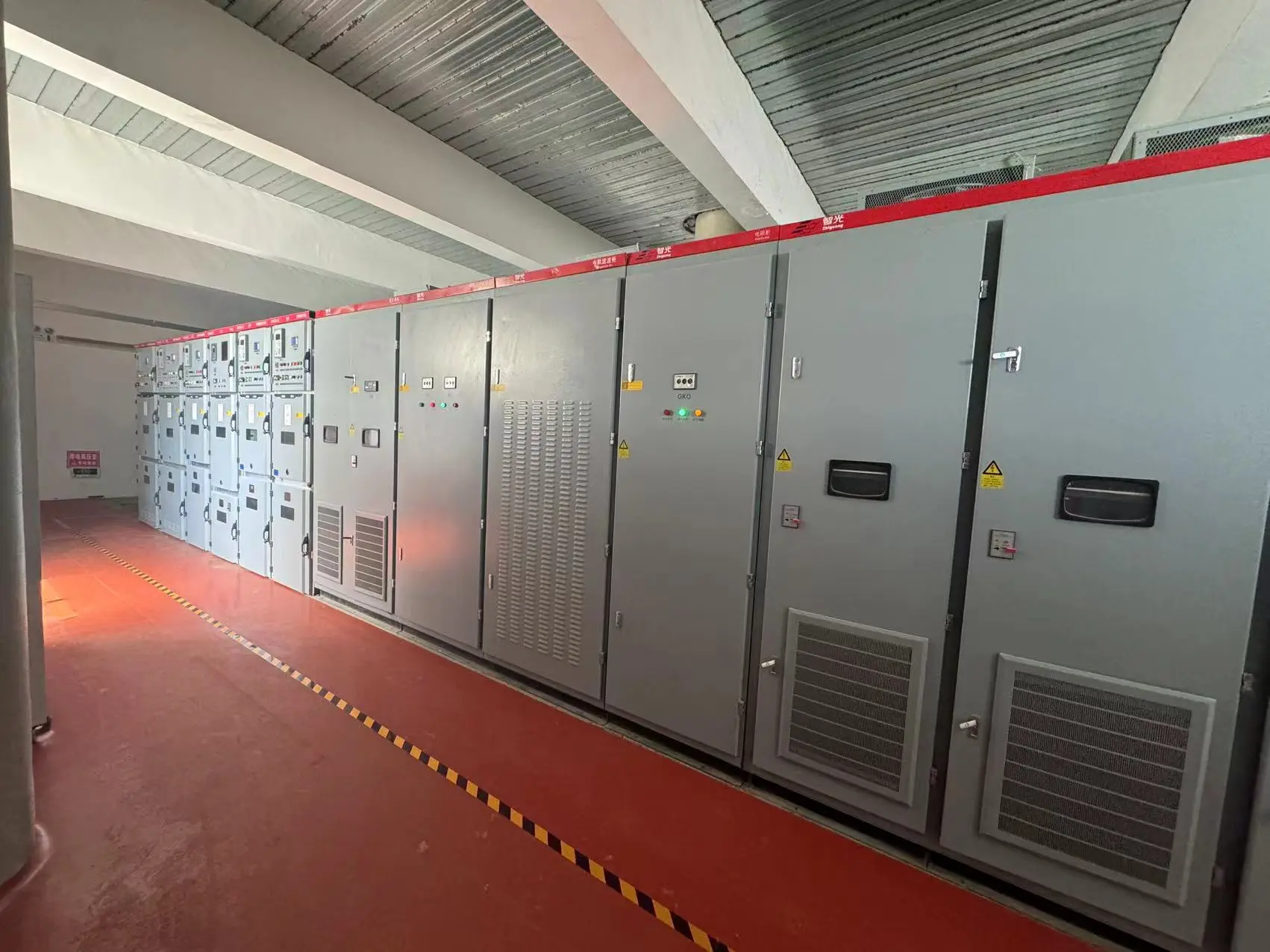
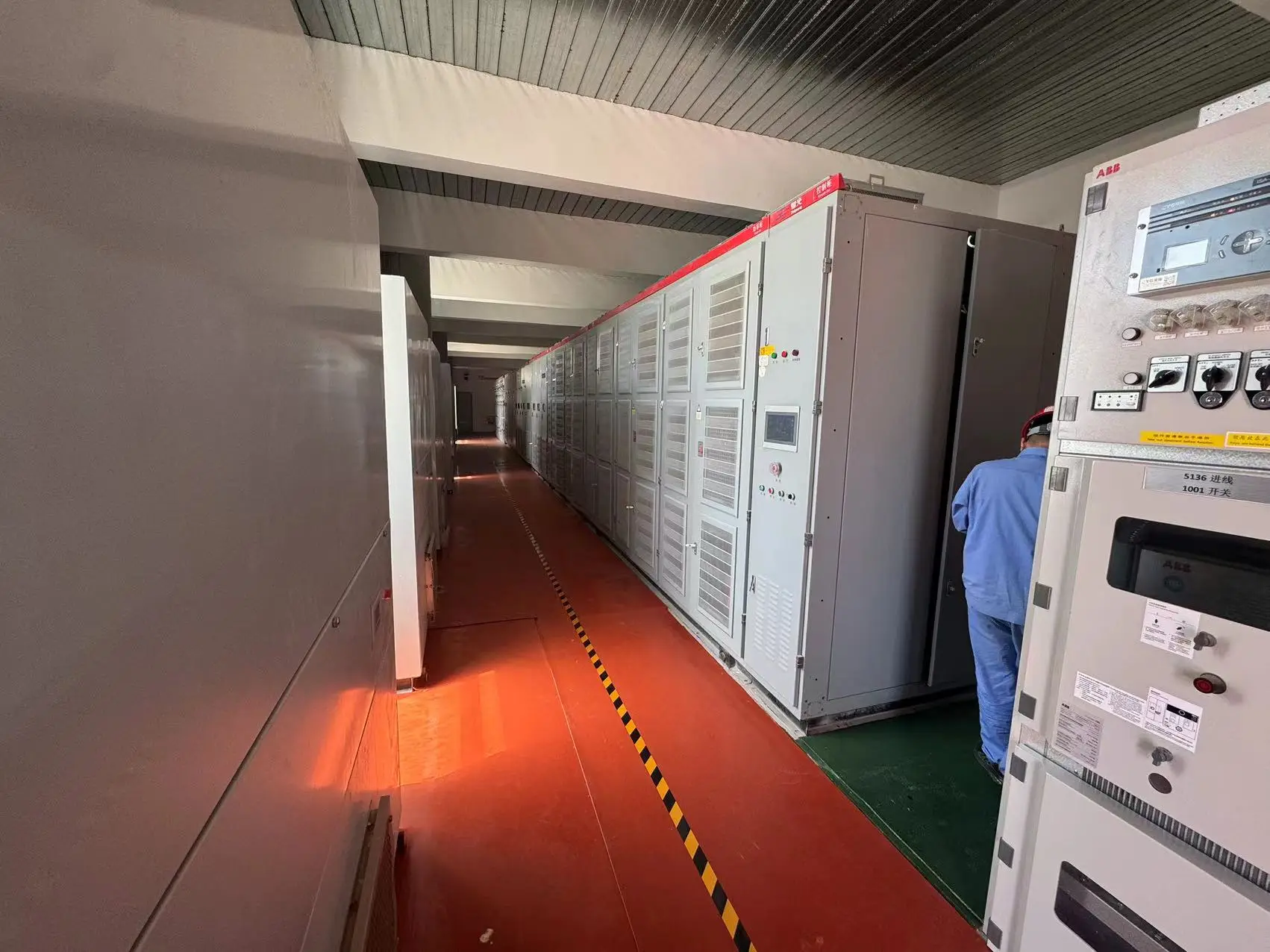
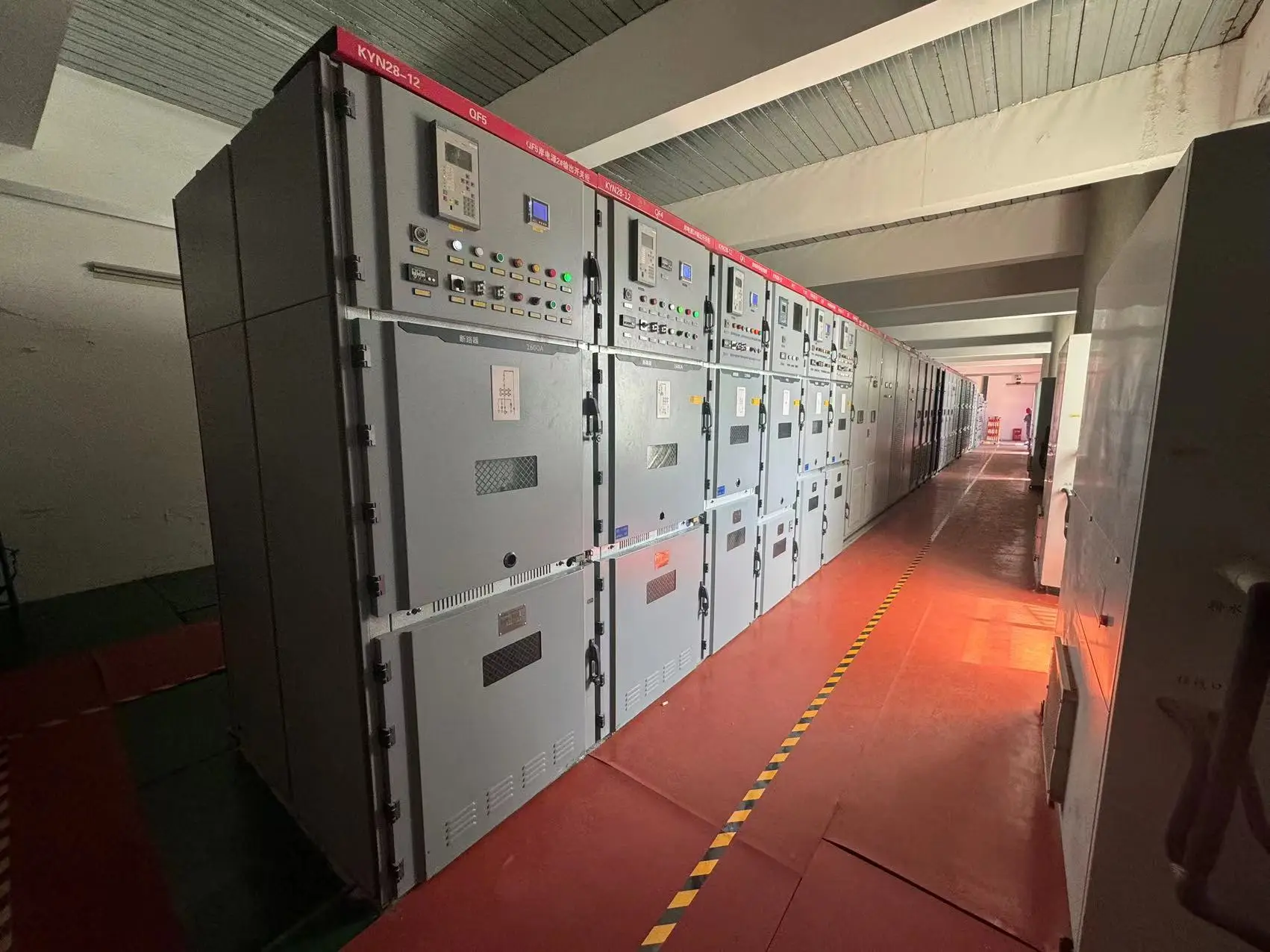
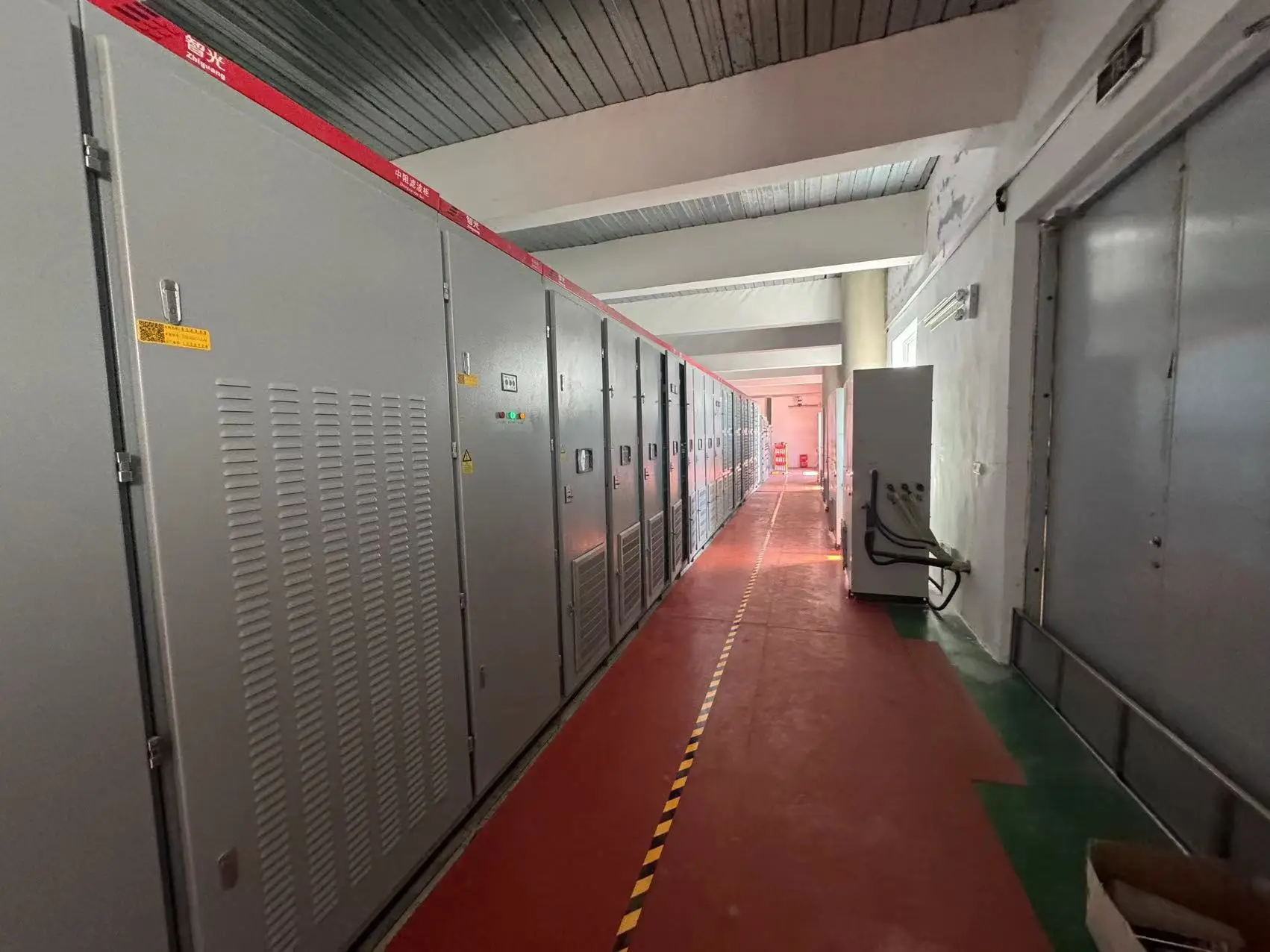
High-voltage shore power supply
The high-voltage shore power frequency conversion system allows one-button voltage/frequency settings, fine voltage tuning, and quick phase-sequence switching to speed up shore power connection. It also features reverse-power detection and protection, automatically adjusting output to eliminate reverse power or tripping if correction fails.
Product Description
Main equipment description
- High-voltage frequency converter power supply
The high-voltage frequency converter adopts a special current-limiting design. Throughout the entire power transmission and supply process, the normal current of the system is less than the rated current, and there is no additional capacity requirement for the upstream power supply system.
The high-voltage frequency converter power supply adopts power unit series technology. Ten units are connected in series per phase for 10kV, with each power unit outputting an AC effective value Vo of 576V, a phase voltage of 5760V, and a line voltage of 10000V. After passing through an isolation transformer, it can output 6.6/11kV shore power.
The power unit mainly consists of a three-phase bridge rectifier, filter capacitors, and IGBT inverter bridge. It also includes control circuitry for power device driving, protection, signal acquisition, and fiber optic communication. By controlling the operating state of the IGBTs, a PWM voltage waveform is output. Each power unit is structurally and electrically identical and interchangeable.
The series high-voltage shore power frequency converter system employs up to 60 levels of rectification technology on the 10kV power supply side, resulting in low harmonic pollution on the grid side, high power factor, and no need for power factor compensation or harmonic suppression devices. It also does not generate harmonic interference to other electrical equipment connected to the same grid. The system output side uses multi-level sinusoidal pulse width modulation (SPWM) technology, achieving a maximum output voltage of 21 levels with very low output harmonics.
The high-voltage shore power frequency conversion system features one-button setting of output voltage and frequency, fine-tuning of output voltage, and one-button switching of output phase sequence, which can significantly shorten shore power connection time. Simultaneously, the high-voltage frequency conversion power supply has reverse power handling and protection functions. During grid connection and disconnection, if the power system detects reverse power, it automatically adjusts the system output voltage to eliminate the reverse power; if elimination fails, the system issues a trip protection.
- Isolation transformer
The isolation transformer adopts a Dy11 connection design, operates at a frequency of 60Hz, and has two sets of taps: 10kV/11kV and 10kV/6.6kV. When supplying power to ships with different voltages, the voltage system is selected by closing the switch of the corresponding voltage tap. The output switches of the two sets of taps are interlocked to prevent accidents caused by simultaneous closure.
- Neutral point resistor cabinet
The neutral point of the isolation transformer is grounded with a resistor of approximately 540Ω and connected to the ship’s hull via a neutral line. This limits the fault current during ship-side grounding when shore power is supplied, providing safety protection for shipboard equipment and personnel. A grounding switch is installed at the ground terminal of the neutral point resistor. When power supply is interrupted, the grounding switch closes, providing safety protection for operators and equipment.
- High-voltage filter cabinet
Shore power frequency converters employ phase-shifting multiplexing technology to eliminate output harmonics. Without a high-voltage filter cabinet, the system’s no-load voltage harmonics are approximately 2%, meeting the harmonic limits for shore power systems specified in the IEC 80005-1 standard. For applications requiring even cleaner power quality, a high-voltage filter cabinet can be added to further reduce system output harmonics.
- Output switch cabinet
The output system of the shore power supply is equipped with high-voltage circuit breakers, grounding switches, power metering devices, and integrated protection devices. The integrated protection devices disconnect the output switches to provide safety protection for the system when abnormal conditions occur, such as excessive output current imbalance, excessive output current, excessively low (or high) output voltage, excessively high (or low) output frequency, or excessive reverse power.
- Dock socket box
Shore power socket boxes are suitable for use in corrosive marine environments at docks. The socket box body is made of 316 stainless steel with an anti-corrosion coating. The socket box is equipped with a power socket, a center line socket, an auxiliary power socket, a control signal socket, and a SCADA socket. The outer shell of the shore power socket box is equipped with a grounding connection. The shore power box should be equipped with an anti-condensation heating device.
- Dedicated cable management system
Due to the different types of ships, the location of shore power outlets on board also varies. The shore power interface is generally located next to the baggage loading and unloading area, and the height difference between the location and the dock surface is not significant. Therefore, a cable management system with a telescopic boom is usually installed on the shore to deliver cables to the ship to achieve ship-shore connection.
The dedicated cable management system consists of power cable reels, control cable reels, neutral cable reels, servo systems, protection systems, and control systems. Ship-to-shore circuit connection can be achieved through a simple four-step operation:
1) Transport the cable management system to the dock front.
2) Connect the cable management system to the dock socket box.
3) Use a telescopic boom to deliver the cable to the side of the ship.
4) Insert the control cable, neutral cable, and power cable into the ship’s socket in sequence.
- Shore power monitoring system
Shore power systems involve numerous devices and complex operational procedures, necessitating a dedicated monitoring system. This system not only monitors each device but also communicates with dockside and ship-side monitoring systems, facilitating on-site monitoring of equipment operation by personnel on both sides. The monitoring system communicates with the output switchgear meters to monitor real-time power supply changes; it also communicates with the frequency converter system to monitor its operating parameters. Furthermore, the system should record output voltage and current data (including necessary waveforms) during power supply periods, enabling the tracing of the fault’s state and analysis of its cause in the event of an abnormal power outage.
Parameter table of shore-based high-voltage frequency converter power supply
| Output | Overload capacity | 110% protection for 1 hour; 130% protection for 1 minute; 200% protection for immediate protection. |
| Rated voltage/frequency | 6.6kV/60Hz or 11kV/60Hz (can be switched with one button) | |
| Three-phase voltage imbalance | ≤2% | |
| Three-phase current imbalance | ≤30% (Customization available for special requirements) | |
| Load stability | ≤±1% | |
| Output voltage harmonics (no load) | ≤3% (without filtering device) | |
| Output frequency | Accuracy 0.01HZ | |
| Input | Number of phases, frequency | Three-phase: 50/60Hz |
| Allowed frequency fluctuations | Frequency: -5% to +5% | |
| Input voltage | Normal operation within 10kV and -15% to +15% | |
| Input power factor | >0.96 (above 20% load) | |
| rectifier circuit | 60 pulses (10 stages in series) | |
| Input current harmonics | <3% (rated load) | |
| Control | System Controller | TI’s high-speed DSP chip for motor control |
| Control power supply | AC380V, three-phase AC power supply, 10kVA | |
| Input/output interface | 16 digital inputs / 16 digital outputs 2 analog inputs / 2 analog outputs (4-20mA or 0-10V signal) The above is the basic configuration. More channels can be selected, subject to the ordering technical agreement. |