How to Protect Shore Power Equipment from Salt Fog, Humidity and Corrosion
For coastal shore power equipment, an IP rating alone is not a corrosion-protection strategy.
Salt-laden air, high humidity and condensation can affect circuit boards, busbars, electrical joints, transformer components, connectors and cooling equipment even when the main enclosure is designed for outdoor service.
A reliable environmental design has to control several risks at the same time: contaminant entry, corrosion of exposed materials, internal moisture, cooling, cable penetrations and the condition of interfaces after installation and maintenance.
The first question should therefore not be simply:
What IP rating does the enclosure have?
What environmental conditions will the shore power system actually operate in, and how will each vulnerable component be protected from them?
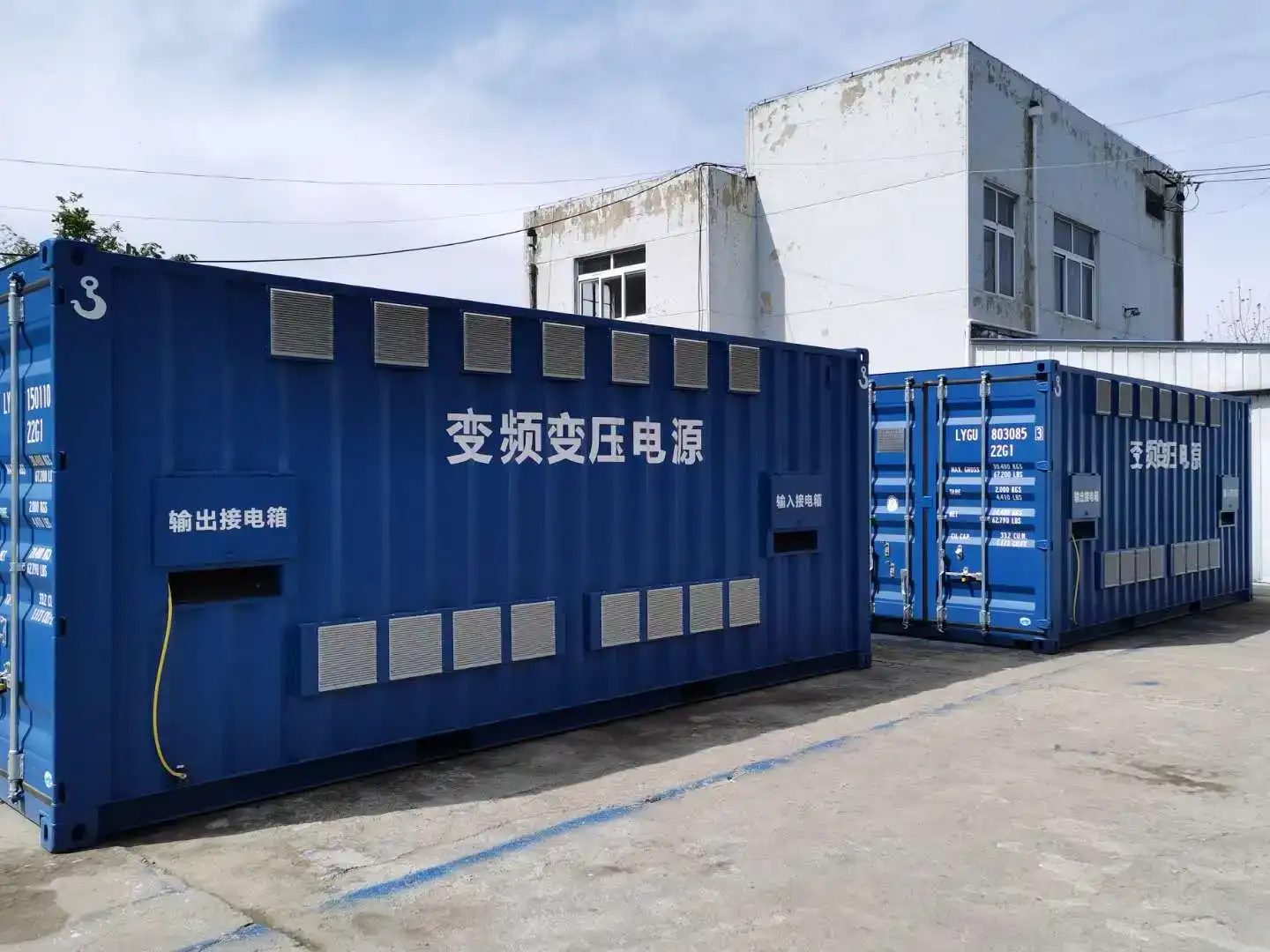
Why IP Rating Alone Is Not Enough
An ingress-protection rating describes resistance to defined solid-particle and water-entry conditions.
It does not define how exposed conductors, fasteners, control electronics or connection hardware will behave in a humid, salt-laden environment.
Nor does it define how condensation, coating condition or site-installed penetrations should be managed.
In one outdoor shore-connection-box specification, IP65 was required together with separate requirements for moisture protection, salt-fog protection, corrosion protection and dust protection.
Ingress protection and corrosion protection answer different engineering questions.
Depending on the installation, environmental protection may involve:
- enclosure materials and surface treatment;
- protected conductor surfaces;
- corrosion-resistant fasteners;
- PCB conformal coating;
- protected transformer components;
- controlled ventilation or air conditioning;
- sealed cable penetrations;
- drainage and condensation control;
- inspection and maintenance.
The RFQ should therefore define both the required ingress protection and the environmental corrosion requirements.
Start with the Actual Coastal Environment
“Outdoor coastal installation” is not enough information to finalize a shore power system.
Two installations in the same port can experience different exposure.
A system beside an open berth may receive more airborne salt and sea spray. Another may be partly sheltered but remain at high humidity for long periods. A shipyard can also add grinding dust, blasting residue or other industrial contamination to the marine environment.
Before the environmental configuration is finalized, the project should identify:
- maximum and minimum ambient temperature;
- relative humidity;
- expected condensation conditions;
- exposure to salt-laden air or direct sea spray;
- dust, sand or industrial pollution;
- rain and flooding exposure;
- solar heating;
- installation arrangement;
- maintenance access;
- expected service life and inspection requirements.
Distance from the sea is useful, but it is not enough by itself.
Wind direction, berth arrangement, surrounding structures, sea spray and port activity can change the actual exposure considerably.
The same principle applies to containerized shore power systems. The enclosure, electrical package and environmental-control system need to be reviewed together rather than selected as independent items.
Protect Components According to How They Fail
There is no single anti-corrosion treatment that solves every environmental problem inside a shore power system.
Circuit boards, cabinet structures, copper conductors, electrical joints and transformer components perform different functions and are exposed through different failure paths.
Their protection therefore needs to be component-specific.
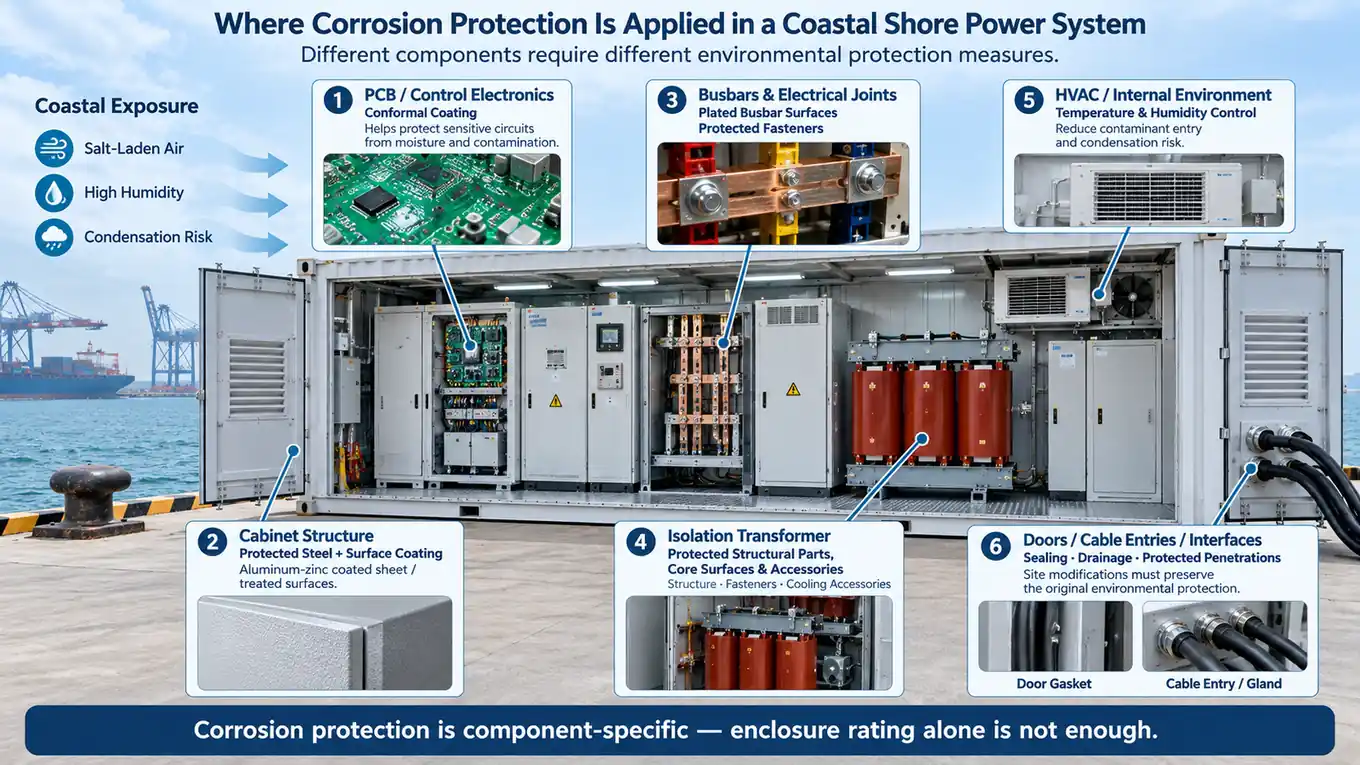
Printed Circuit Boards
Control electronics are sensitive to moisture and contamination because conductor spacing is small and surface contamination can affect insulation performance.
Salt and moisture deposits can contribute to leakage current, tracking and corrosion across PCB surfaces.
In one coastal shore power configuration, PCB assemblies were specified with a thickened conformal-coating treatment.
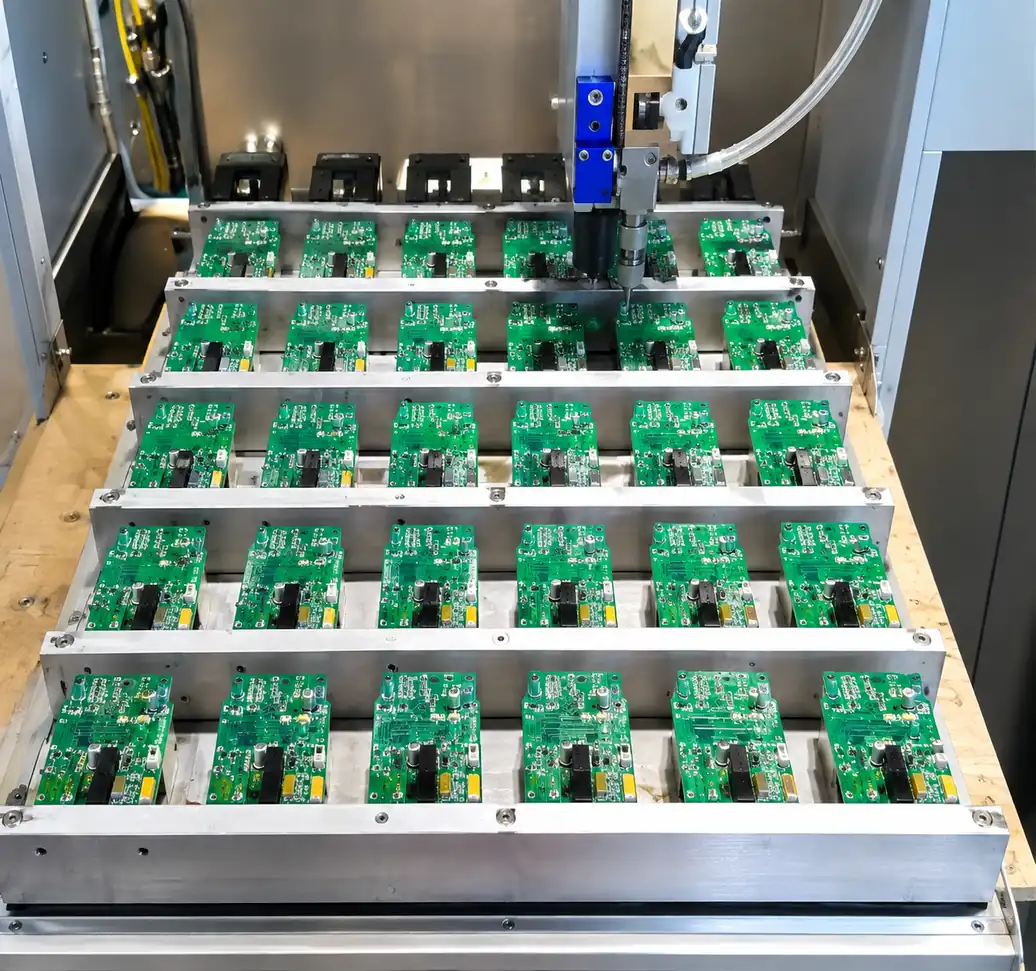
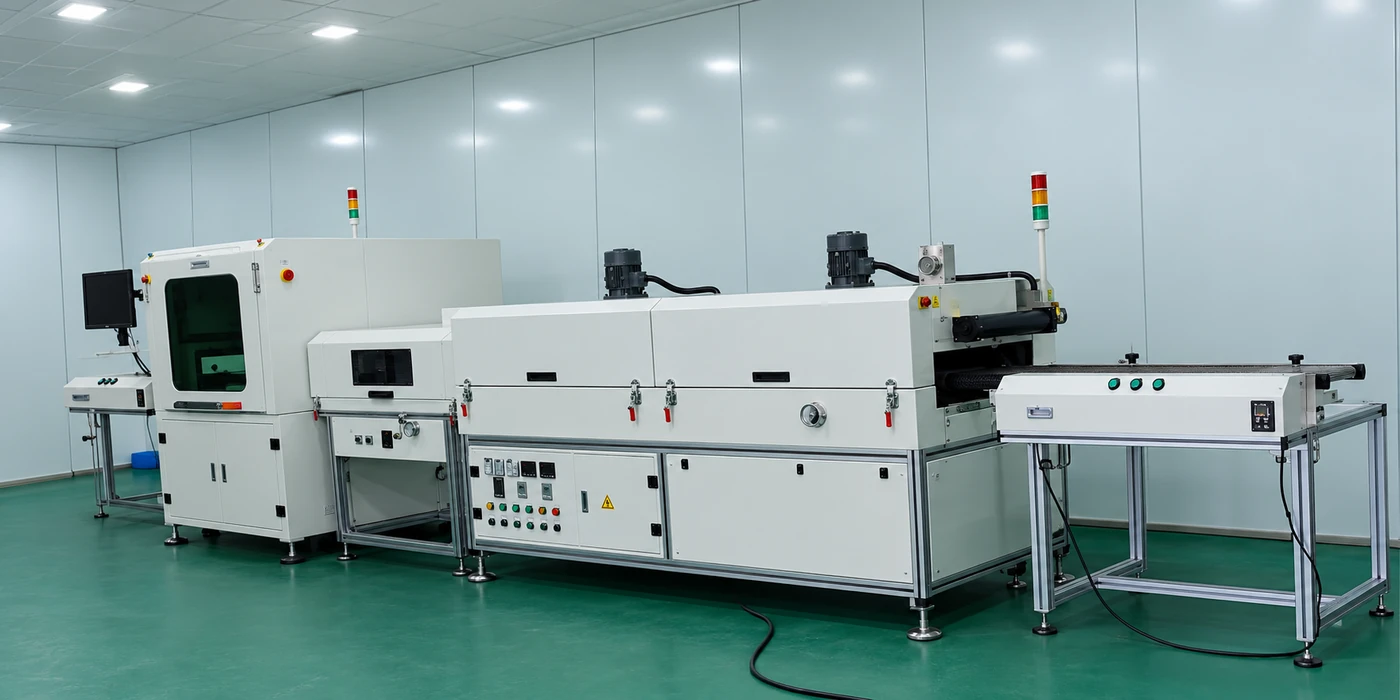
Conformal coating adds a protective layer over sensitive electronic surfaces, but it is not a substitute for enclosure protection.
The coating process also has to respect components and areas that cannot simply be covered indiscriminately, including connectors, contact surfaces, test points and heat-transfer surfaces.
If moisture repeatedly enters the enclosure or condensation repeatedly forms inside it, PCB coating alone does not remove the environmental cause.
The electronics and the environment around them both need to be controlled.
Cabinet Structures and Surface Treatment
Cabinet corrosion protection is not only a question of choosing the sheet material.
In one shore power configuration, switchgear shells and partitions used aluminum-zinc coated steel, while other metal structural components were galvanized.
The enclosure treatment also included surface preparation, anti-corrosion primer and electrostatic epoxy powder coating.
Surface preparation affects the condition on which the primer and final coating are applied. A suitable coating cannot compensate for poorly prepared steel.
For coastal electrical equipment, the protection chain therefore includes:
material selection → surface preparation → coating → inspection
Each stage affects the finished enclosure condition.
Copper Busbars and Electrical Joints
Copper is well suited to carrying current, but exposed conductor surfaces can oxidize in a humid and corrosive atmosphere.
In one coastal shore power configuration, copper busbars were specified with nickel-plated surfaces, while electrical connection bolts used stainless-steel components.
The electrical joint still depends on:
- suitable contact surfaces;
- correct mechanical pressure;
- controlled tightening;
- stable conductor interfaces;
- compatible material combinations.
A plated busbar cannot compensate for a poorly assembled connection.
Corrosion protection therefore has to be considered together with conductivity, mechanical strength and thermal performance.
The same interfaces should be checked during shore power manufacturing and FAT, together with workmanship, fasteners, conductor joints and visible coating condition.
Isolation Transformer Components
Transformer environmental protection should not focus only on winding insulation.
Structural parts, fasteners, core surfaces, cooling fans and other accessories can also be exposed to humidity and contamination.
In one coastal shore power design:
- transformer metal structural parts were galvanized;
- fasteners were galvanized or received protective treatment;
- the transformer core received a dedicated protective coating;
- cooling fans and related accessories received environmental treatment.
The transformer therefore has to be considered as a complete environmental assembly, including its structural parts, fasteners, core surface and cooling accessories.
Protecting only the main electrical insulation can leave other components exposed to long-term environmental deterioration.
Control Humidity Without Creating a Cooling Problem
Salt is only one part of the coastal-environment problem.
High humidity combined with temperature changes can create condensation inside electrical equipment even when no rain enters the enclosure.
For shore power equipment, temperature control and moisture control therefore need to be considered together.
Depending on the project, measures may include:
- suitable enclosure sealing;
- controlled air conditioning;
- anti-condensation heating where required;
- thermal insulation;
- drainage;
- humidity or temperature monitoring;
- controlled ventilation;
- inspection of cable penetrations and door seals.
Cooling and environmental protection cannot be designed independently.
Where outside-air ventilation is used, the environmental condition of the incoming air also has to be considered. Salt, humidity, dust and industrial contamination can then become part of the cooling-system design problem.
In one harsh-environment containerized arrangement, industrial air conditioning was used with a relatively enclosed internal air path.
A relatively enclosed arrangement can reduce direct contaminant entry, but it still has to address:
- equipment heat rejection;
- enclosure sealing;
- condensate drainage;
- HVAC reliability;
- maintenance access.
The final cooling arrangement should therefore be selected from both the equipment heat load and the actual site environment.
Protect the Interfaces, Not Only the Main Enclosure
A well-protected main enclosure can still lose environmental performance through a weak interface.
Doors, cable penetrations, external connection boxes, HVAC openings and shore connectors all need separate attention.
Cable Entries, Doors and Service Openings
Cable penetrations are a common weak point.
A factory-built enclosure may leave the workshop with controlled sealing, but site installation can change that condition.
If an additional opening is cut through the container floor or wall and is not sealed correctly, humid air, salt contamination, dust or water can bypass the original protection.
The same risk applies to:
- cable glands;
- unused cable entries;
- doors and gaskets;
- external connection boxes;
- HVAC openings;
- drainage points;
- interfaces added during commissioning.
Maintenance can change the condition again.
Doors may remain open for extended periods. Covers may be removed. Cable glands may be replaced. Additional communication or control cables may be installed.
Environmental protection therefore has to remain effective through the complete lifecycle:
factory assembly → transport → site installation → commissioning → maintenance
Shore Connection Hardware
Shore connection hardware is also subject to oxidation and ageing during service.
Material selection, anti-corrosion treatment and sealing can slow this deterioration, but exposed connectors still require inspection and maintenance.
Shore-side sockets, vessel-side plugs, cable-reel interfaces and other exposed connection components should be maintained before corrosion or ageing affects their electrical condition.
Connections that no longer meet the required electrical condition should be repaired or replaced rather than treated as a cosmetic corrosion issue.
In one shore-connection procedure, the connected path was also checked electrically before energization, including a DC-resistance check.
The required acceptance value remains project-specific and should follow the applicable connection procedure.
Verify Protection Before Shipment and After Installation
Before Shipment
Factory inspection can include:
- visible coating condition;
- PCB protective treatment where specified;
- cabinet and structural surface treatment;
- protected conductor surfaces;
- fasteners and electrical joints;
- door and panel seals;
- cable-entry arrangements;
- transformer environmental treatment;
- HVAC and ventilation installation;
- condensate drainage;
- internal cleanliness.
In one project inspection procedure, protective coatings were checked for surface condition, visible corrosion and coating loss.
This is an important distinction between specifying a coating and verifying the finished protective surface.
A Factory-Integrated Outdoor Project
A Singapore shipyard project provides a practical example of factory integration for an outdoor shore power package.
The system was rated at 400 kVA, with a 415 V / 50 Hz input and 415 V / 60 Hz output.
The electrical equipment was assembled and internally wired inside an outdoor containerized enclosure. Testing was completed before shipment. The package was then delivered, commissioned and accepted for operation at the shipyard.
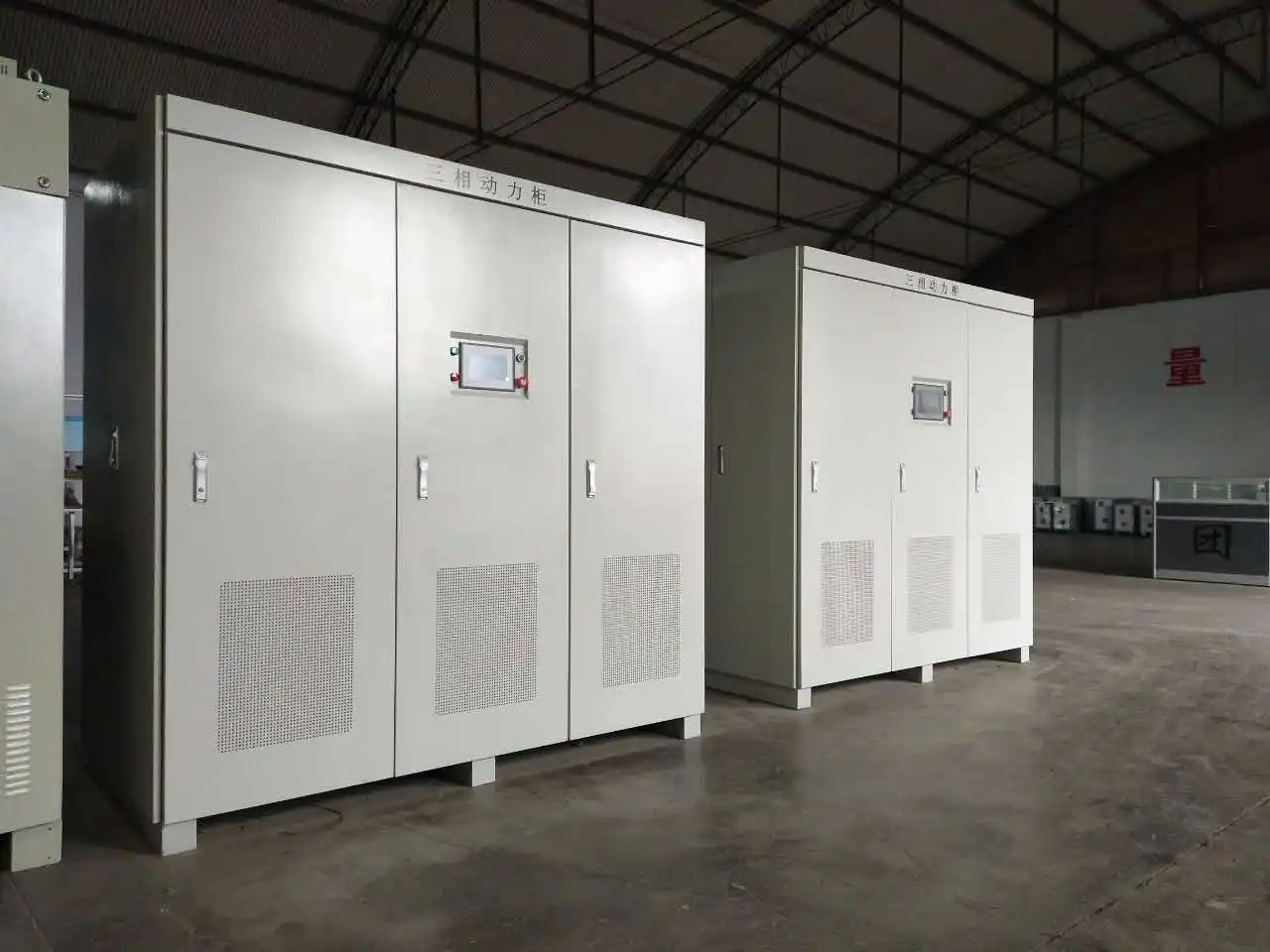
This project is useful as an example of factory integration and pre-shipment verification for an outdoor shore power package.
The enclosure, electrical equipment, cooling equipment and internal interfaces could be reviewed together before shipment.
Long-term environmental performance still depends on the actual site exposure, installation quality, field modifications and maintenance condition.
After Transportation and Installation
After shipment and site installation, check again for:
- coating damage caused during transport;
- damaged or displaced door gaskets;
- open or poorly sealed cable penetrations;
- blocked drainage;
- changed HVAC clearances;
- signs of internal moisture;
- contamination left after construction;
- disturbed electrical joints;
- interfaces modified by local contractors.
Exposed shore connection hardware may also require electrical-condition checks according to the project procedure rather than relying only on visual inspection.
Photographs taken during commissioning are useful as a maintenance baseline. They make later changes in coating condition, corrosion, sealing and cable interfaces easier to identify.
Common Mistakes When Specifying Coastal Shore Power Equipment
Mistake 1 — Treating the IP Rating as the Corrosion Specification
IP protection and corrosion resistance answer different engineering questions.
A project that specifies only an IP rating leaves material selection, surface treatment, humidity control and maintenance requirements incomplete.
A shore connection enclosure may require both an ingress-protection rating and separate salt-fog or corrosion requirements.
Mistake 2 — Protecting the Main Enclosure but Ignoring the Interfaces
The main container can be well protected while external connection boxes, cable glands, HVAC components or connectors remain more exposed.
The weakest interface can determine the actual environmental condition of the complete installation.
Mistake 3 — Designing for Rain but Not Condensation
An enclosure can remain dry from direct rainfall and still develop internal moisture.
High humidity and temperature changes can create condensation without any roof or wall leakage.
Mistake 4 — Assuming Corrosion Protection Means Maintenance-Free
Coatings, gaskets, drains, connectors and exposed surfaces still require inspection.
Connection hardware can continue to oxidize and age during service, so sealing, maintenance and replacement remain part of the environmental strategy.
Environmental design reduces risk. It does not eliminate maintenance.
What Information Should Be Included in the RFQ?
A useful environmental specification starts with actual site data rather than a generic description such as “marine environment.”
Environmental Conditions
Provide:
- installation location;
- exposure to sea spray or salt-laden air;
- maximum and minimum ambient temperature;
- relative humidity;
- expected condensation conditions;
- dust, sand or industrial contamination;
- rain, flooding and solar exposure;
- required IP rating;
- corrosion, material or coating requirements;
- HVAC or ventilation preference;
- cable-entry and external-connection arrangement;
- required service life and maintenance expectations.
Electrical and Layout Context
Also provide:
- single-line diagram;
- shore-side input voltage and frequency;
- vessel-side voltage and frequency;
- required capacity or load;
- berth layout;
- shore connection arrangement.
Environmental protection should be reviewed together with the electrical architecture rather than treated as a separate enclosure specification.
Cooling load, enclosure arrangement, cable routes, external interfaces and maintenance access all depend on the complete project configuration.
Frequently Asked Questions
Does IP65 mean shore power equipment is corrosion-proof?
No.
IP65 addresses defined dust and water ingress conditions. It does not by itself specify corrosion resistance.
Materials, coatings, salt exposure, humidity, condensation and maintenance still need to be considered separately.
Is conformal coating enough for marine shore power equipment?
No.
Conformal coating helps protect sensitive circuit boards, but the enclosure, conductors, electrical joints, transformer components, HVAC system, connectors and cable penetrations also need appropriate environmental protection.
Should a coastal shore power container be completely sealed?
No.
It should be environmentally controlled rather than simply sealed.
A relatively enclosed air-conditioned arrangement can reduce direct contaminant entry, but heat rejection, condensate drainage, sealing, maintenance access and HVAC reliability still have to be considered.
Why are shore power busbars sometimes plated?
Surface treatment can reduce oxidation of exposed conductor surfaces in a corrosive environment.
However, plating does not replace correct contact preparation, mechanical pressure and tightening.
What should be inspected after the shore power system reaches the site?
Check coating damage, door seals, cable penetrations, drainage, HVAC clearances, internal moisture, electrical joints and any interfaces modified during installation.
Transport and site work can change the condition of equipment that passed factory inspection.
Discuss Your Coastal Shore Power Environment
If you are preparing a shore power project for a coastal terminal, port or shipyard, send us the actual environmental and electrical conditions.
Useful information includes:
- temperature and humidity range;
- salt or sea-spray exposure;
- dust and industrial contamination;
- required IP and corrosion requirements;
- enclosure and HVAC arrangement;
- cable-entry arrangement;
- single-line diagram;
- input and output voltage / frequency;
- required capacity;
- berth layout.
We can review the environmental protection together with the electrical configuration before the enclosure, cooling and interface design are finalized.
Discuss Your Coastal Installation